

The Enduring Enigma: Unpacking the Metaphysical Status of Universal Forms
A Direct Inquiry into the Nature of Shared Reality
What precisely is the "Metaphysical Status of Universal Forms"? This profound question lies at the very heart of philosophy, delving into whether shared qualities, properties, and types—like "redness," "humanity," or "justice"—exist independently of the particular things that possess them, or if they are mere mental constructs or linguistic conveniences. This article explores the historical trajectory of this debate, examining how philosophers from antiquity to the present have grappled with the distinction between the Universal and Particular, ultimately shaping our understanding of reality, knowledge, and even language itself. We'll navigate the foundational concepts of Form and Idea, tracing their evolution through the lens of Metaphysics.
The Unseen Foundation: Introducing the Problem of Universals
At its core, metaphysics seeks to understand the fundamental nature of reality. One of its most persistent and perplexing challenges is the "problem of universals." We observe countless particular instances of things: this specific red apple, that individual human being, a particular act of justice. Yet, our minds readily group these particulars under universal concepts: "apple," "human," "justice." But what is the ontological status of these universals? Do they exist as real entities, perhaps in a realm beyond our senses, or are they solely products of our minds, or even just labels we apply?
This seemingly abstract question has profound implications. How can we truly know anything if the concepts we use to categorize and understand the world lack a stable, independent existence? How can ethical principles apply universally if "justice" is merely a convention? The journey to answer these questions begins in ancient Greece, with two titans of Western thought.
Plato's Realm of Perfect Forms: The Blueprint of Reality
For Plato, the metaphysical status of universals was unequivocal: they exist independently, eternally, and perfectly in a transcendent realm known as the World of Forms. These Forms, or Ideas (from the Greek eidos meaning "form" or "pattern"), are not just concepts in our minds; they are the ultimate reality, the perfect archetypes from which all particular things in our sensible world derive their existence and characteristics.
Consider the concept of "beauty." We encounter many beautiful things—a sunset, a painting, a melody. But for Plato, none of these particular instances are Beauty itself. Instead, they participate in the singular, perfect, unchanging Form of Beauty that exists independently of them.
Key Characteristics of Platonic Forms:
- Transcendent: They exist outside of space and time.
- Eternal and Unchanging: They are not subject to decay or alteration.
- Perfect and Pure: They embody the essence of a quality without any admixture of its opposite.
- Intelligible: They can only be grasped by the intellect, not by the senses.
- Archetypal: They serve as the perfect models for all particular things in the sensible world.
For Plato, the sensible world we perceive is merely a shadow or imperfect copy of this higher reality. True knowledge, therefore, involves turning away from the flux of particulars and striving to apprehend these immutable Forms. The Universal is thus a perfect, pre-existing entity, while the Particular is its flawed, temporal manifestation.
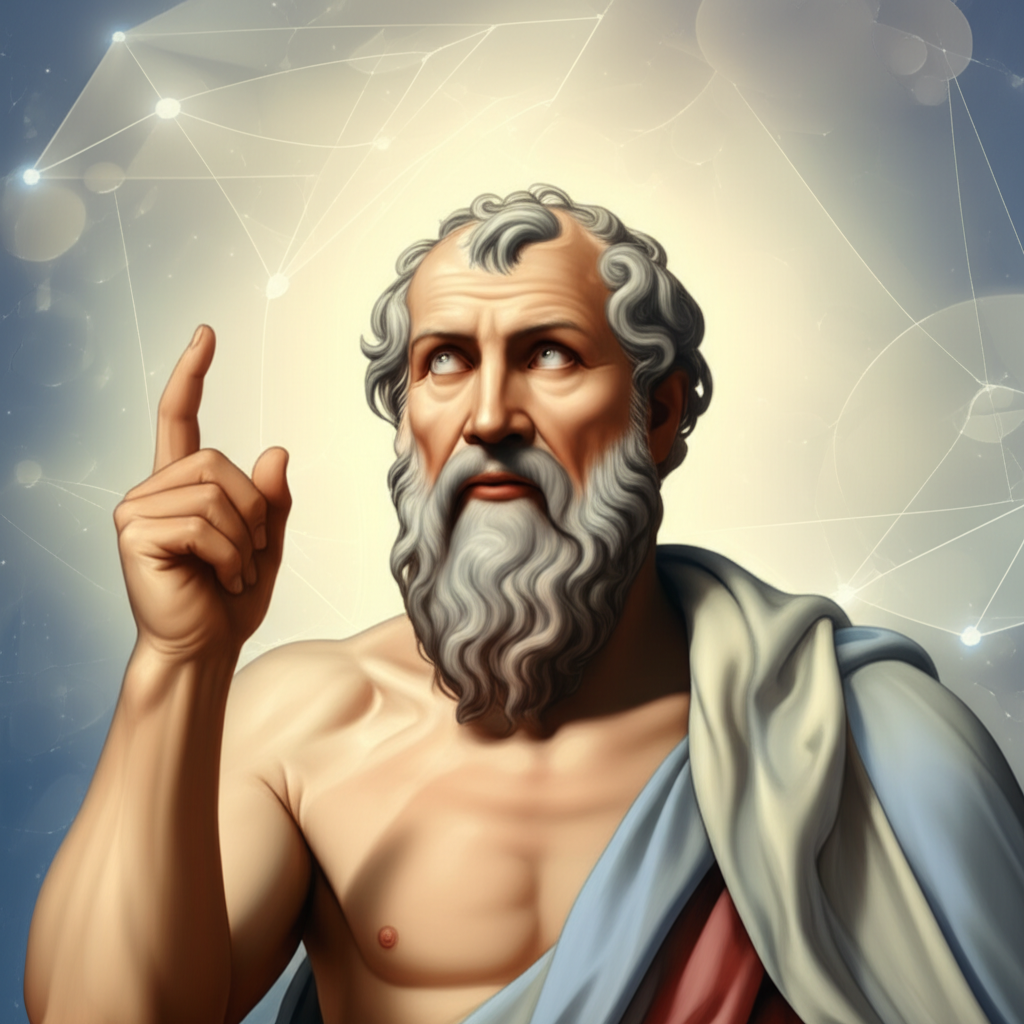
Aristotle's Grounded Forms: Universals Within Particulars
Aristotle, Plato's most famous student, offered a radical departure from his teacher's two-world theory. While acknowledging the reality of Forms (or essences), Aristotle denied their separate, transcendent existence. For him, the Form of a thing is not somewhere else; it is in the thing itself.
Aristotle introduced the concept of hylomorphism, proposing that every particular substance is a compound of form and matter. The matter is the raw stuff, the potential; the form is what makes it a specific thing, its actuality, its essence. For example, a bronze statue is made of bronze (matter) and has the form of a statue. The form of "humanity" is not a separate entity in a different realm, but rather the animating principle, the essence, that makes an individual a human being.
Aristotle's View on Universals:
- Immanent: Forms exist within particular things, not separate from them.
- Abstracted, Not Discovered: Universals are derived by the mind through observation and abstraction from multiple particulars. We see many individual humans and abstract the universal concept of "humanity."
- Essential: The Form is the essence of a thing, what makes it what it is.
- No Separate Existence: While the mind can conceive of "humanity" apart from individual humans, "humanity" does not exist as an independent entity outside of individual human beings.
For Aristotle, the Universal and Particular are inextricably linked. The universal exists in rebus (in things), making the particular intelligible, while the particular provides the empirical basis for our understanding of the universal. This marked a profound shift in the metaphysical status of universals, grounding them firmly in the observable world.
Echoes in the Scholastic Halls: The Medieval Problem of Universals
The debate between Platonic and Aristotelian views on universals continued to resonate for centuries, particularly within medieval scholastic philosophy. The "problem of universals" became a central theological and philosophical battleground, with various positions emerging:
| Position | Description
📹 Related Video: What is Philosophy?
Video by: The School of Life
💡 Want different videos? Search YouTube for: "The Metaphysical Status of Universal Forms philosophy"