

The Mechanics of the Soul: An Inquiry into Its Structure and Function
The concept of the "soul" has long been a cornerstone of philosophical and religious thought, often invoked as the ineffable essence of being, the seat of consciousness, or the immortal spirit. But what if we were to approach the soul not as a mystical, untouchable entity, but as a complex system with discernible mechanics? This pillar page embarks on a journey to explore the "mechanics of the soul" – not to reduce it to mere gears and levers, but to understand its proposed operations, interactions, and underlying principles as articulated by some of history's greatest thinkers. From ancient Greek philosophers dissecting its functions to modern inquiries into the mind-body problem and the physics of consciousness, we will deconstruct how various traditions have attempted to describe the soul's inner workings, its relationship to the body, and its role in shaping our experience of reality.
Deconstructing the Immaterial: Finding Mechanics in Metaphysics
To speak of the "mechanics of the soul" might seem like a contradiction in terms. Traditionally, the soul is considered immaterial, transcendent, and beyond the reach of physical laws. Yet, every philosopher who has ever pondered the soul has, in essence, tried to describe its workings: how it thinks, feels, perceives, and interacts (or doesn't interact) with the physical world. These descriptions, whether they involve tripartite divisions, organizing principles, or complex interactions with the brain, are, in a fundamental sense, attempts to map out the soul's internal and external mechanisms. Our quest is to uncover these conceptual blueprints, tracing their evolution from the classical era to contemporary debates, and to see how the very idea of "mechanics" has expanded to encompass the most profound mysteries of existence.
I. Ancient Blueprints: The Soul as a Working Principle
Long before the advent of modern science, philosophers from the Great Books of the Western World collection sought to understand the soul not just as a concept, but as the active principle of life and thought. Their inquiries provided the earliest "mechanical" models of how a living being operates.
Plato's Chariot and the Tripartite Soul
In his dialogues, particularly Phaedrus and The Republic, Plato offered a vivid analogy for the soul's internal mechanics: the winged chariot.
- The Charioteer: Represents reason (λογιστικόν, logistikon), the guiding principle, seeking truth and wisdom. This is the rational faculty that strives to control and direct.
- The Noble Horse: Represents spirit (θυμοειδές, thumoeides), the spirited or honorable part, associated with courage, ambition, and righteous indignation. It's often aligned with reason's goals.
- The Ignoble Horse: Represents appetite (ἐπιθυμητικόν, epithumētikon), the desiring part, driven by bodily needs and pleasures. This horse is unruly and often pulls in directions contrary to reason.
For Plato, the healthy mechanics of the soul depend on the charioteer (reason) effectively managing the two horses (spirit and appetite). When reason is in control, the soul functions harmoniously, leading to virtuous action. This is a clear model of internal forces, their interactions, and the desired outcome – a truly mechanical view of moral and psychological equilibrium.
Aristotle's Entelechy: The Soul as Form and Function
Aristotle, in his seminal work De Anima (On the Soul), presented a different, yet equally mechanistic, understanding. For him, the soul is not a separate entity imprisoned within the body, but rather the form of a living body. It is the "first actuality of a natural body having life potentially."
Key Aspects of Aristotle's Soul-Mechanics:
- Nutritive Soul: The most basic form, responsible for growth, reproduction, and sustenance (found in plants, animals, and humans). This is the fundamental mechanism of life itself.
- Sensitive Soul: Builds upon the nutritive, adding sensation, desire, and movement (found in animals and humans). This enables interaction with the environment.
- Rational Soul: Unique to humans, encompassing thought, reason, and intellect. This is the mechanism of higher cognition and understanding.
Aristotle's view suggests that the soul is the organizing principle, the very way a living body operates and functions. Its mechanics are inherent in the organism's structure and activity, much like the function of an axe (to cut) is its "soul."
II. The Cartesian Engine: Mind, Body, and the Problem of Interaction
The Enlightenment brought a radical shift with René Descartes, who famously posited a sharp distinction between the mind (or soul) and the body. This dualism introduced a profound problem for the mechanics of interaction.
Descartes' Dualism: Res Cogitans vs. Res Extensa
In his Meditations on First Philosophy, Descartes argued for two fundamentally different substances:
- Res Cogitans (Thinking Substance): The mind or soul, characterized by thought, consciousness, and non-extension. It is indivisible and immaterial.
- Res Extensa (Extended Substance): The body, characterized by extension, shape, motion, and divisibility. It is purely mechanical and operates like a machine.
The challenge for Cartesian mechanics was monumental: How could an immaterial, non-extended soul interact with a material, extended body? Descartes famously proposed the pineal gland as the point of interaction, a small organ in the brain where he believed "animal spirits" (a kind of subtle fluid) could transmit commands from the soul to the body, and sensory information from the body to the soul. This was an attempt to describe a physical mechanism for an essentially metaphysical problem.
Leibniz's Pre-established Harmony: A Clockwork Universe
Gottfried Wilhelm Leibniz, a contemporary of Descartes, found the interaction problem untenable. In his Monadology, he proposed an alternative "mechanical" solution: pre-established harmony. Instead of direct interaction, God, at the moment of creation, perfectly synchronized all "monads" (simple, indivisible substances that make up reality), including souls and bodies, like perfectly set clocks.
Leibniz's View of Soul-Body Mechanics:
- Each monad operates independently according to its own internal programming.
- The apparent interaction between mind and body is merely a reflection of their perfectly synchronized states.
- No causal influence flows from mind to body or vice versa; they simply run in parallel, like two clocks always showing the same time without influencing each other.
This elegant solution sidestepped the causal interaction problem by positing a divine, pre-programmed mechanics for the entire universe, ensuring that the mind and body always appear to be working together.
III. The Soul as an Emergent Property: Towards a Modern Physics of Consciousness?
With the rise of empiricism and later, neuroscience, the concept of the soul as a separate substance faced increasing scrutiny. Modern approaches often seek the mechanics of consciousness within the brain itself, blurring the lines between mind, body, and physics.
Empirical Challenges and the Brain's Mechanics
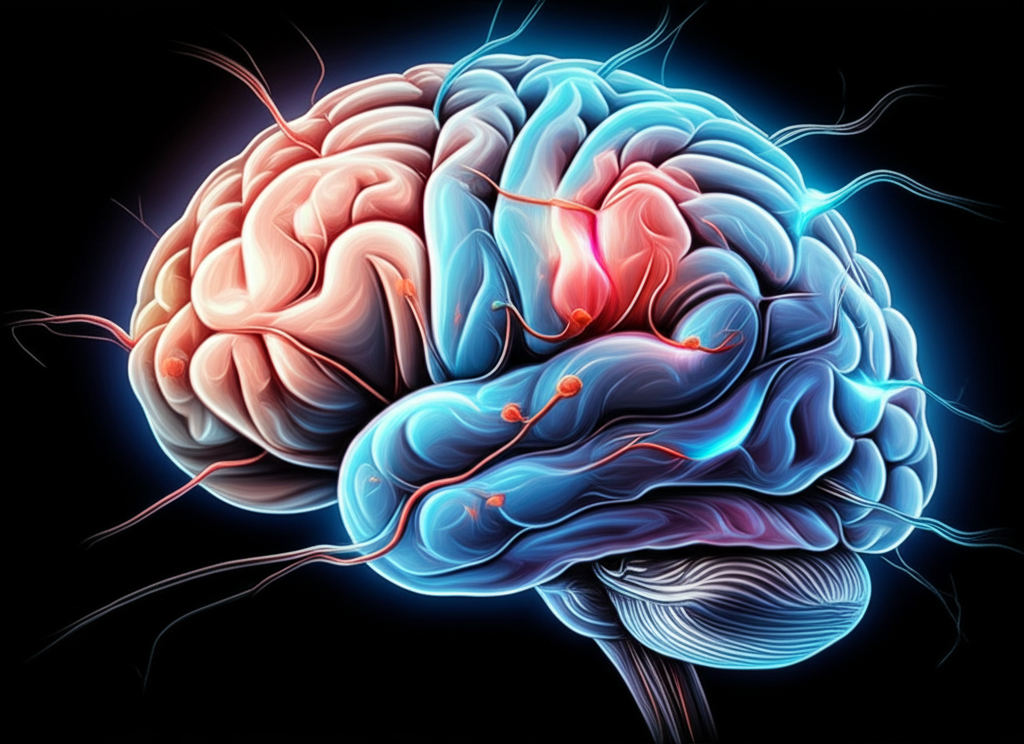
Philosophers like John Locke and David Hume shifted the focus from innate substances to experience and observation. The mind was increasingly seen not as a distinct entity, but as a product of sensory input and neural processes. Contemporary neuroscience views the mind as an emergent property of the incredibly complex mechanics of the brain.
- Neural Networks: Billions of neurons firing and connecting in intricate patterns.
- Brain Regions: Specialized areas responsible for different functions (e.g., prefrontal cortex for decision-making, hippocampus for memory).
- Neurotransmitters: Chemical messengers facilitating communication between neurons.
From this perspective, the "soul" might be understood as the sum total of these biological mechanisms and their emergent properties – consciousness, self-awareness, emotions, and thoughts.
The Enigmatic Role of Physics and Quantum Consciousness
While neuroscience explores the biological mechanics of the brain, some speculative theories reach deeper into the realm of physics. The "hard problem of consciousness" – explaining subjective experience itself – remains a profound challenge. Could the mechanics of the soul somehow be linked to fundamental principles of the universe?
- Quantum Mechanics and Microtubules: Physicists like Roger Penrose and anesthesiologist Stuart Hameroff have proposed the "Orchestrated Objective Reduction" (Orch OR) theory, suggesting that consciousness arises from quantum processes occurring within microtubules inside brain neurons. This theory posits that consciousness is a non-computable, quantum phenomenon, implying a deeper physics for the mechanics of the mind.
- Information Theory: Other approaches view consciousness as a fundamental aspect of information processing, where the "soul" could be understood as a complex informational structure, perhaps even a pattern that could theoretically exist independently of a specific biological substrate.
These ideas, though highly controversial and not widely accepted within mainstream science, represent attempts to find the mechanics of the soul not just in biology, but in the very fabric of physics.
IV. The Mechanics of Moral Action and Identity
Beyond consciousness, the soul has been historically tied to our moral compass and sense of self. Here, too, we can discern "mechanisms" at play.
Kant's Categorical Imperative: The Mechanics of Moral Law
Immanuel Kant, in works like the Groundwork of the Metaphysics of Morals, explored the mechanics of ethical decision-making. For Kant, the soul's capacity for reason allows it to discern universal moral laws, independent of personal desires or external consequences.
- Autonomy: The soul's ability to be a law unto itself, to act according to principles it rationally endorses. This is the core "mechanism" of free will.
- Categorical Imperative: The ultimate moral principle, demanding actions that could be universalized without contradiction. This provides a formal "mechanism" for determining right from wrong.
Kant's philosophy describes a rigorous, almost algorithmic, mechanics for moral action, rooted in the rational structure of the human mind.
Existentialist Perspectives: The Mechanics of Self-Creation
Later philosophers, particularly existentialists like Jean-Paul Sartre, offered a different "mechanical" view of identity. If there is no pre-given essence or soul in the traditional sense, then the mechanics of identity become a process of self-creation through choices and actions.
- Existence Precedes Essence: We are born into the world without an inherent purpose or nature.
- Radical Freedom: We are condemned to be free, constantly making choices that define who we are.
- Responsibility: The mechanics of identity involve constantly taking responsibility for our choices, thereby constructing our "soul" or self through our engagement with the world.
From this perspective, the "mechanics of the soul" are dynamic, an ongoing process of becoming rather than a fixed structure.
V. Beyond Reductionism: Can the Soul Be Fully Mechanized?
Despite advancements in neuroscience and speculative physics, the question remains: Can the soul, in all its richness and depth, ever be fully explained by its mechanics?
The Enduring Hard Problem of Consciousness
Even if we map every neural connection and understand every chemical reaction in the brain, many argue that this doesn't fully explain the subjective, qualitative experience of consciousness – what it feels like to see red, to love, or to be self-aware. This "hard problem" suggests there might be aspects of the soul that resist purely mechanistic or physical reduction. Perhaps our current understanding of physics is incomplete, or perhaps there are fundamental properties of reality that transcend purely material descriptions.
Reconciling the Spiritual and the Scientific
The journey through the "mechanics of the soul" reveals a tension between ancient metaphysical insights and modern scientific inquiry. For some, finding the mechanics of the soul in brain functions or quantum processes diminishes its spiritual significance. For others, understanding these mechanisms deepens our appreciation for the intricate design of existence, whether seen as divine or emergent. The ongoing quest is not necessarily to choose between these perspectives, but to explore how they might inform each other, expanding our understanding of what it means to be a conscious, feeling, thinking being.
Conclusion: An Ever-Evolving Machine
From Plato's charioteer navigating internal forces to Aristotle's soul as the very function of life, from Descartes' dualistic interaction problem to Leibniz's elegant harmony, and finally to modern neuroscience and the speculative physics of consciousness, the "mechanics of the soul" have been a persistent and evolving subject of inquiry. The term "mechanics" itself has transformed, moving from literal gears and levers to complex systems, emergent properties, and fundamental principles.
Ultimately, investigating the mechanics of the soul is not about reducing it to something lesser, but about seeking a profound understanding of its operations, its origins, and its place in the cosmos. Whether we find its blueprints in ancient texts or future scientific discoveries, the human quest to decipher the intricate workings of our inner selves – the very engine of our being – continues to drive philosophy forward.
📹 Related Video: PLATO ON: The Allegory of the Cave
Video by: The School of Life
💡 Want different videos? Search YouTube for: ""Plato's Republic Tripartite Soul Explained""
📹 Related Video: ARISTOTLE ON: The Nicomachean Ethics
Video by: The School of Life
💡 Want different videos? Search YouTube for: ""Descartes Mind Body Problem Explained""