

The Mechanics of the Soul: Unpacking Consciousness Through Philosophical Lenses
The concept of the soul has captivated humanity for millennia, serving as a cornerstone of religious doctrine, artistic expression, and, crucially, philosophical inquiry. But what if we were to approach this ethereal, often spiritual, entity with a more rigorous, almost engineering-like perspective? What are the mechanics of the soul? This exploration delves into the historical and philosophical attempts to understand the soul not merely as an abstract principle, but as a functional aspect of existence, examining its proposed structures, operations, and interactions with the physical world. We'll navigate the intellectual landscapes carved by the great thinkers of Western philosophy, from ancient Greece to the dawn of modernity, seeking to understand how the Mind might exert influence, how consciousness arises, and whether Physics can ever truly illuminate the non-physical.
Defining the Indefinable: What is the Soul?
Before we can dissect the "mechanics" of the soul, we must first grapple with its definition – a task that has proven notoriously elusive. Across cultures and epochs, the term "soul" (psyche in Greek) has signified everything from the animating principle of life to the seat of personality, emotion, and intellect, and even an immortal essence destined for an afterlife. For our purposes, we'll focus on its philosophical interpretations as presented in the Great Books of the Western World, primarily concerning its nature, function, and relationship to the body.
Early Philosophical Conceptions of the Soul
The ancient Greeks laid much of the groundwork for Western thought on the soul.
-
Plato's Tripartite Soul: In works like The Republic and Phaedrus, Plato posited a soul composed of three distinct parts, each with its own "mechanics" or function:
- Reason (λογιστικόν - logistikon): The rational, calculating part, seeking truth and guiding the other parts. Located in the head.
- Spirit (θυμοειδές - thymoeides): The spirited, emotional part, associated with honor, courage, and indignation. Located in the chest.
- Appetite (ἐπιθυμητικόν - epithymetikon): The desirous part, driven by bodily pleasures and needs. Located in the abdomen.
Plato believed the soul was immortal and pre-existed the body, entering it upon birth. Its "mechanics" involved a constant struggle for harmony under the guidance of reason.
-
Aristotle's De Anima: Aristotle, in his seminal work De Anima (On the Soul), offered a more biological and functional definition. He viewed the soul not as a separate entity inhabiting the body, but as the form of a natural body having life potentially within it. It is the actuality of the body, what makes a living thing alive and capable of its specific activities.
- Nutritive Soul: Shared by plants, animals, and humans; responsible for growth, reproduction, and nourishment.
- Sensitive Soul: Shared by animals and humans; responsible for sensation, desire, and locomotion.
- Rational Soul: Unique to humans; responsible for thought, reason, and intellect.
For Aristotle, the "mechanics" of the soul are intrinsically tied to the organism's vital processes. When the body dies, the soul, as its form, perishes with it, though the rational part's relationship to immortality remains a subject of debate among scholars.
Table 1: Comparing Plato's and Aristotle's Views on the Soul
| Feature | Plato's View | Aristotle's View |
|---|---|---|
| Nature | Immortal, pre-existent, distinct from body | Form/actuality of the body, intrinsically linked |
| Composition | Tripartite (Reason, Spirit, Appetite) | Hierarchical (Nutritive, Sensitive, Rational) |
| Relationship to Body | Pilot of the body, imprisoned within it | Soul is the body's organization/function, not separate |
| Immortality | Yes, for the entire soul | Debatable for the rational part; generally mortal with body |
| Primary Focus | Ethical conduct, knowledge, ideal forms | Biological function, natural processes, empirical observation |
The Engine Room of Existence: Mind-Body Dualism and its Critics
The question of how the soul—or, more commonly in modern philosophy, the Mind—interacts with the body is perhaps the most central "mechanics" problem. This challenge was most famously articulated by René Descartes in his Meditations on First Philosophy and Discourse on Method, establishing what is known as Cartesian dualism.
Descartes and the Problem of Interaction
Descartes posited two fundamentally different substances:
- Res Cogitans (Thinking Substance): The Mind or soul, which is unextended, indivisible, and whose essential attribute is thought.
- Res Extensa (Extended Substance): The body, which is material, extended in space, divisible, and whose essential attribute is extension.
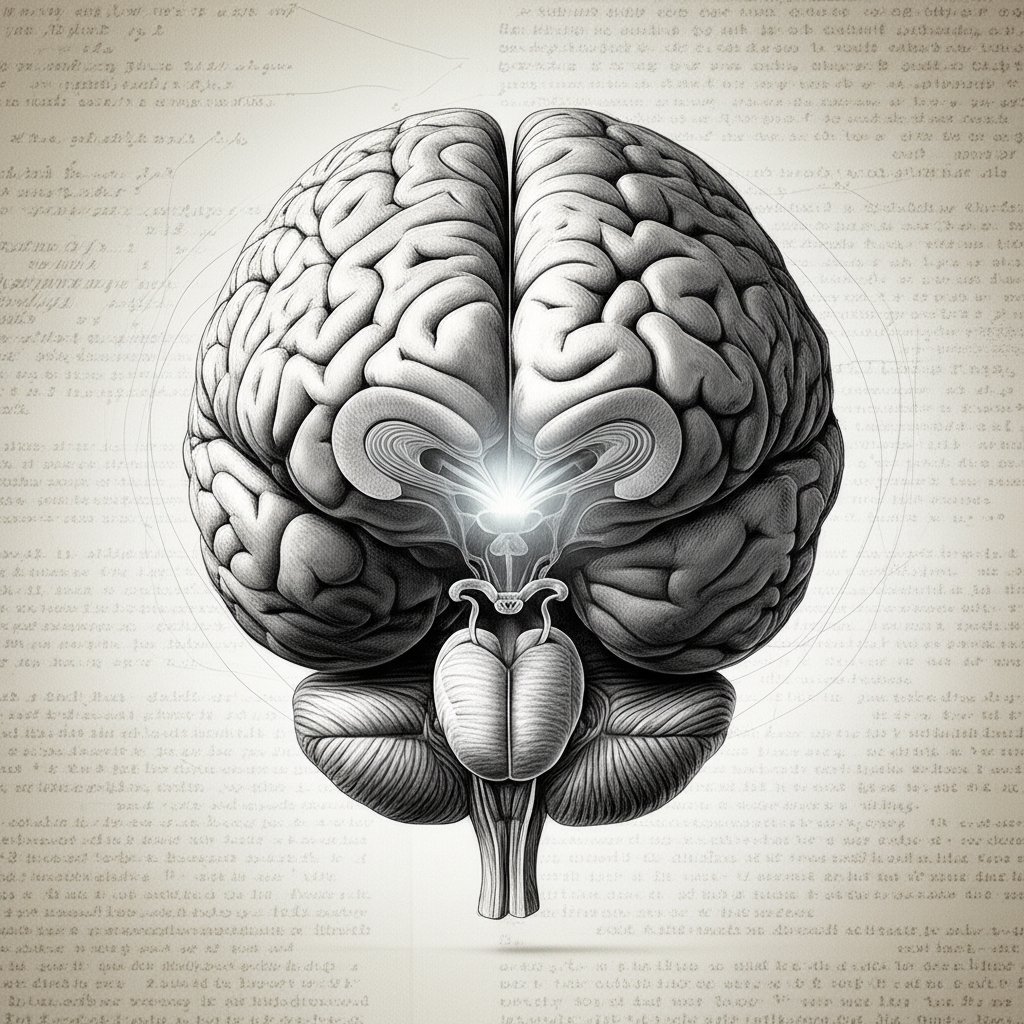
The "mechanics" of how these two disparate substances could possibly interact became Descartes's enduring challenge. He famously suggested the pineal gland, a small organ in the brain, as the point of interaction where the immaterial Mind could influence the material body and vice-versa. This explanation, however, satisfied few, raising the critical question: how could an unextended, non-physical entity exert force upon, or be affected by, a physical object? This is the quintessential "mechanics of the soul" problem in its most acute form.
Responses and Alternatives to Dualism
The profound difficulties of Cartesian interactionism spurred numerous philosophical responses, seeking alternative "mechanisms" for the Mind-body relationship:
- Occasionalism (Malebranche): God intervenes on every occasion to mediate between mental and physical events. The Mind does not directly cause the body to move; rather, God causes the body to move when the Mind wills it. This pushes the "mechanics" into the divine realm.
- Pre-established Harmony (Leibniz): Gottfried Wilhelm Leibniz, in his Monadology, proposed that God created the universe such that all substances (monads, which are mind-like) are perfectly synchronized from the outset, like two clocks ticking in perfect time without ever interacting. The "mechanics" here are a grand, pre-programmed cosmic ballet.
- Spinoza's Parallelism: Baruch Spinoza, in his Ethics, argued for a monistic view where Mind and body are merely two different attributes (thought and extension) of the same underlying substance (God or Nature). They do not interact because they are not separate entities; rather, every mental event has a corresponding physical event, and vice-versa, without one causing the other. They run in perfect "parallel," a different kind of "mechanics" entirely.
List of Key Questions Arising from Mind-Body Interaction:
- How can an immaterial thought cause a physical action, like raising an arm?
- How can a physical sensation, like pain, arise from a material injury and be experienced by an immaterial Mind?
- Is the Mind merely an emergent property of complex brain activity, or does it possess independent existence?
- Can the "mechanics" of consciousness be fully explained by neural processes, or is something more fundamental at play?
Physics and Metaphysics: Can We Quantify the Unseen?
The scientific revolution, driven by advances in Physics, brought new pressures to bear on the concept of the soul. As the physical world yielded its secrets to mechanistic explanations, the non-physical nature of the soul became increasingly problematic for empirical inquiry.
The Rise of Mechanistic Worldviews
The success of Newtonian Physics in explaining the motion of celestial bodies and terrestrial objects encouraged a worldview where the universe operated like a grand machine, governed by deterministic laws. This raised the question: if the body is a machine, what about the Mind or Soul?
- Vitalism vs. Mechanism: For centuries, a "vital force" was invoked to explain life itself, separate from mere chemical and physical processes. As Physics and chemistry advanced, many vitalistic explanations were replaced by mechanistic ones, arguing that living organisms, including humans, could ultimately be understood through their constituent parts and their interactions. This directly challenged the need for an independent "soul" as an animating principle.
- Locating the Soul: With the advent of neuroscience, the search for the Mind or soul often shifted to the brain. Is consciousness merely an epiphenomenon of neural networks? Can the "mechanics" of thought be reduced to electrochemical signals? While tremendous progress has been made in understanding brain function, the "hard problem of consciousness"—explaining why and how physical processes give rise to subjective experience—remains a profound philosophical and scientific challenge.
The Limits of Physics for the Immaterial
Can the "mechanics" of the soul, if it is indeed non-physical, ever be understood through the lens of Physics?
- Energy and Information: Modern Physics deals with energy, matter, space, time, and information. Some speculative theories attempt to bridge the gap by positing consciousness as a form of information processing or even a fundamental property of the universe. However, these are often metaphors rather than direct physical explanations of an immaterial Soul.
- Quantum Mechanics and Consciousness: The counter-intuitive nature of quantum Physics, with its concepts of superposition, entanglement, and observer effect, has led some to draw parallels with the mysteries of consciousness. While intriguing, these connections remain highly speculative and lack robust scientific consensus. Applying quantum "mechanics" to the soul often risks misinterpreting scientific principles.
The ultimate challenge lies in this: if the soul is truly immaterial, then by definition, it falls outside the domain of Physics, which is the study of matter and energy. Any attempt to describe its "mechanics" would necessarily require a metaphysics that transcends empirical measurement.
Beyond the Cogito: Modern Interpretations and the Future of the Soul
Contemporary philosophy continues to grapple with the legacy of these foundational debates, often reframing the "mechanics of the soul" in light of new scientific and philosophical insights.
- Emergentism: Many modern philosophers and scientists propose that consciousness (and by extension, what we might metaphorically call the "soul") is an emergent property of highly complex systems, particularly the brain. It's not reducible to individual neurons, but arises from their intricate interactions, much like wetness emerges from water molecules but isn't a property of a single molecule. The "mechanics" here are systemic and holistic.
- The Narrative Self: In some contemporary views, the "soul" or "self" is not a static entity but a dynamic, ongoing narrative we construct about ourselves. It's a continuous process of interpreting experiences, memories, and aspirations, creating a coherent sense of identity over time. The "mechanics" are psychological and hermeneutic.
- Philosophical Naturalism: Many contemporary thinkers adopt a naturalistic stance, attempting to explain all phenomena, including consciousness, within the framework of the natural world and scientific inquiry, without recourse to supernatural or immaterial entities. This approach often seeks to dissolve the traditional Mind-body problem rather than solve it, by arguing that the Mind is the brain, or a function thereof.
The inquiry into the "mechanics of the soul" is therefore not merely an exercise in historical philosophy but a living, evolving question. As our understanding of the brain, consciousness, and the fundamental nature of reality expands, so too will our conceptual tools for probing the deepest mysteries of human existence. Whether we ultimately discover a quantifiable "mechanism" or settle for a metaphorical understanding, the journey itself continues to define what it means to be human.
Further Exploration:
-
📹 Related Video: PLATO ON: The Allegory of the Cave
Video by: The School of Life
💡 Want different videos? Search YouTube for: ""Great Books of the Western World Plato Aristotle Soul""
-
📹 Related Video: PLATO ON: The Allegory of the Cave
Video by: The School of Life
💡 Want different videos? Search YouTube for: ""Descartes mind body problem explained""