

The Corporeal Calculus: Unpacking the Mechanics of the Body and Life
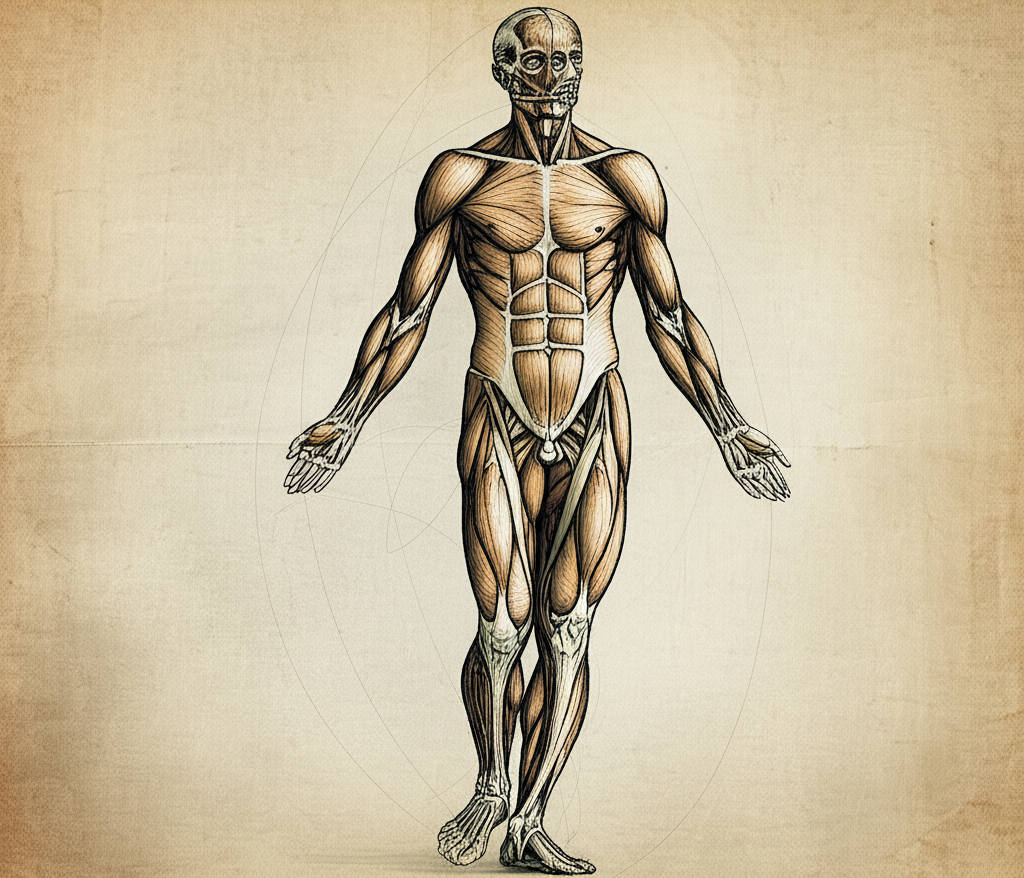
The human body, in its intricate complexity, has long served as a profound canvas for philosophical inquiry. Far from being a mere biological entity, it is a testament to the interplay of mechanics and physics, a living system whose operations compel us to ponder the very essence of life and death. This article delves into how the physical laws governing our existence shape our understanding of consciousness, vitality, and our ultimate cessation, drawing insights from the enduring wisdom found in the Great Books of the Western World.
The Ancient Inquiry into Motion and Matter
From the earliest philosophical stirrings, thinkers grappled with the observable mechanics of the natural world. The Pre-Socratics, for instance, sought fundamental principles – be it Thales' water or Anaximenes' air – that governed all existence, including the body. Democritus, with his atomic theory, proposed that all things, animate and inanimate, were composed of indivisible particles moving in a void. This early materialist perspective laid a groundwork, suggesting that even the most complex phenomena, life itself, could be reduced to the arrangement and movement of basic constituents.
Aristotle, in works like On the Soul, moved beyond mere materialism, acknowledging the body's physical components while positing a "soul" as the form or animating principle that gives life to the matter. For him, the soul was not a separate entity imprisoned in the body, but rather the very mechanics of its being alive – its capacity for nutrition, growth, sensation, and thought. This teleological view saw the body's structures and functions as serving specific purposes, a sophisticated organic machine driven by an inherent potential.
The Body as a Philosophical Apparatus: From Mechanism to Metaphor
The Enlightenment brought a renewed focus on the body as a machine, heavily influenced by advances in physics and engineering. René Descartes, a pivotal figure in the Great Books canon, famously articulated a dualistic view where the body was a complex automaton, governed by mechanical laws, while the mind (or soul) was a separate, non-physical substance. His work, particularly Meditations on First Philosophy, presented the body as a sophisticated clockwork, its movements and functions explicable through purely mechanical principles.
This mechanistic perspective, while powerful in its explanatory potential for physiological processes, simultaneously raised profound questions about the nature of consciousness and free will. If the body is merely a machine, driven by cause and effect, where does agency reside?
Key Philosophical Perspectives on the Body's Mechanics:
| Philosopher | Era | Core Concept | Relation to Mechanics/Physics |
|---|---|---|---|
| Democritus | Ancient Greek | Atomism: All reality (including the body) composed of indivisible particles. | Early materialist physics, reducing life to atomic mechanics. |
| Aristotle | Ancient Greek | Hylomorphism: Body and soul are inseparable; soul is the form/actuality of the body. | Emphasized the mechanics of function and purpose within a living system. |
| René Descartes | 17th Century | Dualism: Body is a machine (res extensa), mind is a separate thinking substance (res cogitans). | Explicitly framed the body through clockwork mechanics and physical laws. |
| Julien Offray de la Mettrie | 18th Century | Radical Materialism: Man a Machine (L'homme Machine), mind is an emergent property of the brain. | Pushed Cartesian mechanics to its logical conclusion, denying a separate soul. |
This progression highlights a fascinating tension: the more we understand the mechanics and physics of the body, the more pressing the philosophical questions about what constitutes life become.
Life's Intricate Dance: Biological Physics and Existential Realities
Modern science, building upon centuries of inquiry, continues to unravel the astonishing mechanics of life. From the molecular motors that power cellular functions to the electrochemical signals that orchestrate thought, the body is a symphony of physics in action. DNA replication, protein synthesis, nerve impulses – these are all processes governed by fundamental physical and chemical laws. The very structure of biological tissues, their elasticity, strength, and conductivity, are all subjects of biophysics.
Yet, understanding how these mechanics work doesn't fully explain why they collectively result in subjective experience, emotion, or the drive for meaning. The sheer complexity of these interactions leads some to argue for emergent properties – that life is more than the sum of its mechanical parts. The philosophical challenge remains: how do the quantifiable physics of cells and organs translate into the unquantifiable experience of being alive?
The Inevitable Halt: Mechanics of Life and Death
The most profound philosophical implication of the body's mechanics is perhaps its inevitable failure. Life and Death are two sides of the same coin, with death being the ultimate cessation of the body's operational mechanics. When the heart stops, the brain ceases its electrical activity, and the cells no longer metabolize, the intricate machine simply powers down.
Philosophers across the ages have pondered this cessation. Epicurus, for instance, argued that death is nothing to us, for when we are, death is not, and when death is, we are not. This perspective, rooted in a materialist understanding of the body's mechanics, suggests that there is no "self" to suffer once the physical processes cease. Conversely, thinkers like Plato, in works such as Phaedo, proposed an immortal soul capable of existing independently of the body, suggesting that death is merely the soul's liberation from its physical vessel.
The modern medical definition of death, often tied to brain activity or circulatory function, is a direct reflection of our understanding of the body's critical mechanics. Yet, the existential dread or spiritual hope associated with death transcends purely biological physics, touching upon our deepest philosophical convictions about purpose, legacy, and what, if anything, lies beyond the final turn of the gears.
Conclusion: Beyond the Gears and Levers
The journey through the mechanics of the body and life is a testament to the enduring dialogue between science and philosophy. While physics and biology continually illuminate the intricate workings of our corporeal forms, the Great Books of the Western World remind us that these mechanics are but a starting point for deeper inquiries into consciousness, purpose, and the ultimate meaning of life and death. The human body, in its marvelous and finite existence, remains a profound philosophical enigma, inviting us to look beyond its observable operations and contemplate the unseen forces that give it meaning.
📹 Related Video: ARISTOTLE ON: The Nicomachean Ethics
Video by: The School of Life
💡 Want different videos? Search YouTube for: ""Aristotle On the Soul Explained""
📹 Related Video: PLATO ON: The Allegory of the Cave
Video by: The School of Life
💡 Want different videos? Search YouTube for: ""Descartes Dualism Body and Mind""