

The Intricate Dance: Deconstructing the Mechanics of Body and Life
The human body, a marvel of biological engineering, operates through an intricate web of mechanics that scientists and philosophers alike have sought to understand for millennia. Far from being a mere collection of parts, it is a dynamic system whose very functioning underpins our experience of life and confronts us with the profound reality of death. This article delves into the philosophical implications of viewing the body through a mechanical lens, exploring how the principles of physics not only govern our biological existence but also illuminate the deepest questions about consciousness, purpose, and our place in the cosmos.
The Body as a Grand Mechanism: An Enduring Idea
From the earliest inquiries into human anatomy, thinkers have been struck by the body's clockwork precision. Ancient Greek physicians and philosophers, notably those whose works are preserved in the Great Books of the Western World, observed the rhythmic pulse of the heart, the coordinated movement of limbs, and the complex processes of digestion and respiration. This observation naturally led to the conceptualization of the body as a sophisticated machine.
- Aristotle's Organicism: While not a purely mechanical view in the modern sense, Aristotle, in works like De Anima, saw the soul (psyche) as the form of the body, the organizing principle that gives life and purpose to matter. The body's parts function teleologically, serving the overall life of the organism. This suggests an inherent, organized mechanics directed towards an end.
- Descartes' Animal-Machine: Centuries later, René Descartes, a pivotal figure in the Great Books, famously articulated a more explicit mechanical view. He posited that the bodies of animals, and indeed the human body, are nothing more than complex machines, governed by the laws of physics. For Descartes, the only thing distinguishing humans was the presence of a non-physical, rational soul that interacted with the body, primarily through the pineal gland. This dualistic perspective solidified the idea of the body as a distinct, observable mechanism.
The allure of this mechanical perspective lies in its explanatory power. Understanding the mechanics of blood circulation, nerve impulses, or muscle contraction allows us to diagnose, treat, and even replicate certain functions. Yet, it also raises fundamental questions about what constitutes "life" beyond mere physical operations.
From Atoms to Organisms: The Physics of Being
At the most fundamental level, the body is a conglomeration of atoms and molecules, subject to the same laws of physics that govern the universe. The intricate dance of chemical reactions, electrical impulses, and thermodynamic processes dictates everything from cellular respiration to thought itself.
- Lucretius and Atomism: Echoing Democritus, Lucretius, in De Rerum Natura (On the Nature of Things), presented a comprehensive atomic theory where all things, including the soul, are composed of atoms. This ancient perspective prefigured modern physics in its assertion that the universe, and by extension, life, arises from the mechanical interactions of fundamental particles. For Lucretius, even the mind was a material entity, its functions reducible to atomic motion.
- The Second Law of Thermodynamics and Life: While organisms appear to defy entropy by maintaining high levels of organization, they do so by expending energy and increasing the entropy of their surroundings. This constant struggle against the universe's tendency towards disorder is a core aspect of biological mechanics, a continuous energy conversion process essential for sustaining life.
Key Physical Principles Governing the Body:
| Principle | Description | Biological Manifestation |
|---|---|---|
| Thermodynamics | Energy conservation and entropy (disorder) | Metabolism, heat regulation, aging |
| Fluid Dynamics | Movement of liquids and gases | Blood circulation, respiration, kidney function |
| Electromagnetism | Interaction of charged particles | Nerve impulses, muscle contraction, brain activity |
| Biomechanics | Application of mechanical principles to living systems | Movement of limbs, structural integrity of bones, tissue elasticity |
These principles are not merely abstract concepts; they are the very gears and levers of our biological existence, dictating how our body moves, thinks, and reacts to the world.
The Enigma of Life and Death: Beyond Mere Mechanics?
If the body is a machine, what then is life? And what happens when the machine ceases to function, leading to death? These are questions that transcend pure physics and delve into the heart of philosophy.
- The Vital Spark: Historically, many cultures and philosophies believed in a "vital spark" or "life force" that animated the mechanical body. When this force departed, death ensued. While modern science has largely replaced this with an understanding of complex biological processes, the philosophical longing for something "more" persists.
- Consciousness and Subjectivity: Perhaps the greatest challenge to a purely mechanical view of life is the phenomenon of consciousness. Can qualia—the subjective experience of redness, pain, or joy—be fully explained by the firing of neurons, by mere mechanics? This "hard problem of consciousness" (as articulated by contemporary philosophers, building on earlier debates) suggests there might be aspects of life that defy reduction to physics alone.
- The Irreversibility of Death: Death represents the ultimate failure of the body's mechanics. The cessation of vital functions—heartbeat, respiration, brain activity—marks the point where the organism can no longer maintain its internal order against the forces of entropy. Philosophically, it forces us to confront the impermanence of our physical existence and the potential for a non-physical realm, or simply, the absolute end of individual consciousness.
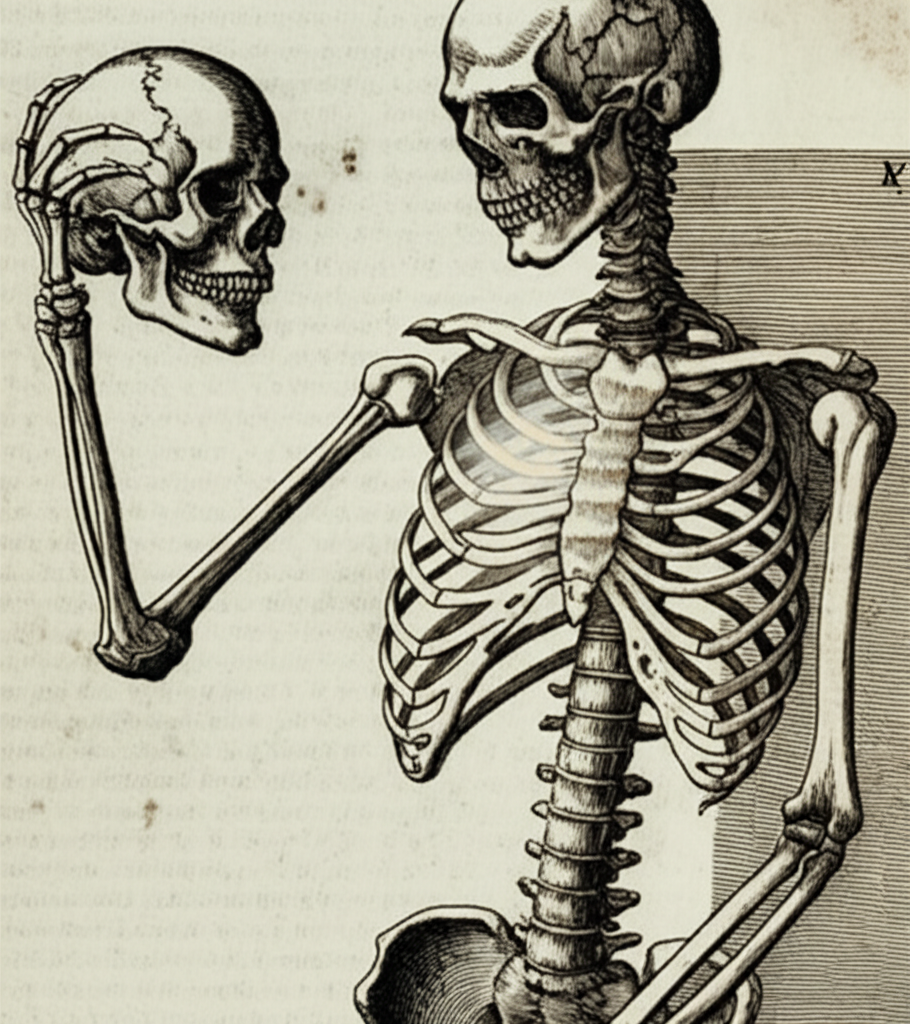
Philosophical Perspectives on the Mechanical Body
Throughout the Great Books of the Western World, various thinkers have grappled with the implications of the body's mechanics for understanding life, mind, and mortality.
- Plato (e.g., Phaedo): Emphasized the soul's imprisonment within the body, seeing the body as a transient, corruptible vessel. The soul's true nature is intellectual and eternal, distinct from the body's physical mechanics.
- Epicurus (as conveyed by Lucretius): Advocated for a materialist view where the soul is also atomic and dissipates upon death. Life is the arrangement of these atoms, and death is their dispersion, removing the fear of an afterlife.
- Galen (e.g., On the Natural Faculties): Though a physician, his detailed anatomical and physiological descriptions laid groundwork for understanding the mechanics of the body, influencing centuries of medical and philosophical thought on how the body functions.
- Thomas Aquinas (e.g., Summa Theologica): Synthesized Aristotelian thought with Christian theology, viewing the soul as the substantial form of the body. The body and soul are not separate entities but form a unified whole, where the soul actualizes the body's potential for life.
These diverse perspectives highlight the ongoing philosophical tension: Is life merely an emergent property of complex mechanics, or is there an irreducible, non-physical essence?
Conclusion: The Enduring Question
The study of the mechanics of the body offers profound insights into the nature of life itself. From the atomic dance governed by physics to the intricate systems that sustain our existence, the human organism is a testament to natural order and complexity. Yet, even as we unravel more of its mechanical secrets, the philosophical questions surrounding consciousness, free will, and the ultimate meaning of life and death remain. The journey through the Great Books of the Western World demonstrates that this inquiry is not new, but an eternal human endeavor to understand ourselves as both physical beings and conscious entities, forever oscillating between the tangible gears of our body and the intangible spark of life.
📹 Related Video: What is Philosophy?
Video by: The School of Life
💡 Want different videos? Search YouTube for: ""Philosophy of Mind: The Hard Problem of Consciousness Explained""
📹 Related Video: ARISTOTLE ON: The Nicomachean Ethics
Video by: The School of Life
💡 Want different videos? Search YouTube for: ""Ancient Greek Philosophy: Aristotle's Biology and Soul""