

The Mechanics of the Body and Life: A Philosophical Inquiry
The human body, a marvel of biological engineering, operates through intricate processes that tantalize both scientists and philosophers alike. At its core, life itself seems to be a complex dance of mechanics and physics, yet the sheer phenomenon of life often transcends a purely reductionist explanation. This article delves into the historical and philosophical journey of understanding the body as a machine, exploring how its physical operations relate to the profound questions surrounding consciousness, purpose, and the ultimate Life and Death. We will navigate the insights from ancient thinkers to modern science, pondering whether the sum of our biological mechanics truly encapsulates the essence of being.
The Body as a Machine – An Ancient Notion, a Modern Science
From the earliest observations of anatomy, humanity has sought to understand the internal workings of the body. The regularity of pulse, the rhythm of breath, the coordinated movement of limbs – all hinted at an underlying system, a kind of biological clockwork.
From Galen to Descartes: Early Mechanistic Views
The concept of the body as a machine is not a purely modern invention. Galen of Pergamon, whose extensive anatomical and physiological writings profoundly influenced Western medicine for over a millennium (a cornerstone of the Great Books of the Western World), meticulously described the body's systems, inferring their functions from their structures. While his understanding was limited by the technology of his era, his systematic approach laid groundwork for a mechanistic interpretation. He saw the body as an organized whole, each part serving a specific purpose, much like components in a complex device.
Centuries later, René Descartes (another titan from the Great Books collection) articulated this view with startling clarity. For Descartes, the material world, including the human body, was essentially a grand machine governed by the laws of physics. He famously posited a dualism where the non-physical mind (or soul) interacted with the physical body, but the body itself, from its digestion to its reflexes, operated like an automaton. This radical idea profoundly shaped subsequent scientific inquiry, encouraging the dissection and analysis of biological functions into their constituent mechanics.
The Triumph of Physics: Unpacking Biological Processes
Modern science, particularly through the lenses of physics and chemistry, has significantly advanced our understanding of these biological mechanics. We now comprehend the electrochemical impulses that drive nerve signals, the molecular machinery of cellular respiration, and the biomechanical principles governing movement. The body is indeed a testament to intricate physical and chemical processes.
Consider the following examples where fundamental physics underpins biological function:
| Biological Process | Underlying Mechanistic Principles (Physics/Chemistry) |
|---|---|
| Respiration | Gas exchange via diffusion (Fick's Law), pressure gradients in lungs (fluid dynamics), cellular energy production (thermodynamics, redox reactions). |
| Circulation | Fluid dynamics (Poiseuille's Law), pressure regulation (hydrostatics), muscle contraction (biomechanics). |
| Neural Transmission | Electrical potential differences (electrophysics), ion channel mechanics (diffusion, electrostatic forces). |
| Muscle Contraction | Lever systems (classical mechanics), sliding filament theory (molecular interactions, chemical energy conversion). |
| Sensory Perception | Transduction of physical stimuli (light, sound, pressure) into electrical signals (optics, acoustics, mechanics). |
These examples highlight how deeply the mechanics of the physical world are interwoven with the operations of the body.
Beyond the Clockwork – What Defines "Life"?
Despite the remarkable success in explaining biological processes through mechanics, a profound question persists: does a complete understanding of these mechanisms fully account for life itself? Is a living organism merely a highly complex machine, or is there something more?
The Elusive Spark: More Than Just Parts
A purely mechanistic view often struggles with emergent properties—qualities that arise from the complex interaction of simpler components but are not present in the components themselves. Consciousness, self-awareness, intentionality, and even the very drive to self-organize and reproduce, seem to defy reduction to mere gears and levers.
Aristotle, in his treatise On the Soul (another indispensable Great Book), did not separate the soul from the body as Descartes would centuries later. Instead, he saw the psyche (soul or life-principle) as the form of the body, its organizing principle. For Aristotle, life was not merely the sum of physical mechanics but the actuality of a natural body possessing organs. The capacity for nutrition, growth, sensation, and thought defined different levels of life, indicating that life was an inherent property of certain complex organizations of matter, not an external force.
Emergence and Complexity: Life's Unique Properties
Modern systems theory and complexity science offer a lens through which to view life not just as a machine, but as a self-organizing, adaptive system. Properties like autopoiesis (self-creation and maintenance) distinguish living systems from non-living machines. A car, no matter how complex, does not repair itself, reproduce, or evolve. A living organism, however, continuously rebuilds its components, maintains its internal environment, and responds dynamically to its surroundings.
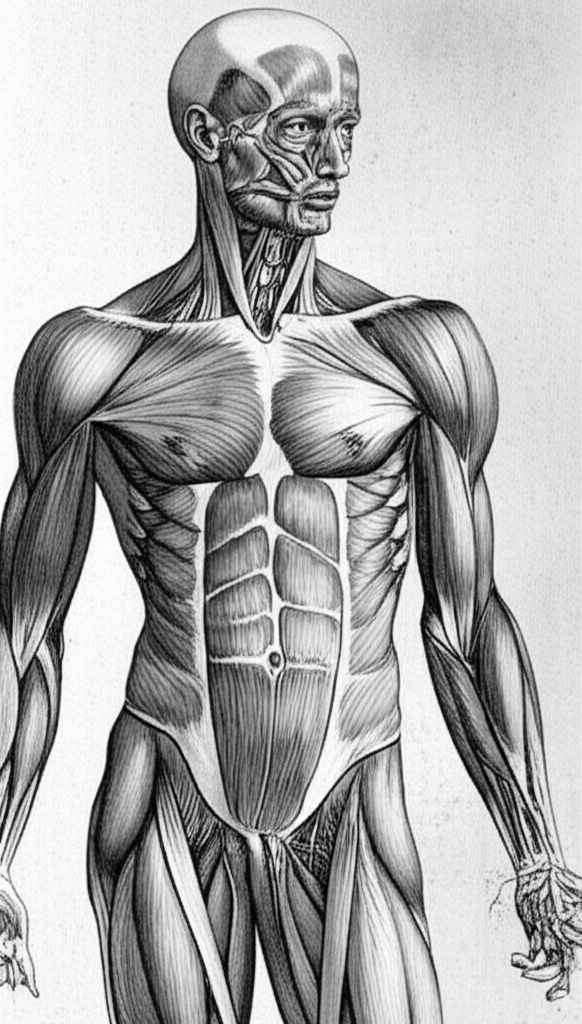
This interplay between the deterministic mechanics and the emergent, unpredictable aspects of life forms a central philosophical tension. While physics provides the rules, life seems to play a game of infinite complexity within those rules, producing phenomena that are more than the sum of their parts.
The Ultimate Mechanism – Life and Death
The grand narrative of the body's mechanics inevitably leads to its ultimate cessation: death. This final act raises profound questions about the nature of existence and the boundaries of our physical being.
The Inevitable Halt: The Mechanics of Dying
From a purely mechanistic standpoint, death is the irreversible cessation of the body's vital functions. It's the moment the biological machinery grinds to a halt. Cellular processes fail, organs cease to function, and the intricate balance of homeostasis is lost. This is not a sudden, singular event but a cascade of failures, often initiated by a critical breakdown in one of the body's essential mechanics—be it cardiac arrest, respiratory failure, or neurological collapse.
Entropy, a fundamental concept in physics, dictates that systems naturally tend towards disorder. The living body constantly battles this tendency, expending energy to maintain its highly ordered state. Death, in this sense, is the ultimate surrender to entropy, where the body's ability to maintain its intricate order is finally overcome.
Philosophical Confrontations with Mortality
Philosophers throughout history have grappled with the implications of Life and Death for the individual. For Epicurus (another figure from the Great Books), death was nothing to fear, as "when we are, death is not come, and when death is come, we are not." His mechanistic view of the soul as merely atoms dispersed upon death led him to conclude that sensation and consciousness cease, thus rendering death a non-event for the individual.
In contrast, Plato posited the immortality of the soul, seeing the body as a temporary vessel. For him, death was not the end of being but a separation, allowing the soul to return to a realm of pure forms. Later, thinkers like Martin Heidegger introduced the concept of "being-towards-death," arguing that our awareness of our own mortality shapes our existence and gives meaning to life.
Ultimately, while mechanics can describe the physical processes of dying, they cannot fully capture the human experience of Life and Death—the grief, the fear, the hope, the philosophical quest for meaning in the face of finitude.
Conclusion
The journey to understand the mechanics of the body has been a monumental intellectual undertaking, yielding incredible insights into the biological underpinnings of life. From the ancient observations of Galen to the dualism of Descartes and the molecular precision of modern physics, we have meticulously dissected, analyzed, and explained countless biological phenomena.
Yet, the philosophical inquiry into life itself remains an open question. While the body operates as an astonishingly complex machine, the emergent properties of consciousness, self-awareness, and the subjective experience of being alive suggest that life is more than just a sum of its physical parts. The mechanics provide the canvas and the paints, but the artistry of life—and the poignant reality of Life and Death—continues to challenge and inspire our deepest philosophical ponderings. The tension between the reductionist clarity of mechanics and the holistic mystery of life will likely remain a fertile ground for thought for generations to come.
YouTube Video Suggestions:
-
📹 Related Video: ARISTOTLE ON: The Nicomachean Ethics
Video by: The School of Life
💡 Want different videos? Search YouTube for: "Descartes Dualism Explained"
2. ## 📹 Related Video: ARISTOTLE ON: The Nicomachean Ethics
Video by: The School of Life
💡 Want different videos? Search YouTube for: "Aristotle on the Soul and Life"