

The Enduring Enigma: Measuring Time and Space
The human endeavor to comprehend reality is perhaps nowhere more profoundly tested than in our attempts to measure Time and Space. These fundamental constituents of existence, often taken for granted in our daily lives, pose a philosophical labyrinth that has captivated thinkers from antiquity to the present. This article delves into the philosophical underpinnings of measuring time and space, exploring how we assign quantity to the seemingly unquantifiable, and the indispensable role of Mathematics in this grand intellectual quest. We will journey beyond the mere mechanics of clocks and rulers to question what it is we are truly measuring, and what these measurements reveal—or conceal—about the nature of reality itself.
The Philosophical Foundations of Measurement
Before we can even speak of measurement, we must first grapple with the very nature of Time and Space. Are they objective realities existing independently of our minds, or are they constructs of our consciousness, frameworks through which we perceive the world? This question forms the bedrock of our inquiry.
Time: The Elusive Flow
For centuries, philosophers have wrestled with the ephemeral nature of Time. How can one measure something that, by definition, is constantly slipping away?
- Aristotle's Perspective: In the Physics, Aristotle posited that Time is the "number of motion with respect to before and after." He argued that we perceive time only through change; if nothing changed, time would be imperceptible. This view ties time directly to events and movement, making its quantity a measure of sequence and duration. We don't measure time itself, but the intervals between events.
- Augustine's Dilemma: Saint Augustine, in his Confessions, famously pondered the paradox of time: "What then is time? If no one asks me, I know what it is. If I wish to explain it to him who asks, I do not know." He struggled with how the past no longer exists, the future not yet, and the present is but an instant. For Augustine, time seemed to reside primarily in the mind, in our memory of the past, our attention to the present, and our expectation of the future. How then, can one measure such a subjective phenomenon?
The act of measuring Time thus becomes an exercise in quantifying change, establishing conventional units (seconds, minutes, hours) that allow us to synchronize our experiences and predict phenomena. The precision of atomic clocks today, while astonishing, still relies on the fundamental philosophical agreement to equate the number of oscillations of an atom with a specific quantity of time.
Space: The Container of Existence
Similarly, Space presents its own set of philosophical challenges. Is it an empty void, a stage upon which existence unfolds, or is it merely the relationship between objects?
- Plato's Receptacle: In the Timaeus, Plato introduces the concept of the "receptacle" (chora) – a formless, invisible medium that provides "room" for the sensible world to appear. It's not Space in the modern sense, but a primordial, material principle that allows for differentiation and extension. This suggests an underlying reality that accommodates quantity and form.
- Aristotle's Place (Topos): Aristotle, again in the Physics, defined place not as an empty void, but as the innermost motionless boundary of what contains a body. For him, there was no empty space; Space was always filled, defined by the objects within it. The measurement of space, therefore, would be the measurement of the dimensions and relationships of physical bodies.
- Euclid's Geometry: The Elements of Euclid, a cornerstone of the Great Books, provided the foundational Mathematics for understanding and measuring Space. His axioms and postulates allowed for the systematic quantification of distances, areas, and volumes, establishing a framework that dominated thought for millennia. Euclidean geometry essentially provided the manual for how to apply Mathematics to the physical world, turning abstract concepts into measurable quantities.
The debate between absolute space (an independent, unmoving container, as conceptualized by Newton) and relational space (space defined by the relations between objects, as argued by Leibniz) further highlights the philosophical struggle to define what we are actually measuring when we speak of length, width, and height.
The Indispensable Role of Mathematics
It is in Mathematics that the abstract concepts of Time and Space find their most concrete expression for measurement. Without the language of numbers and abstract reasoning, our attempts to quantify these fundamental aspects of reality would be futile.
- Quantifying the Unseen: Mathematics provides the tools to transform qualitative experiences into quantitative data. The flow of Time becomes a sequence of numbers, and the extension of Space becomes a set of coordinates.
- Establishing Relationships: Geometry, born from the need to measure land, is the ultimate mathematical language for Space. It allows us to calculate distances, angles, and volumes, establishing precise relationships between points and objects. Calculus, on the other hand, provides the framework for understanding change over Time, allowing us to quantify rates of motion, acceleration, and the accumulation of effects.
| Philosophical Concept | Mathematical Tool for Measurement | Key Thinkers (Great Books) |
|---|---|---|
| Time (Duration) | Number sequences, calculus | Aristotle, Augustine |
| Space (Extension) | Geometry (points, lines, planes) | Plato, Euclid, Aristotle |
| Quantity (General) | Arithmetic, algebra | Pythagoras, Plato, Aristotle |
Mathematics doesn't just measure; it shapes our very understanding of Time and Space. The development of non-Euclidean geometries, for instance, paved the way for Einstein's theories of relativity, fundamentally altering our perception of Space-Time as a unified, dynamic entity.
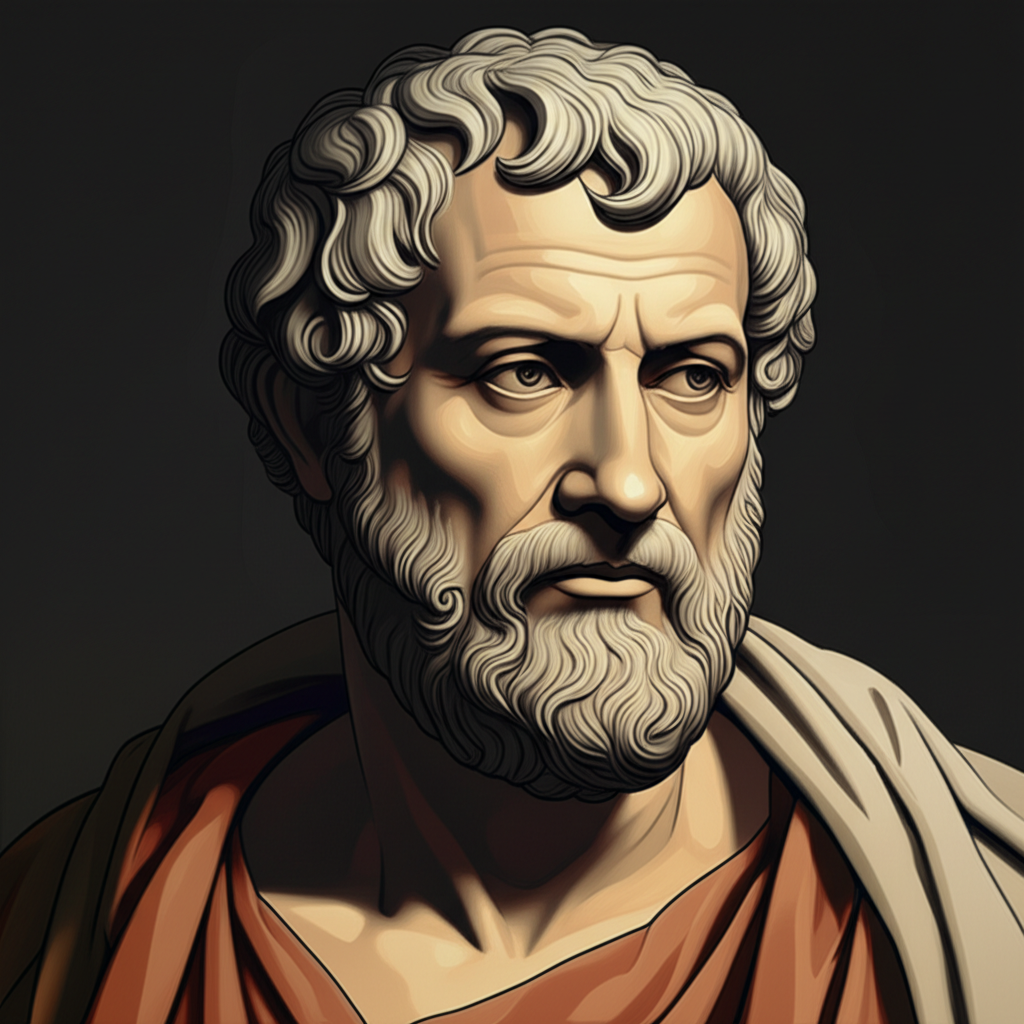 contemplating a sundial or an hourglass, with geometric diagrams (like Euclid's constructions) subtly etched into the background, symbolizing the interplay between abstract thought, the measurement of time, and the quantification of space.)
The Continuing Quest for Precision and Meaning
Our modern world thrives on precise measurements of Time and Space. From GPS systems relying on atomic clocks and relativistic calculations to the vast distances measured by astronomers, the quantity of these dimensions underpins our technological advancement. Yet, the philosophical questions remain.
- Are we measuring an objective reality, or merely the constructs of our minds?
- Does the act of measurement itself alter the nature of Time and Space?
- What are the limits of our ability to quantify these fundamental aspects of existence?
The journey to measure Time and Space is not merely a scientific endeavor; it is a profound philosophical quest that forces us to confront the very nature of reality, our perception, and the remarkable power of Mathematics to illuminate the cosmos.
YouTube Video Suggestions:
-
📹 Related Video: What is Philosophy?
Video by: The School of Life
💡 Want different videos? Search YouTube for: "Augustine on Time Philosophy"
2. ## 📹 Related Video: ARISTOTLE ON: The Nicomachean Ethics
Video by: The School of Life
💡 Want different videos? Search YouTube for: "Aristotle on Space and Place Explained"