

The Immeasurable Canvas: Navigating the Measurement of Time and Space
The human endeavor to comprehend the universe often begins with an attempt to quantify it. How do we measure the boundless? This article delves into the profound philosophical and practical challenges inherent in the measurement of Time and Space, exploring how these fundamental concepts, though seemingly intuitive, resist simple definition and demand a sophisticated engagement with Mathematics and the very nature of Quantity. We will journey through historical perspectives, from ancient Greek philosophers to modern physics, to understand why these universal dimensions remain an enduring source of intellectual inquiry and wonder.
Unpacking the Illusion of Measurement
At first glance, measuring Time and Space appears straightforward. We consult clocks, tape measures, and GPS devices daily, confident in their precision. Yet, beneath this veneer of practicality lies a philosophical abyss. What exactly are we measuring when we mark the passage of a second or the distance of a meter? Are Time and Space independent entities, containers in which events unfold, or are they merely relationships between objects and occurrences? This fundamental question, echoing through the halls of philosophy for millennia, challenges our very understanding of Quantity and the limits of Mathematics in describing reality.
The Elusive Flow of Time: From Cycles to Seconds
The concept of Time has perhaps been the most vexing for philosophers and scientists alike. Is it a continuous, linear progression, or a series of discrete moments? How do we assign a Quantity to something that, by its very nature, seems to slip through our grasp?
Historically, the measurement of Time was rooted in observation of natural cycles:
- Celestial Rhythms: The rotation of the Earth (day and night), the phases of the Moon, and the apparent movement of the sun across the sky provided the earliest, most reliable clocks. These cyclical phenomena offered a mathematical framework for dividing the year into predictable units.
- Human Experience: The rhythm of life, growth, and decay also informed early perceptions of Time's passage, though this was subjective and lacked precise Quantity.
With the advent of mechanical clocks and, later, atomic clocks, our ability to measure Time became astonishingly precise. Yet, precision in measurement does not equate to complete understanding. As Augustine pondered in his Confessions, "What then is time? If no one asks me, I know; if I wish to explain it to one who asks, I know not." This profound statement from the Great Books of the Western World highlights the enduring philosophical enigma: we can measure it, but can we truly grasp its essence?
Mapping the Infinite Canvas of Space: Euclidean Geometry to Curved Manifolds
Similar to Time, our perception and measurement of Space have evolved dramatically. For centuries, Euclidean geometry, prominently featured in the Great Books via Euclid's Elements, provided the unquestioned mathematical framework for understanding Space. It described a static, three-dimensional arena where objects resided and events transpired, a concept championed by Newton as absolute Space.
Key aspects of Space and its measurement include:
- Dimensions: Our immediate experience presents us with three spatial dimensions – length, width, and height. The measurement of these dimensions relies on a standard unit, allowing us to assign a Quantity to distance, area, and volume.
- Relativity: Einstein's theories of relativity, while not strictly within the original Great Books canon, profoundly reshaped our understanding of Space. He demonstrated that Space is not a fixed background but a dynamic entity, interwoven with Time into a four-dimensional "spacetime" fabric that can be warped by mass and energy. This monumental shift demonstrated how our mathematical models of Space must adapt to deeper physical realities.
- The Problem of Infinity: Is Space infinite or finite? Bounded or unbounded? These questions, explored by philosophers like Kant in his Critique of Pure Reason, highlight the limits of empirical measurement when confronting cosmic scale. How do we measure the Quantity of something that might have no end?
Mathematics: The Language of Quantification
The bridge between our qualitative experience of Time and Space and our quantitative understanding is Mathematics. From the simple counting of days to the complex equations of general relativity, Mathematics provides the tools to formalize our observations and make predictions.
- Abstraction: Mathematics allows us to abstract concepts like duration and extension into numerical values, enabling comparison and analysis.
- Models: We use mathematical models to represent the structure of Space (e.g., Euclidean, non-Euclidean geometries) and the flow of Time (e.g., linear, cyclical). These models, while powerful, are always approximations of reality, reflecting our current understanding.
- Limits of Quantification: While Mathematics excels at assigning Quantity, it struggles with the inherent qualitative aspects of Time and Space – their subjective experience, their ultimate nature. Does a mathematical equation fully capture the "now" or the feeling of "being here"? This tension is a fertile ground for philosophical inquiry.
Philosophical Echoes from the Great Books
The philosophical journey concerning Time and Space is richly documented in the Great Books of the Western World.
- Plato (Timaeus): Views Time as the "moving image of eternity," created alongside the cosmos itself, measured by the motions of the heavenly bodies. Space is the "receptacle" or "nurse" of all becoming.
- Aristotle (Physics, Metaphysics): Defines Time not as an independent entity but as the number of motion "in respect of 'before' and 'after'." Space (or 'place') is the inner boundary of the containing body. Both are inextricably linked to change and motion, rather than existing independently.
- Newton (Principia Mathematica): Postulated absolute Time and absolute Space – independent, unchanging frameworks against which all motion occurs. These were objective, quantifiable realities, a foundation for classical physics.
- Leibniz (Correspondence with Clarke): Challenged Newton, arguing that Time and Space are not absolute containers but rather systems of relations between objects and events. Without objects, there is no Space; without events, no Time. This relational view emphasizes the mathematical relationships that define these concepts.
- Kant (Critique of Pure Reason): Argued that Time and Space are not empirical concepts derived from experience, but rather a priori forms of intuition, inherent structures of the human mind that make experience possible. We cannot perceive anything except through these lenses. This places the measurement of Time and Space firmly within the realm of human cognition.
These diverse perspectives demonstrate that the act of measurement is not merely a scientific technique but a deeply philosophical act, reflecting our fundamental assumptions about reality.
The Human Dimension: Why Measurement Matters
Beyond the abstract philosophical debates, the measurement of Time and Space profoundly impacts human existence. It underpins our ability to:
- Organize Society: Calendars, schedules, and geographical mapping are essential for social coordination, commerce, and governance.
- Advance Science and Technology: Precise measurement is the bedrock of scientific discovery, engineering, and technological innovation, from navigation to particle physics.
- Understand Our Place: By quantifying the vastness of the cosmos and the fleeting nature of existence, we gain perspective on our own significance and the mysteries that still await unraveling.
The ongoing quest to refine our measurement of Time and Space is a testament to humanity's insatiable curiosity and our relentless pursuit of understanding the universe, one Quantity at a time.
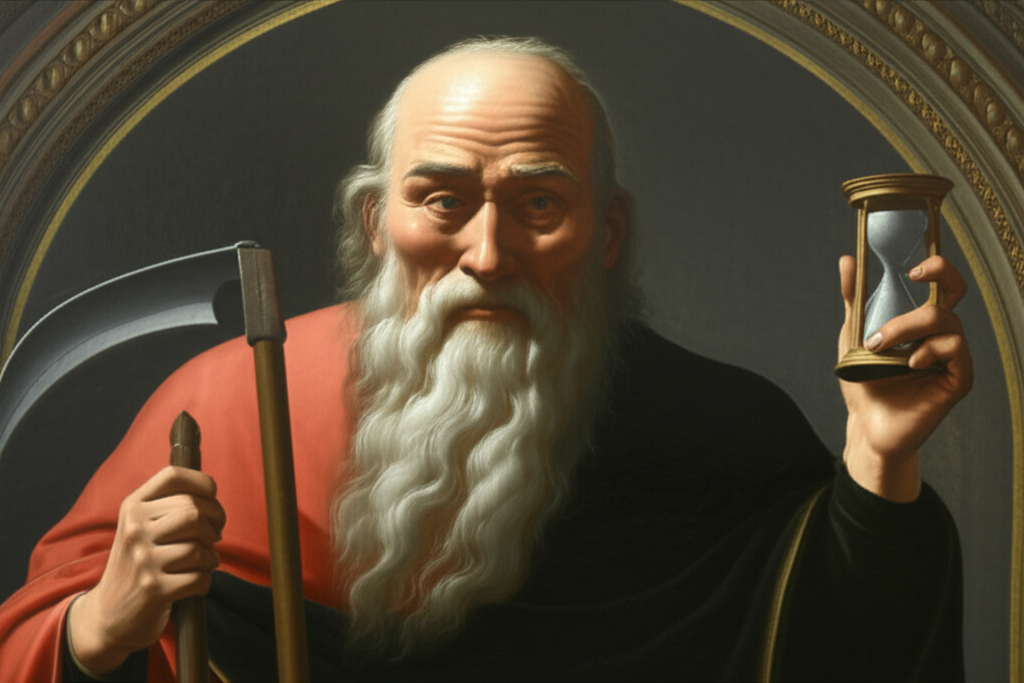 alongside a figure representing "Space" (perhaps a draped woman holding a celestial sphere or a compass). The background could feature architectural elements suggesting structure and order, juxtaposed with cosmic elements like stars or nebulae, symbolizing the vastness. The figures are engaged in a contemplative or even slightly melancholic posture, hinting at the profound and perhaps ungraspable nature of the concepts they embody, surrounded by faint mathematical symbols or geometric patterns.)
📹 Related Video: What is Philosophy?
Video by: The School of Life
💡 Want different videos? Search YouTube for: ""Great Books of the Western World Time and Space Philosophy""
📹 Related Video: PLATO ON: The Allegory of the Cave
Video by: The School of Life
💡 Want different videos? Search YouTube for: ""Plato Aristotle Newton Kant Time Space Measurement""