

The Elusive Metrology: Measuring the Fabric of Existence
Summary: The measurement of time and space, seemingly straightforward empirical tasks, reveal themselves upon philosophical scrutiny to be profound inquiries into the very nature of reality. From the ancient Greeks who grappled with the definition of quantity to the Enlightenment thinkers who formalized these concepts with mathematics, humanity has continuously refined its understanding, not just of how to measure, but what it is we are measuring. This article explores the historical and philosophical journey of quantifying the fundamental dimensions of our existence, highlighting the enduring questions that persist despite scientific advancements.
The Philosophical Foundations of Measurement
Before instruments could precisely tick and beam, philosophers pondered the fundamental nature of Time and Space. Was time an absolute river flowing uniformly, or merely a measure of change? Was space an empty container, or an inherent property of matter? These questions, central to the Great Books of the Western World, laid the groundwork for all subsequent scientific inquiry.
Time as a Measure of Change
For Aristotle, a significant figure in the philosophical tradition, Time was not an independent entity but rather "the number of motion in respect of 'before' and 'after'." This perspective suggests that without change, without motion, there would be no time. It's a relational concept, tied directly to events. When we measure time—be it with a sundial, a pendulum, or an atomic clock—we are essentially quantifying intervals between events, or the duration of processes.
- Ancient Greek Perspectives on Time:
- Plato (Timaeus): Time as the "moving image of eternity," created with the cosmos itself.
- Aristotle (Physics): Time as the measure of motion, dependent on change.
- Zeno's Paradoxes: Challenged the divisibility and reality of time and motion, prompting deeper philosophical reflection.
Space as an Extended Quantity
Similarly, Space presented its own conceptual challenges. Is space a void, a plenum, or a relationship between objects? Euclid's Elements, a cornerstone of mathematics, provided a rigorous framework for understanding space as a three-dimensional quantity that could be measured, divided, and analyzed geometrically. This geometrical understanding became foundational for centuries.
- Conceptualizing Space:
- Pre-Socratics: Debates on the void vs. plenum.
- Euclid: Formalized axioms and postulates for understanding spatial relationships and magnitudes.
- Aristotle: Defined "place" as the inner boundary of the containing body, rather than an empty void.
The very act of measurement, then, becomes an assertion about the nature of the thing being measured. To say Time is measurable implies it has duration; to say Space is measurable implies it has extent.
The Mathematical Language of Reality
The transition from purely philosophical speculation to empirical science was largely driven by the application of mathematics to these fundamental concepts. The Renaissance and Enlightenment periods saw a profound shift, where quantitative description became the gold standard for understanding the universe.
Euclidean Geometry and the Structure of Space
Euclid's geometric system, with its points, lines, and planes, provided a universal language for describing and measuring Space. Whether surveying land or mapping the heavens, Euclidean geometry offered a consistent framework. This vision of space was intuitive, absolute, and independent of its contents.
Table: Evolution of Spatial Measurement Concepts
| Era/Philosopher | Primary Concept of Space | Measurement Implication |
|---|---|---|
| Ancient Greeks | Place (Aristotle), Geometrical Ideal (Plato, Euclid) | Relative to objects, or ideal forms; formalizable by geometry. |
| Newtonian Era | Absolute Space (independent, fixed container) | Universal, consistent measurement independent of observer. |
| Modern Physics | Spacetime (dynamic, interwoven with time and matter) | Measurements depend on observer's frame of reference. |
Newtonian Physics: Absolute Time and Space
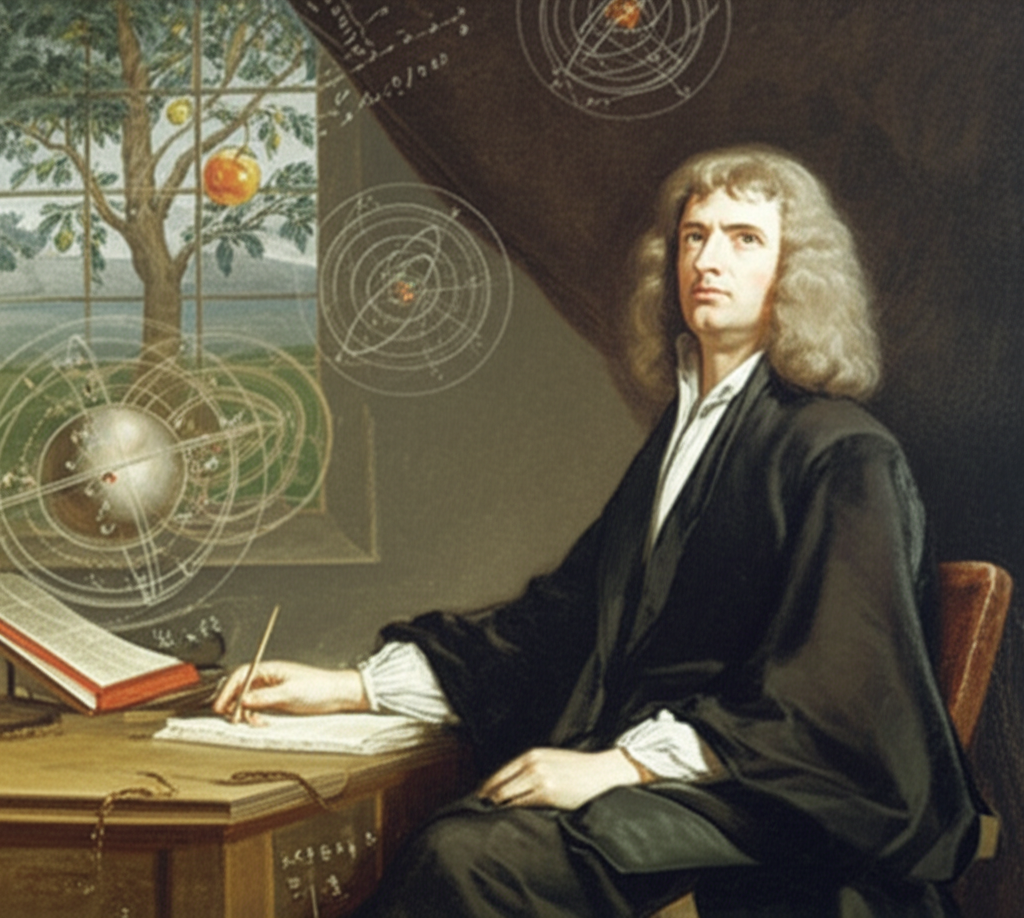
Sir Isaac Newton, deeply influenced by the philosophical currents of his time and a monumental figure in the Great Books, codified an understanding of Time and Space that dominated scientific thought for centuries. In his Principia Mathematica, he posited:
- Absolute, True, and Mathematical Time: Flows equably without relation to anything external. It is a universal constant.
- Absolute Space: Remains always similar and immovable, an infinite container for all matter and events.
This Newtonian framework allowed for precise mathematical descriptions of motion and gravity, making the universe appear as a giant, predictable clockwork mechanism. The measurement of quantity in terms of length, mass, and time became the bedrock of physics.
The Enduring Philosophical Questions
Even with the triumphs of Newtonian physics and the subsequent revolutions in modern physics (like Einstein's relativity, which challenged Newtonian absolutes), the philosophical questions surrounding the measurement of Time and Space persist.
- Is Time fundamental or emergent? Does it truly "flow," or is it merely an illusion arising from entropy or consciousness?
- What is the "true" nature of Space? Is it a background stage, or an active participant in cosmic drama?
- Can we truly measure "nothing"? When we measure a vacuum, are we measuring space itself, or merely its properties?
These questions push us beyond empirical observation into the realm of metaphysics, reminding us that even our most precise measurements are founded upon underlying philosophical assumptions about what Time, Space, and Quantity truly are. The pursuit of exactitude in mathematics and science ultimately circles back to the deeper, more fundamental inquiries that began with the earliest philosophers.
YouTube Video Suggestions:
-
📹 Related Video: ARISTOTLE ON: The Nicomachean Ethics
Video by: The School of Life
💡 Want different videos? Search YouTube for: ""Great Books of the Western World Aristotle Time Space""
2. ## 📹 Related Video: What is Philosophy?
Video by: The School of Life
💡 Want different videos? Search YouTube for: ""Philosophy of Time and Space Measurement""