

The Labyrinth of Meaning: Unraveling Sign and Symbol in Poetry
Poetry, at its core, is an intricate dance of words, rhythm, and imagery, but its true power often lies beyond the literal. It is within the subtle interplay of Sign and Symbol that poetry transcends mere communication to become an Art form capable of profound philosophical insight and emotional resonance. This article delves into the fundamental distinction between signs and symbols, exploring how poets wield these linguistic tools to imbue their verses with layers of meaning, inviting readers into a richer, more contemplative engagement with Language and the world it attempts to describe.
The Fundamental Distinction: Sign vs. Symbol
To truly appreciate the depth of poetic expression, we must first establish a clear understanding of what constitutes a sign and what defines a symbol. While often used interchangeably in casual discourse, their philosophical and linguistic implications are distinct, especially within the nuanced world of Poetry.
-
Signs: A sign, in its most basic form, points directly to a specific object, idea, or action. Its meaning is generally singular, direct, and unambiguous, often conventionalized for practical communication. Think of a stop sign, a traffic light, or a mathematical equation – their interpretations are largely fixed and universal within their respective contexts. They are utilitarian, serving to convey information with minimal ambiguity.
-
Symbols: A symbol, conversely, is something that stands for or represents something else, but its meaning is richer, more complex, and often multi-layered. Unlike a sign, a symbol does not merely point to; it evokes. Its significance is often culturally, historically, or personally imbued, carrying emotional and intellectual weight that extends beyond its literal form. A symbol invites interpretation, contemplation, and can resonate on multiple levels simultaneously.
Consider the following table for a clearer differentiation:
| Feature | Sign | Symbol |
|---|---|---|
| Relationship | Direct, one-to-one | Indirect, suggestive, associative |
| Meaning | Fixed, specific, unambiguous | Fluid, multi-layered, open to interpretation |
| Function | To inform, direct, designate | To evoke, represent, deepen understanding |
| Context | Often universal, literal | Culturally, historically, personally resonant |
| Impact | Cognitive, practical | Emotional, intellectual, spiritual |
| Example | Traffic light (red = stop) | A dove (peace, purity, Holy Spirit) |
Poetry's Canvas: Elevating Language through Symbolism
In Poetry, the poet is an architect of meaning, and symbols are their most potent building blocks. While signs provide the necessary framework for clarity, it is the strategic deployment of symbols that elevates verse from mere statement to profound Art. A poet doesn't just describe a sunset; they might describe "the dying embers of the day," transforming a literal event into a symbol of ending, reflection, or even mortality.
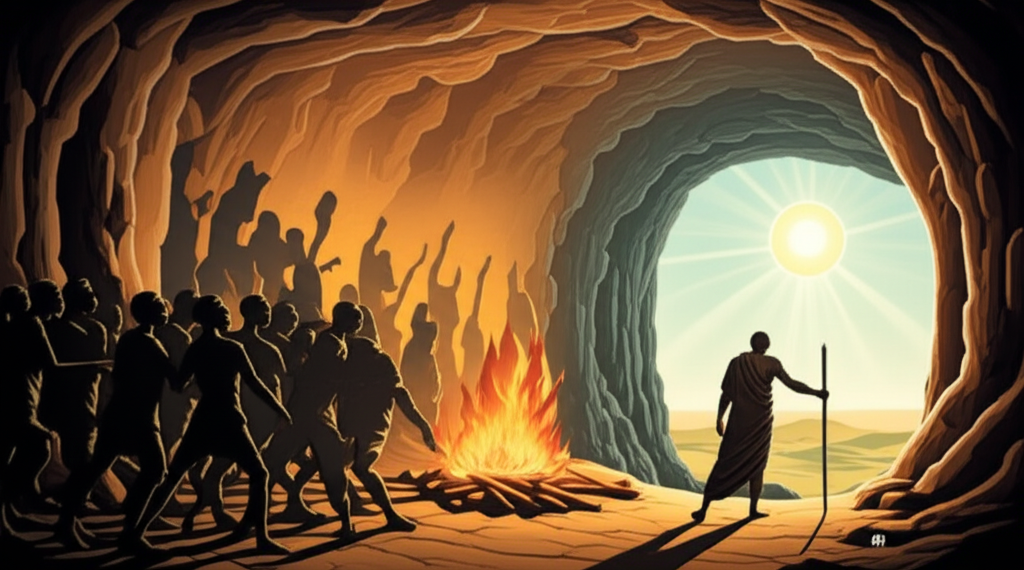
The Great Books of the Western World offer countless examples of this symbolic power. From Homer's wine-dark sea, symbolizing the vast, unpredictable nature of existence, to Dante's intricate allegories in The Divine Comedy, where every figure and landscape carries spiritual weight, symbols are the very sinews of poetic meaning. Plato, in his Republic, uses the Allegory of the Cave not as a mere description but as a powerful symbol for the human condition, enlightenment, and the nature of reality itself. Aristotle, in his Poetics, discusses how poetry, through its mimetic quality, can reveal universal truths, often through symbolic representation that goes beyond mere imitation.
The Art of Evocation: How Symbols Work in Poetry
The true genius of symbolic Poetry lies in its capacity to evoke rather than merely state. It invites the reader to participate in the creation of meaning, drawing upon their own experiences, cultural knowledge, and imaginative faculties. This co-creative process is what makes reading Poetry such a deeply personal and enriching experience.
- Compression of Meaning: A single symbol can encapsulate a vast array of ideas, emotions, and associations. A rose is not just a flower; it can symbolize love, beauty, transience, or even national identity, depending on its context. This allows poets to convey complex themes with economy and elegance.
- Emotional Resonance: Symbols tap into our collective unconscious and personal histories. The image of a journey, a river, or a broken mirror can stir deep-seated emotions and archetypal understandings that transcend literal interpretation.
- Ambiguity and Richness: Unlike the precise nature of a sign, the inherent ambiguity of a symbol is its strength. It allows for multiple valid interpretations, fostering deeper contemplation and ensuring the
Poetryremains fresh and relevant across different readings and generations. This open-endedness is a hallmark of greatArt. - Universality and Specificity: A well-chosen symbol can bridge the gap between the particular and the universal. A specific tree in a poem might symbolize a character's personal struggle, yet simultaneously evoke the universal themes of growth, resilience, or solitude.
The Philosopher's Gaze: Poetry as a Symbolic Language of Truth
For the philosopher, Poetry is more than just aesthetically pleasing Language; it is a unique mode of inquiry into truth. Unlike scientific discourse, which aims for objective, verifiable facts, poetry, through its symbolic structure, explores truths of human experience, emotion, and existence that are often ineffable through direct statement. It speaks to the soul, not just the intellect.
The symbolic nature of Poetry allows it to grapple with paradoxes and complexities that resist straightforward articulation. It can explore the tensions between life and death, love and loss, hope and despair, not by defining them, but by representing them through evocative imagery and symbolic narratives. This makes Poetry an indispensable tool in the broader philosophical endeavor to understand what it means to be human.
Conclusion: The Enduring Power of Poetic Symbolism
The distinction between Sign and Symbol is not merely an academic exercise but a crucial lens through which to appreciate the profound depths of Poetry as an Art form. While signs provide clarity and direction, it is the symbol that grants poetry its expansive power, allowing it to transcend the literal and delve into the multi-layered tapestry of human experience. By understanding how poets masterfully weave signs for structure and symbols for resonance, we gain access to a richer understanding of Language itself – not just as a tool for communication, but as a vehicle for profound philosophical insight and enduring aesthetic beauty.
YouTube Video Suggestions:
-
📹 Related Video: ARISTOTLE ON: The Nicomachean Ethics
Video by: The School of Life
💡 Want different videos? Search YouTube for: ""Jungian archetypes and symbols in literature explained""
2. ## 📹 Related Video: ARISTOTLE ON: The Nicomachean Ethics
Video by: The School of Life
💡 Want different videos? Search YouTube for: ""Semiotics explained: Saussure, Peirce, and the study of signs""