

The Labyrinth of the Mind: Decoding Signs and Symbols in Dreams
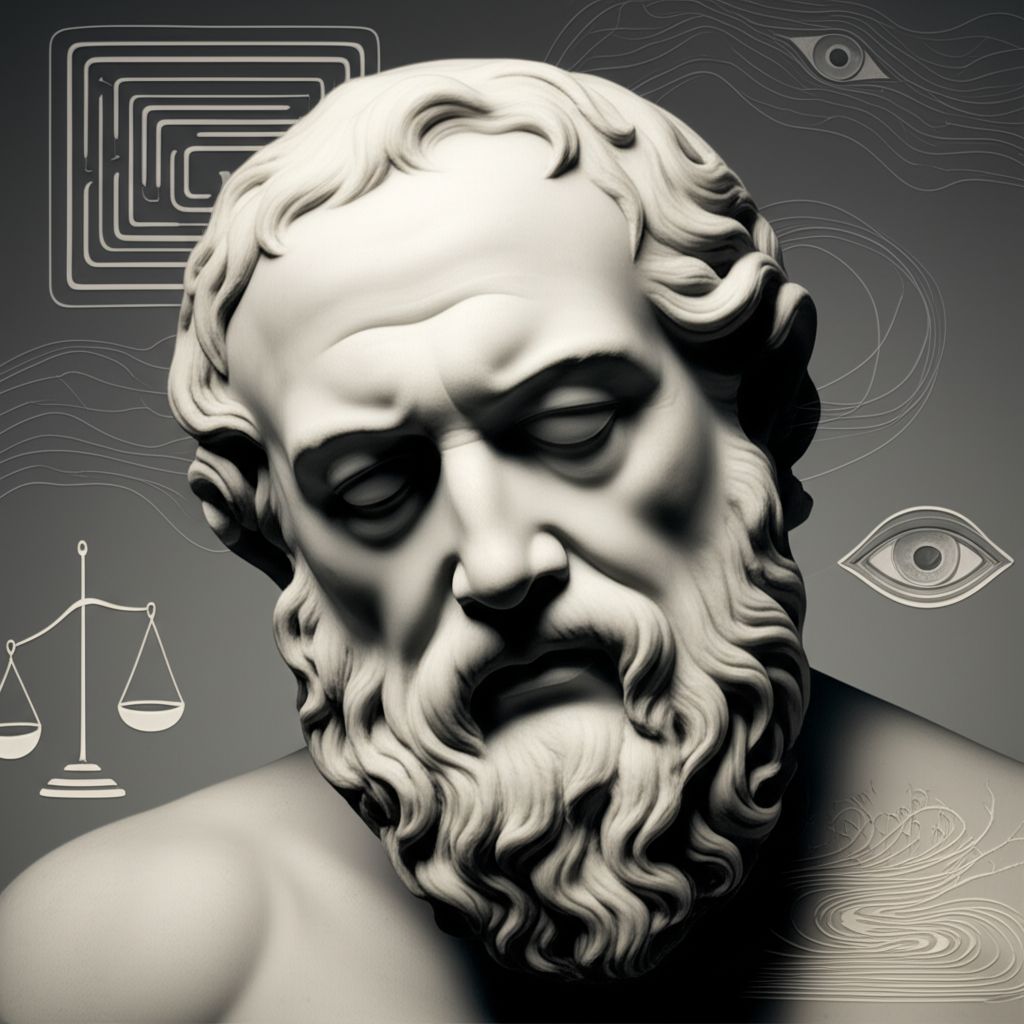
Dreams, those enigmatic nightly dramas, are far more than mere neural static. They represent a profound domain where the "Mind" engages in a unique form of communication, weaving together our daily "Experience" with the vast archives of "Memory and Imagination." This article delves into the philosophical significance of "Sign and Symbol" within dreams, arguing that these nocturnal narratives offer a rich, albeit often obscured, pathway to self-knowledge and a deeper understanding of human consciousness. By examining how our inner world translates experiences into symbolic language, we can begin to decipher the profound messages our subconscious endeavors to convey.
The Dreamscape: A Canvas of Meaning
For centuries, philosophers have grappled with the nature of dreams. Far from being random, these intricate mental constructs have been recognized as potential windows into the soul. Ancient thinkers, whose insights are preserved in the Great Books of the Western World, often considered dreams as echoes of our waking lives or even premonitions. Plato, in his Republic, touched upon the unruly desires and suppressed impulses that might surface in sleep, suggesting a realm where the rational mind's guard is lowered. Aristotle, in his treatises On Dreams and On Prophecy in Sleep, posited that dreams are often the residual impressions of sensory "Experience," albeit sometimes distorted or amplified. These early philosophical inquiries laid the groundwork for understanding dreams not as chaotic aberrations, but as meaningful expressions emanating from the depths of our being.
Distinguishing Sign and Symbol in the Nocturnal Realm
To truly grasp the meaning in dreams, it is crucial to differentiate between a sign and a symbol. In philosophical terms:
- A Sign directly points to or indicates something. It has a relatively unambiguous, often conventional, interpretation. For instance, smoke is a sign of fire. In a dream, a direct feeling of thirst manifesting as a dream of drinking water could be considered a sign – a straightforward representation of a physical need.
- A Symbol, conversely, represents something else by association, resemblance, or convention, often carrying deeper, more abstract, and multifaceted meanings. A symbol does not merely point; it evokes. A dove is a symbol of peace; a cross, a symbol of faith.
In dreams, this distinction is vital. A dream sign might be a direct echo of a recent "Experience" – perhaps the stress of an upcoming deadline manifesting as a dream about running late. A dream symbol, however, is far more complex. A recurring house might not just be a house, but a powerful symbol of the self, with different rooms representing various aspects of one's personality or life stages. Understanding this distinction is the first step in unlocking the deeper philosophical insights dreams can offer.
Memory, Imagination, and the Architect of Dreams
The raw material of our dreams is fundamentally shaped by our "Memory and Imagination," drawing extensively from our waking "Experience." As Aristotle explored in De Anima and On Memory and Recollection, the faculties of the soul are responsible for retaining impressions and forming mental images. During sleep, the "Mind" does not cease its activity; rather, it shifts its mode of operation.
- Memory's Contribution: Our conscious and unconscious memories, encompassing everything from mundane daily events to deeply ingrained childhood experiences, provide the vast reservoir of images, emotions, and narratives that populate our dreams. These memories are not simply replayed but are often fragmented, recontextualized, and combined in novel ways.
- Imagination's Transformation: It is "Imagination" that acts as the dream architect, taking these mnemonic fragments and weaving them into coherent, albeit often bizarre, narratives. This creative process allows the "Mind" to explore possibilities, process emotions, and grapple with unresolved issues in a unique, non-linear fashion. The symbolic language of dreams is largely a product of this imaginative synthesis, where concrete images stand for abstract ideas, and personal "Experience" is transmuted into universal archetypes.
The Mind's Unconscious Language
The "Mind" is the central stage upon which these nightly dramas unfold. Dreams are, in essence, the "Mind's" attempt to communicate with itself, particularly its unconscious aspects. While waking thought is often linear and logical, dream thought is associative, metaphorical, and highly personal. It is a language built on "Sign and Symbol," reflecting the profound ways our "Mind" processes information and expresses itself when freed from the constraints of conscious reasoning. This unconscious language allows the "Mind" to:
- Process Experience: Digest daily events, emotional encounters, and unresolved conflicts.
- Explore Emotions: Confront fears, desires, anxieties, and aspirations in a safe, often allegorical, space.
- Integrate Knowledge: Connect disparate pieces of information and "Experience" into new insights.
Philosophically, this highlights the immense complexity of the human "Mind," suggesting that a significant portion of our mental life operates beyond immediate awareness, constantly striving for equilibrium and understanding.
Interpreting the Echoes: Philosophical Approaches to Dream Symbolism
Interpreting dream "Sign and Symbol" is not merely a psychological exercise; it is a philosophical endeavor to understand the self and the nature of consciousness. By attempting to decode these nocturnal messages, we engage in a form of introspection that can lead to greater self-awareness, a core tenet of many philosophical traditions, from Socratic wisdom to existential self-analysis.
Consider some common symbolic motifs and their potential philosophical resonances:
- Falling: Often symbolizes a loss of control, insecurity, or a fear of failure. Philosophically, it can represent existential anxiety, the precariousness of human existence, or the struggle against the forces of fate.
- Flying: Represents freedom, transcendence, or overcoming obstacles. It can reflect a philosophical longing for liberation, the pursuit of higher ideals, or the aspiration to rise above mundane "Experience."
- Houses: Frequently symbolize the self, one's inner world, or the various aspects of personality. Different rooms might represent different facets of one's "Mind" or life, inviting reflection on one's psychological architecture and the journey of self-discovery.
- Water: Can symbolize emotions, the unconscious, change, or purification. Its fluidity connects to philosophical concepts of flux (Heraclitus), the depths of the psyche, or the cleansing power of transformation.
- Journeys/Paths: Often represent life's trajectory, decision-making, or personal growth. These symbols evoke the philosophical concept of life as a journey, the choices that define our existence, and the ongoing quest for meaning.
Beyond the Veil: Dreams as Philosophical Insights
The meaning of "Sign and Symbol" in dreams extends beyond mere personal interpretation; it touches upon fundamental philosophical questions about reality, consciousness, and the human condition. Dreams remind us that our "Mind" is not a passive recipient of external stimuli but an active constructor of meaning, constantly engaging in a dialogue with itself and its "Experience."
By paying attention to the "Sign and Symbol" in our dreams, we embark on a philosophical journey into the depths of our own "Mind" and "Memory and Imagination." This exploration can reveal hidden truths, illuminate unresolved conflicts, and ultimately lead to a more profound understanding of who we are and our place in the world. The nightly drama of dreams is, in essence, a continuous philosophical inquiry, offering insights into the very nature of our being.
📹 Related Video: What is Philosophy?
Video by: The School of Life
💡 Want different videos? Search YouTube for: ""Ancient Greek Philosophy on Dreams""
📹 Related Video: What is Philosophy?
Video by: The School of Life
💡 Want different videos? Search YouTube for: ""Symbolism and the Unconscious Mind Philosophy""