

The Matter of the Body: A Philosophical Inquiry
The human body, that familiar vessel of our existence, is far more than a mere collection of tissues and organs. It is a profound philosophical battleground, a nexus where the tangible reality of Matter collides with the intangible questions of self, consciousness, and being. This article delves into the rich history of philosophical thought surrounding the Body, exploring how thinkers across millennia have grappled with its material composition, its relationship to the mind, and its ultimate significance for Man. From ancient metaphysics to modern Physics, we trace the evolution of our understanding of this most intimate of subjects.
More Than Mere Flesh: Unpacking the Body's Essence
When we speak of the Body, we often default to a biological understanding – a complex organism governed by physiological laws. Yet, for millennia, philosophers have looked beyond the purely empirical, seeking to understand the very Matter of which we are composed and what that implies for our existence. Is the body merely a temporary dwelling for the soul, a biological machine, or is it an integral, inseparable part of who we are? This question lies at the heart of our inquiry, touching upon fundamental aspects of reality, identity, and the nature of Man.
Ancient Echoes: From Atom to Form
The earliest philosophical inquiries into the Body were often intertwined with cosmology and metaphysics.
- Pre-Socratics: Thinkers like Democritus proposed that all reality, including the Body, was composed of indivisible particles – atoms – moving in a void. Here, the Body was pure Matter, subject to mechanical laws, a precursor to modern Physics.
- Plato's Dualism: For Plato, the Body was a temporary, imperfect prison for the immortal soul. It belonged to the world of phenomena, constantly changing and ultimately deceptive, while true reality resided in the unchanging Forms. The Matter of the body was seen as a hindrance to intellectual and spiritual ascent.
- Aristotle's Hylomorphism: Aristotle offered a more integrated view. He saw the individual human being as a composite of Matter (the physical body) and Form (the soul or essence). These two were inseparable, with the soul being the "form" of the body, giving it its specific characteristics and functions. The Body was not merely a vessel but an essential component of human existence.
For these ancient thinkers, understanding the Matter of the Body was crucial to understanding the nature of reality and the place of Man within it.
The Cartesian Divide: Mind and Material
The philosophical landscape shifted dramatically with René Descartes in the 17th century. His radical dualism profoundly influenced subsequent thought on the Body.
Descartes posited two fundamentally distinct substances:
- Thinking Substance (Res Cogitans): The mind or soul, characterized by thought and consciousness, non-extended and immaterial.
- Extended Substance (Res Extensa): The physical Body, characterized by extension, shape, and motion, purely mechanical and governed by the laws of Physics.
This sharp distinction rendered the Body as a complex machine, a mere automaton whose Matter could be understood entirely through mechanical principles, separate from the rational, conscious mind. The challenge then became explaining how these two disparate substances could interact, a problem that continues to vex philosophers.
The Body in the Age of Physics: From Mechanism to Quantum
The rise of modern science, particularly Physics, further solidified the view of the Body as a material entity. Anatomy, physiology, and later biochemistry, meticulously dissected and analyzed the body's components, revealing its intricate mechanisms.
- Newtonian Mechanics: The body, like any other physical object, was seen to operate according to predictable, deterministic laws. Its Matter was subject to forces, motion, and energy transfers.
- Molecular Biology: The discovery of DNA and the elucidation of molecular processes further reduced the Body to its constituent chemical reactions, seemingly leaving little room for a non-material "soul."
- Quantum Physics (Modern Implications): While not directly offering a unified theory of consciousness and Matter, quantum Physics has introduced complexities regarding the nature of reality at its most fundamental level, prompting new questions about reductionism and the emergence of consciousness from seemingly inert Matter.
This scientific lens, while incredibly powerful, often leads to a reductionist view of Man, where the Body is seen primarily as a biological machine, and consciousness is an emergent property of complex neural networks.
The Human Condition: Embodiment and Existence
Despite the scientific advancements, philosophers continue to grapple with the unique experience of embodiment. For Man, the Body is not merely an object; it is the very medium through which we perceive, interact, and experience the world.
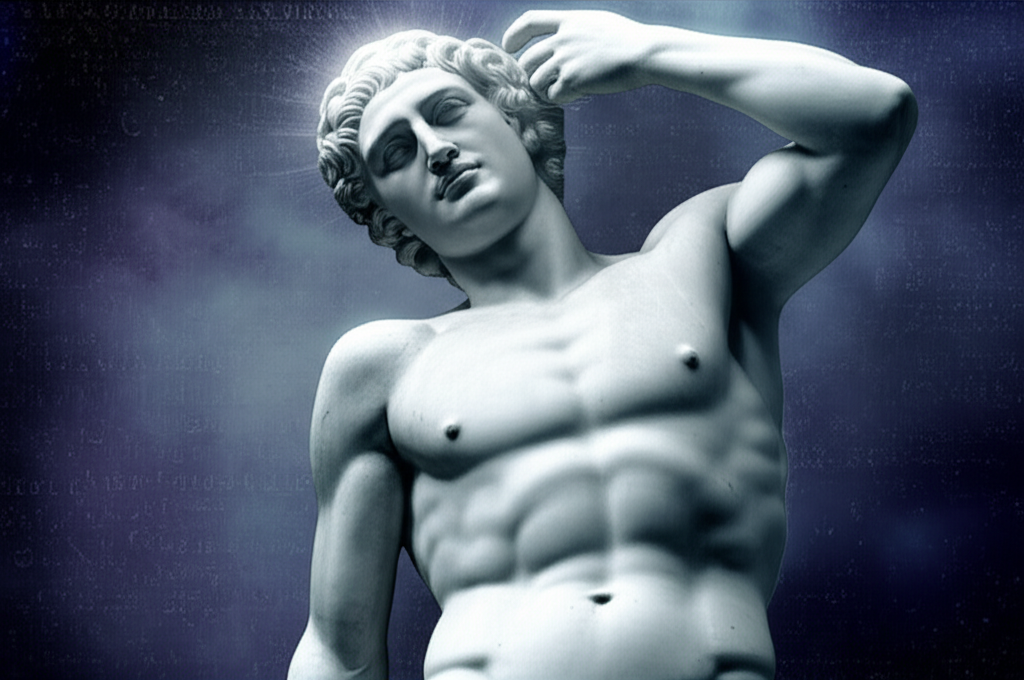
Key Philosophical Perspectives on the Body
Different schools of thought offer varying insights into the relationship between Man and his Body:
| Philosophical Perspective | Core Idea Regarding the Body | Key Thinkers (Great Books Context) |
|---|---|---|
| Dualism | The body and mind/soul are distinct substances, often with the body seen as inferior or a vessel. | Plato, René Descartes |
| Materialism | The body (and all reality) is fundamentally Matter; mental phenomena are reducible to physical processes. | Democritus, Thomas Hobbes, modern eliminative materialists |
| Hylomorphism | The body is the Matter, and the soul is the Form that gives it life and essence; they are inseparable in a living being. | Aristotle, Thomas Aquinas |
| Phenomenology | Emphasizes the "lived body" (Leib), the body as the primary site of experience and engagement with the world, not just an object. | Maurice Merleau-Ponty, Martin Heidegger (in his analysis of "Dasein" and being-in-the-world) |
| Existentialism | The body is central to our existence and freedom; we are "thrown" into the world as embodied beings, responsible for our choices. | Jean-Paul Sartre (discussing "being-for-itself" and "being-in-itself"), Albert Camus (the absurd nature of embodied existence) |
The Enduring Mystery of Our Material Self
The Matter of the Body remains one of philosophy's most profound and enduring mysteries. While Physics can describe its atomic composition and biological sciences its intricate functions, they cannot fully capture the subjective experience of being embodied, the unique way in which Man inhabits his own flesh.
From the ancient Greek quest for fundamental Matter to Descartes's radical separation, and from the scientific reduction of the Body to its physical components to the phenomenological insistence on the lived experience, the conversation continues. The Body is not just a biological fact; it is a philosophical proposition, constantly inviting us to reflect on what it means to be, to perceive, and ultimately, to be Man.
📹 Related Video: What is Philosophy?
Video by: The School of Life
💡 Want different videos? Search YouTube for: ""philosophy of the body" "mind body problem explained""