

The Matter of the Body: A Philosophical Inquiry into Our Physical Substance
Summary: The human body, an intricate tapestry of biological processes and physical structures, serves as the undeniable vessel for our existence. Yet, its fundamental nature, its very matter, has perplexed philosophers and scientists alike for millennia. This article delves into the philosophical journey of understanding the body as matter, tracing its evolution from ancient Greek metaphysics to modern physics, and exploring how this understanding shapes our conception of Man. We shall examine how the physical substance of our being informs, and is informed by, our broader philosophical inquiries into consciousness, identity, and existence.
Unpacking the Physical Form: An Introduction to Corporeal Philosophy
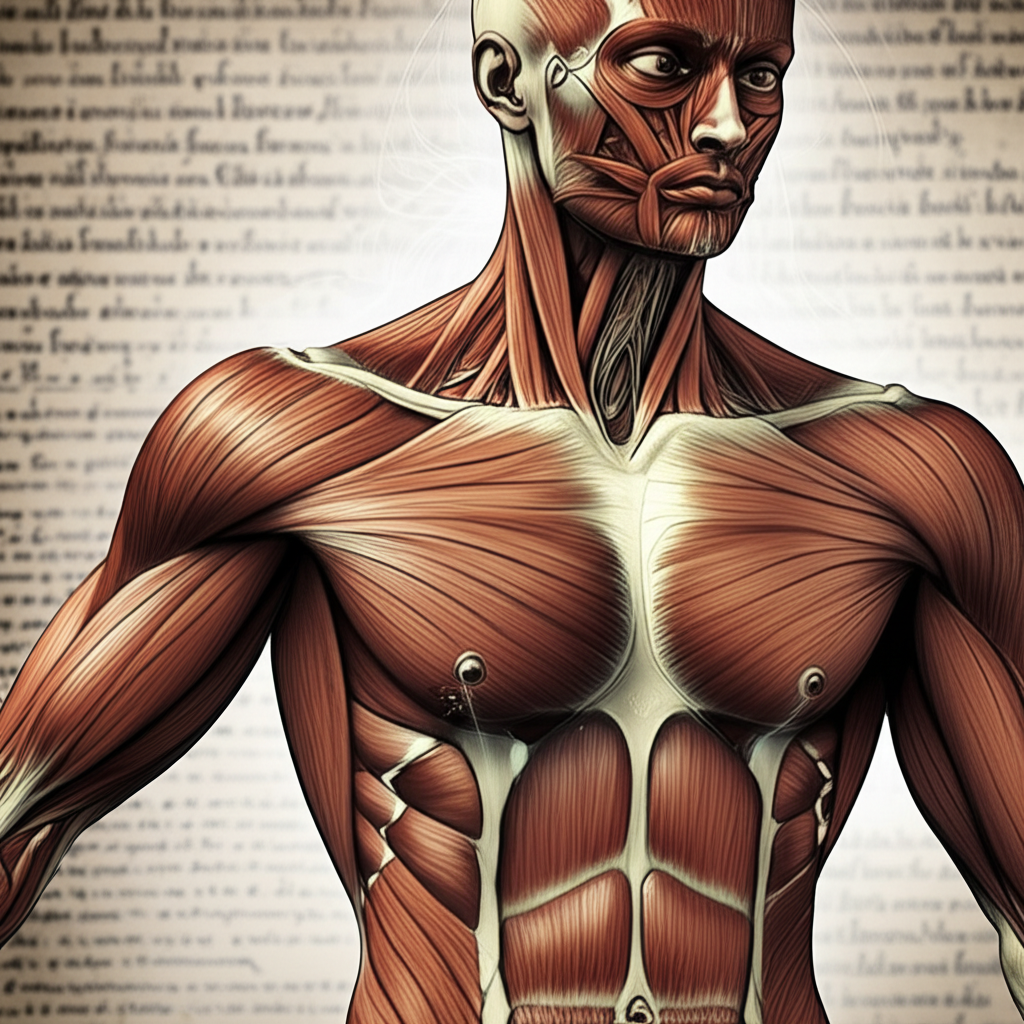
To speak of the "matter of the body" is to embark upon a journey into the very bedrock of our being. We are, undeniably, physical entities. We occupy space, we are subject to gravity, we grow, decay, and interact with the world through our senses – all functions of our corporeal form. But what is this matter? Is it merely inert substance, a collection of atoms and molecules, or does its organization and complexity hold deeper philosophical significance?
From the earliest stirrings of philosophical thought, Man has grappled with the distinction, or lack thereof, between the animating spirit and the physical shell. The body is not just a biological marvel; it is a profound philosophical problem, challenging our understanding of self, freedom, and destiny. Our exploration will touch upon the historical evolution of this inquiry, grounding it in the rich tradition of the Great Books of the Western World.
Historical Perspectives: From Elemental Substance to Cartesian Dualism
The journey to comprehend the matter of the body is a winding one, marked by significant intellectual shifts.
-
Ancient Greek Foundations:
- The Pre-Socratics: Early thinkers like Thales, Anaximenes, and Heraclitus sought a singular primal matter – water, air, fire – from which all things, including the body, derived. This was an attempt to unify the diverse phenomena of the world under a single physical principle.
- Plato's Forms and the Imperfect Body: For Plato, the body was inherently imperfect, a prison for the immortal soul. Its matter was transient and deceptive, a mere shadow of the perfect, eternal Forms. The body's materiality was seen as a hindrance to true knowledge, which resided in the realm of the intellect.
- Aristotle's Hylomorphism: Aristotle, in his Physics and De Anima, offered a more integrated view. He posited that every substance, including the body, is a composite of matter and form. The matter (the raw potential) and the form (the actualizing principle, the soul in the case of living beings) are inseparable. The body is the matter organized by the soul, which gives it its specific nature and functions. This perspective provided a robust framework for understanding the body not as an accidental aggregation, but as a purposeful organization of matter.
-
The Rise of Modern Philosophy and Dualism:
- Descartes' Radical Separation: René Descartes, a pivotal figure in modern thought, famously proposed a radical dualism between mind (res cogitans – thinking substance) and body (res extensa – extended substance). For Descartes, the body was essentially a machine, governed by the laws of physics, entirely distinct from the non-material, thinking mind. Its matter was purely mechanical, devoid of inherent thought or feeling. This clear-cut distinction profoundly influenced subsequent Western philosophy, setting the stage for ongoing debates about the mind-body problem.
The Physics of the Body: A Modern Materialist Lens
With the advent of modern science, particularly the revolutions in biology, chemistry, and physics, our understanding of the body's matter has become incredibly detailed.
- Atomic and Subatomic Constituents: The body is undeniably composed of atoms – primarily carbon, hydrogen, oxygen, nitrogen, calcium, and phosphorus – arranged into molecules, cells, tissues, and organs. Modern physics reveals that these atoms themselves are mostly empty space, governed by the fundamental forces and particles of the universe. The "stuff" of the body is the same "stuff" that makes up stars and rocks, albeit organized in an extraordinarily complex and dynamic fashion.
- Biological Processes as Physical Phenomena: All physiological processes – metabolism, nerve impulses, muscle contractions – can be described in terms of chemical reactions and physical forces. From a purely scientific standpoint, the body functions as a highly sophisticated physical system, obeying the laws of thermodynamics, electromagnetism, and quantum mechanics. This perspective often leads to a materialist or physicalist view, where all aspects of Man, including consciousness, are ultimately reducible to, or emergent from, the body's matter and its physical interactions.
Consider the following shifts in understanding the body's materiality:
| Era | Primary View of Body's Matter | Key Philosophical Implication for Man |
|---|---|---|
| Ancient (Plato) | Imperfect, transient, a prison for the soul. | Man's true essence is spiritual; the body is a hindrance to knowledge. |
| Ancient (Aristotle) | Integral part of a substance, organized by form (soul). | Man is a unified being of matter and form; the body is essential to existence. |
| Modern (Descartes) | Extended substance, a machine, distinct from the thinking mind. | Man is fundamentally a mind; the body is a separate, mechanical entity. |
| Contemporary (Science) | Complex arrangement of atoms/molecules, governed by physical laws. | Man's existence, including consciousness, is an emergent property of matter. |
The Human Dimension: Man as Embodied Existence
Even with a comprehensive scientific understanding of the body's matter, the philosophical questions persist. How does this intricate arrangement of particles give rise to subjective experience, self-awareness, and moral agency?
- Embodiment and Experience: Our body is not merely a container; it is the very medium through which we experience the world. Our perceptions, emotions, and actions are deeply intertwined with our physical form. The way we move, feel, and interact with others is fundamentally shaped by our embodiment. This challenges purely reductionist views, suggesting that while the body is matter, its organization and function create something qualitatively different.
- The Limits of Reductionism: While physics can explain the mechanics of a neuron firing, it struggles to fully account for the subjective experience of seeing the color red or feeling love. This is where the philosophy of mind intersects with the philosophy of the body. Is consciousness an emergent property of highly organized matter, or does it point to something beyond the purely physical?
- Man's Mortality and Materiality: The undeniable materiality of the body confronts Man with his own mortality. It ages, sickens, and ultimately perishes. This physical reality forces us to confront questions of meaning, legacy, and the nature of existence in the face of inevitable decay. The philosophical implications of our body's matter are thus profound, touching upon our understanding of life, death, and what it means to be human.
Conclusion: The Enduring Mystery of Our Material Self
The matter of the body remains a rich and fertile ground for philosophical inquiry. From the ancient Greeks seeking elemental principles to modern scientists dissecting the subatomic world, Man has continuously sought to understand the physical basis of his own existence. While physics and biology offer increasingly detailed maps of our corporeal landscape, the philosophical implications – concerning consciousness, identity, and our place in the cosmos – continue to provoke deep reflection. The body is not just a collection of matter; it is the very crucible in which our human experience is forged, a testament to the profound mystery of existence.
📹 Related Video: What is Philosophy?
Video by: The School of Life
💡 Want different videos? Search YouTube for: ""Mind-Body Problem Philosophy Explained""
📹 Related Video: ARISTOTLE ON: The Nicomachean Ethics
Video by: The School of Life
💡 Want different videos? Search YouTube for: ""Aristotle on Form and Matter""