

The Matter of the Body
Our existence begins and ends with the body. It is the undeniable physical vessel through which we experience the world, a complex tapestry of matter that has captivated philosophers and scientists alike for millennia. This article delves into the profound philosophical journey of understanding the body – not merely as a biological entity, but as a central question for Man, examining its material composition through the lens of physics and metaphysics, from ancient inquiries into matter and form to modern considerations of consciousness and embodiment. We will navigate the rich intellectual landscape offered by the Great Books of the Western World, exploring how thinkers have grappled with the corporeal reality that defines our very being.
The Corporeal Canvas: Early Inquiries into Matter and Form
From the earliest stirrings of Western thought, the body presented a fascinating paradox. It was undeniably physical, subject to decay and change, yet it housed the very essence of Man – his mind, his soul, his spirit. The ancient Greeks, particularly Aristotle, offered a foundational framework for understanding matter. For Aristotle, matter was not simply inert stuff but a principle of potentiality, waiting to be actualized by form. The body, then, was a particular actualization, a specific form impressed upon universal matter.
Consider the distinctions:
- Plato's Forms: While Plato posited an ideal realm of Forms, the physical body was often seen as imperfect, a temporary dwelling for the immortal soul, a hindrance to true knowledge. The matter of the body was secondary to the Form of Man or the soul itself.
- Aristotle's Hylomorphism: Aristotle, in contrast, saw the body and soul (or form) as inseparable, a unified composite. The soul was the form of the body, giving it its specific functions and characteristics. The matter of the body was essential for the Man to exist as a living being. Without the appropriate matter, the form could not be realized.
This ancient understanding laid the groundwork for centuries of debate, establishing the body as more than just a collection of atoms, but as a philosophical problem deeply intertwined with the nature of existence itself.
The Mechanical Man: From Mechanism to Mind-Body Dualism
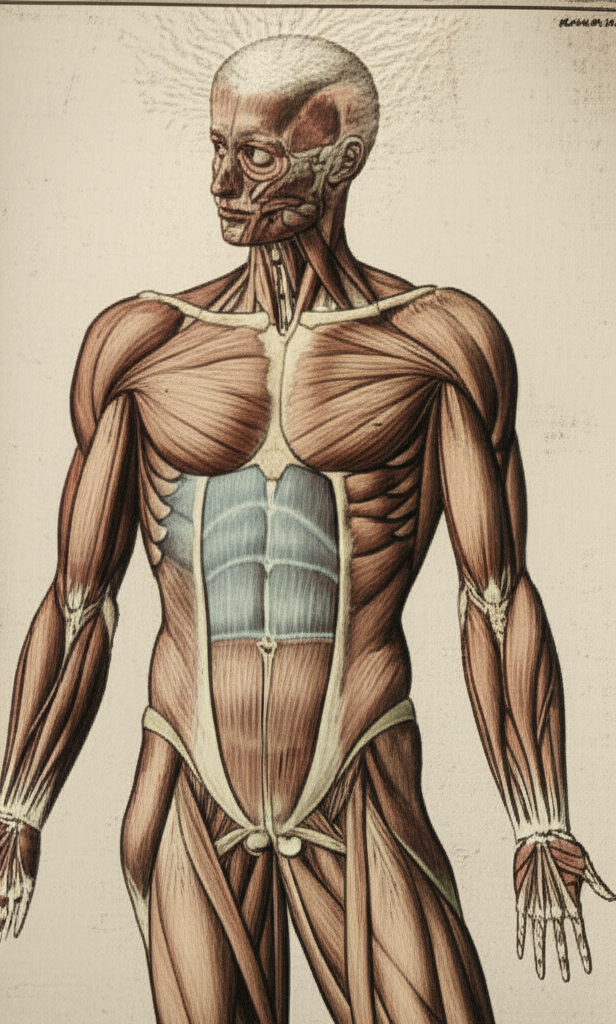
The Scientific Revolution brought a seismic shift in how Man perceived the body. With the rise of modern physics and anatomy, the body began to be understood as a sophisticated machine. Thinkers like René Descartes, a pivotal figure in the Great Books tradition, famously articulated a radical dualism that forever altered the discussion.
Descartes proposed:
- The Body as Res Extensa: A purely material substance, extended in space, subject to the laws of physics like any other machine. Its movements could be explained mechanically, much like a clockwork automaton. This view emphasized the matter of the body in its most quantifiable, objective sense.
- The Mind as Res Cogitans: An immaterial, thinking substance, distinct from the body. This created the infamous mind-body problem: how could two such fundamentally different substances interact?
This mechanistic view, while incredibly influential for the advancement of medicine and physics, inadvertently demoted the body in philosophical discourse, often reducing it to mere matter, a vessel for the true essence of Man – his rational mind. Yet, even in this reduction, the body's intricate design and its undeniable presence remained a source of wonder and scientific inquiry.
The Embodied Experience: Phenomenology and the Living Body
Later philosophical movements, particularly phenomenology in the 20th century, sought to reclaim the body from its purely mechanical or subordinate status. Philosophers like Maurice Merleau-Ponty argued passionately against the Cartesian separation, emphasizing the lived body as the primary mode of being in the world.
For Merleau-Ponty, the body is not merely an object among objects, but the very condition of our subjectivity. It is through the body that Man perceives, acts, and understands.
Key aspects of the lived body include:
- Perceptual Field: Our body is not just a container for our senses; it is our way of perceiving. The world is given to us through our embodied perspective.
- Habit and Skill: Complex actions, from walking to playing an instrument, are not just mental commands executed by a machine, but are deeply ingrained bodily habits that shape our interaction with the environment.
- Intercorporeality: Our body is always already in relation to other bodies, forming the basis of social interaction and shared understanding.
This perspective elevates the body from inert matter to an active, meaning-making entity, intrinsically linked to consciousness and identity. It is through this body that Man truly exists as a being-in-the-world.
Modern Perspectives: Physics, Biology, and the Enduring Mystery
In our contemporary era, advancements in physics, biology, and neuroscience continue to unravel the complexities of the body's matter. We understand the intricate dance of molecules, the firing of neurons, and the genetic code that dictates our physical form. Yet, the philosophical questions persist.
- Quantum Physics and Consciousness: Some speculative theories attempt to link the peculiar nature of quantum physics to the mystery of consciousness, suggesting that the very matter of the body might hold secrets beyond classical understanding.
- Neuroscience and the Mind: While neuroscience provides incredible insights into the brain, the leap from neural activity to subjective experience – the "hard problem of consciousness" – remains a profound challenge, reminding us that the body is more than just its material constituents.
- Biotechnology and the Future of Man: As we gain the ability to manipulate the body through genetic engineering, prosthetics, and artificial intelligence, the very definition of Man and his body is being redefined, forcing us to confront the ethical and existential implications of our mastery over matter.
The body remains the fundamental site where matter and meaning converge. It is the canvas upon which our lives are painted, a testament to the enduring wonder of existence. From the atom to the organism, the matter of the body continues to be a source of profound philosophical inquiry for Man.
YouTube Video Suggestions:
-
📹 Related Video: ARISTOTLE ON: The Nicomachean Ethics
Video by: The School of Life
💡 Want different videos? Search YouTube for: "Aristotle Hylomorphism Body Soul Explanation"
2. ## 📹 Related Video: KANT ON: What is Enlightenment?
Video by: The School of Life
💡 Want different videos? Search YouTube for: "Merleau-Ponty Phenomenology of Perception Explained"