

The Enduring Question of the Body's Matter
The human body, that most intimate and undeniable aspect of our existence, seems at first glance a straightforward affair – a collection of flesh, bone, and sinew, governed by the laws of physics. Yet, for millennia, philosophers, theologians, and scientists, whose enduring thoughts fill the pages of the Great Books of the Western World, have grappled with its true nature. The "matter of the body" is far from a simple empirical observation; it is a profound philosophical problem, inextricably linked to our understanding of matter itself, the essence of man, and the very fabric of reality. This article delves into the rich philosophical landscape surrounding the body, examining its material constitution, its role in defining human experience, and the persistent questions it poses.
Unpacking "Matter": From Formless Potential to Quantum Foam
At the heart of understanding the body lies the concept of matter. What is this fundamental stuff from which all things, including ourselves, are composed?
Philosophical Conceptions of Matter
Throughout history, "matter" has been understood in various, often conflicting, ways:
- Ancient Greek Perspectives:
- Plato: Viewed the physical world, including the body, as a mere shadow or imperfect copy of eternal, unchanging Forms. Matter was associated with flux and imperfection, a substrate that "participates" in the Forms. The body, for Plato, was often a hindrance to the soul's ascent to true knowledge.
- Aristotle: Offered a more integrated view. He posited prime matter as a pure potentiality, without any form or quality of its own, but capable of receiving forms. The body of any living being is a composite of matter and form, where the soul is the "form" of the body. For Aristotle, the matter of the body is not just inert stuff, but the very stuff that makes a particular man or animal actual.
- Modern Interpretations:
- The rise of modern physics shifted the understanding of matter towards measurable, quantifiable properties. Thinkers like Democritus's ancient atomism found a new resonance in the scientific revolution. Matter became atoms, then subatomic particles, and now, in quantum mechanics, a complex interplay of fields and probabilities.
Even as physics provides increasingly detailed accounts of the material world, the philosophical question of "what matter is" at its most fundamental level remains a vibrant debate. Is it merely extension (Descartes)? Is it ultimately energy? Or is it something we can never fully grasp outside of its phenomenal manifestations?
The Body: More Than Mere Physics
While the body is undeniably a physical entity, subject to the laws of physics, to reduce it solely to its material components misses its profound philosophical significance. The body is not just a thing; it is our thing, the locus of our senses, emotions, and actions.
Embodiment: The Human Condition
The experience of embodiment is central to what it means to be man.
- Sensation and Perception: Our bodies are the interface through which we experience the world. Pain, pleasure, sight, sound—all are mediated by our physical form.
- Action and Agency: We act through our bodies. Our intentions manifest as physical movements, shaping the world around us.
- Identity and Selfhood: While some philosophers (like Descartes) sought to separate mind from body, many others argue that our physical form is deeply intertwined with our sense of self and personal identity. Our memories, habits, and even our personality are often expressed and influenced by our bodily experiences.
The Mind-Body Problem: A Perennial Conundrum
Perhaps the most famous philosophical challenge concerning the body is the mind-body problem, eloquently articulated by René Descartes in his Meditations.
| Philosophical Stance | Key Idea DuPont: Acknowledging the influence of the physical world on the mind, but also the mind's ability to act upon the body. The body is not merely a vessel but an integral part of human experience.
* Dualism (Descartes): Proposed a radical separation between the immaterial, thinking mind (res cogitans) and the material, extended body (res extensa). The body is a complex machine, while the mind is distinct and non-physical. The interaction point was famously posited in the pineal gland.
* Materialism/Physicalism: Contends that everything, including consciousness, is ultimately physical. The mind is what the brain does. The body is the entirety of man.
* Emergentism: Suggests that consciousness and mental properties emerge from complex physical systems (like the brain) but are not reducible to them.
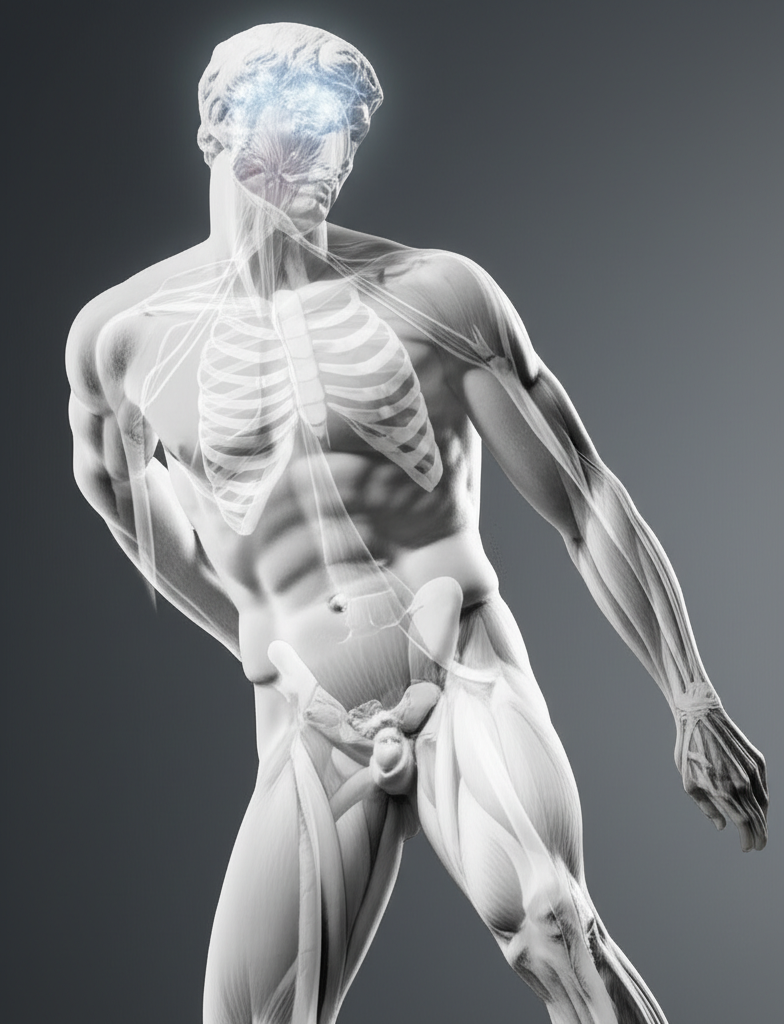
The Man and His Body: An Enduring Relationship
The question of the matter of the body ultimately circles back to the question of man. What does our physical constitution tell us about our essence, our limitations, and our potential?
The Body as a Tool or a Prison?
- For some, like Plato, the body was often seen as a temporary prison for the immortal soul, a source of desires and distractions that impede philosophical contemplation. The ideal man was one who transcended bodily limitations.
- For others, like Aristotle, the body is not a prison but an essential aspect of the living organism. The soul (or mind) is the form of the body; it cannot exist apart from it in living beings. The man is the composite of both.
- In modern thought, the body can be seen as a tool, an instrument through which we navigate and manipulate the world. It enables our freedom and expression, but also imposes limitations through illness, aging, and mortality.
The Materiality of Being Human
Our understanding of the body's matter directly impacts our ethical and existential considerations.
- Mortality: The body's finite nature, its susceptibility to decay and death, is a fundamental aspect of the human condition. This awareness shapes our values, our pursuit of meaning, and our relationship with time.
- Vulnerability and Connection: Our shared physicality makes us vulnerable but also connects us. Empathy often arises from recognizing the bodily experiences of others.
- Technology and Transformation: As physics and biology advance, humanity increasingly gains the capacity to modify the body's matter – through medicine, prosthetics, and genetic engineering. These interventions raise profound questions about what constitutes a "natural" or "authentic" man, and where the boundaries of the body truly lie.
Conclusion: A Philosophical Mirror
The matter of the body remains a fertile ground for philosophical inquiry. From the ancient Greek debates on prime matter and form to Descartes' radical dualism and the contemporary insights of physics, the body serves as a constant reminder of the intricate relationship between the material and the immaterial, the concrete and the conceptual. It forces us to confront not only the physical laws that govern our existence but also the profound questions of consciousness, identity, and the very definition of man. As we continue to probe the depths of the universe, the universe within our own skin continues to offer some of the most challenging and essential philosophical reflections.
YouTube Video Suggestions:
-
📹 Related Video: ARISTOTLE ON: The Nicomachean Ethics
Video by: The School of Life
💡 Want different videos? Search YouTube for: ""Great Books of the Western World mind body problem""
-
📹 Related Video: ARISTOTLE ON: The Nicomachean Ethics
Video by: The School of Life
💡 Want different videos? Search YouTube for: ""Aristotle on the soul and body explained""