

The Enduring Dance of Matter and Form: Unpacking Physical Objects
Have you ever stopped to truly consider what makes a physical object what it is? It’s a question that might seem simple on the surface, but it quickly plunges us into some of the most profound philosophical inquiries about reality itself. At the heart of this exploration lies the ancient, yet remarkably enduring, concept of the matter-form distinction. This idea, championed by Aristotle, provides a powerful framework for understanding not just the composition of things, but also their identity, change, and existence. It's a foundational concept that bridges Physics and Metaphysics, helping us unravel the very fabric of our world.
What's Beneath the Surface? A Direct Look at Matter and Form
At its core, the matter-form distinction posits that every physical object is a composite of two fundamental principles:
- Matter (Hyle): This is the underlying stuff, the raw material, the potentiality out of which something is made. Think of it as the undifferentiated substrate, capable of taking on various shapes and qualities. It's the "what it's made of."
- Form (Morphe/Eidos): This is the structure, the essence, the organizing principle that gives matter its specific identity and characteristics. It's what makes a thing what it is, actualizing the potential inherent in the matter. It's the "what it is."
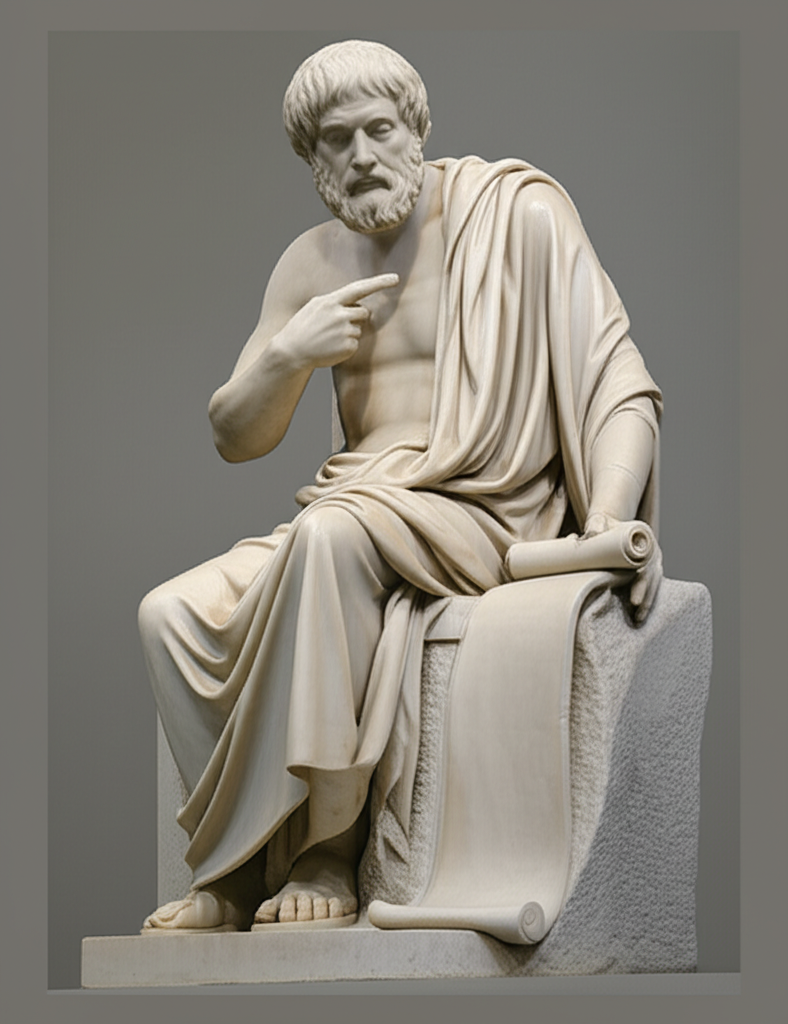
Let's illustrate: Imagine a lump of clay. The clay itself is the matter. It has the potential to become many things. Now, a sculptor takes that clay and shapes it into a statue of a horse. The specific shape, the defining characteristics of a horse—that’s the form. The clay doesn't cease to be clay, but it now is a horse statue because it has acquired the form of a horse. Without the form, it's just indeterminate clay; without the matter, the form has no physical manifestation. They are inseparable in any existing physical object.
Diving Deeper: Varieties of Form
Aristotle didn't stop at a single type of form. He distinguished between different ways form manifests:
- Substantial Form: This is the form that makes a thing what it essentially is. It's the principle of its being, its species. For example, the substantial form of a human being is what makes us human, distinct from a tree or a rock. It's what defines its very nature.
- Accidental Form: These are the non-essential qualities or characteristics that a substance can gain or lose without changing its fundamental nature. Think of a person's height, hair color, or current emotional state. A person can change their hair color (an accidental form) and still remain the same person (possessing the same substantial form).
This distinction is crucial for understanding change. When an object changes its accidental forms (like a leaf changing color), it remains the same object. When it loses its substantial form (like a living thing dying and decomposing), it ceases to be that particular object and becomes something else entirely—its matter takes on new forms.
Matter and Form Across Philosophical Landscapes
The matter-form distinction isn't just an abstract philosophical game; it has profound implications for how we understand the world, bridging ancient thought with contemporary insights.
In Physics: Understanding Change and Becoming
For Aristotle, Physics was the study of nature, focusing on change and motion. The matter-form distinction provides the fundamental explanation for how things come into being and pass away. Change isn't simply something appearing out of nothing or disappearing into nothingness. Instead, it's the process where matter, which is always present, loses one form and acquires another.
- Generation: Matter acquiring a new form (e.g., wood taking the form of a table).
- Corruption: Matter losing a form (e.g., a table breaking down into mere wood pieces).
- Alteration: Matter retaining its substantial form but acquiring new accidental forms (e.g., a table being painted a different color).
This framework explains how the world is in constant flux, yet maintains a degree of stability and intelligibility. The unchanging matter provides the continuity, while the changing forms account for the diversity and transformation we observe.
In Metaphysics: The Nature of Being and Reality
Beyond the physical processes, the matter-form distinction delves into Metaphysics, the study of the fundamental nature of reality. It addresses questions of:
- Essence: What makes a thing what it is? The form.
- Existence: How do abstract forms become concrete realities? Through their embodiment in matter.
- Individuality: While forms can be universal (e.g., the form of "humanity"), it's their instantiation in particular matter that creates individual humans.
This distinction highlights that reality is not just a jumble of particles (matter) nor a world of pure ideas (forms), but a dynamic interaction between the two. It's a powerful argument for a structured, intelligible universe, where things have definite natures and behave according to those natures.
Why This Distinction Still Matters Today
Even thousands of years after Aristotle, the matter-form distinction continues to resonate.
- Philosophy of Mind: Modern hylomorphism (the view that mind and body are matter and form) is seeing a resurgence as an alternative to dualism or pure materialism, suggesting that our consciousness isn't just brain matter, but the form that organizes and animates that matter.
- Biology: While not directly equivalent, we can see echoes in how DNA acts as a "form" that dictates the structure and function of biological "matter" (cells, tissues). The genetic code provides the blueprint, the organizing principle, for the raw biological components.
- Technology & Design: Every manufactured object, from a smartphone to a building, is an application of human intelligence (form) imposing structure onto raw materials (matter).
The ability to categorize, understand change, and grasp the essence of things—these are fundamental cognitive processes that owe much to this ancient insight. It encourages us to look beyond the superficial and consider both the underlying potential and the defining actuality of everything around us.
Key Aspects of the Matter-Form Distinction
Let's summarize some critical aspects:
| Feature | Matter | Form |
|---|---|---|
| Role | Substrate, Potentiality | Essence, Actuality, Organizing Principle |
| Nature | Indeterminate, Undifferentiated | Determinant, Definitive |
| Primary Question | "What is it made of?" | "What is it?" |
| Change | Persistent, Undergoes change | Acquired or lost during change |
| Independence | Never exists without some form | Never exists physically without matter |
This distinction isn't about separating two things that can exist apart, but rather about identifying two co-principles that are inherently intertwined in every physical object.
Conclusion: A Framework for Understanding Reality
The matter-form distinction, originating in the profound philosophical inquiries of ancient Greece and meticulously explored in the Great Books of the Western World, offers an incredibly robust and elegant framework for understanding the physical world. It provides a logical basis for explaining change, defining identity, and grasping the intricate relationship between potentiality and actuality. As we continue to probe the mysteries of the universe, this timeless philosophical tool reminds us that true understanding often lies in appreciating the dynamic interplay of the raw "stuff" and the defining "structure" that gives everything its being.
YouTube: "Aristotle Matter and Form Explained"
YouTube: "Hylomorphism Philosophy of Mind"
📹 Related Video: What is Philosophy?
Video by: The School of Life
💡 Want different videos? Search YouTube for: "The Matter-Form Distinction in Physical Objects philosophy"