

The Inseparable Duo: Exploring the Matter-Form Distinction in Physical Objects
The world around us is a vibrant tapestry of change, identity, and existence. From the shifting sands of a desert to the enduring structure of a mountain, everything is something. But what exactly constitutes that "something"? This seemingly simple question plunges us into one of philosophy's most enduring and insightful distinctions: the separation of matter and form in physical objects. Rooted deeply in ancient Greek thought, particularly in the works of Aristotle, this concept offers a powerful lens through which to understand not only the Physics of our world but also the profound Metaphysics that underpins it.
Unpacking the Core Idea: A Philosophical Foundation
At its heart, the matter-form distinction, often referred to as hylomorphism (from the Greek hyle for matter and morphe for form), posits that every physical object is a composite. It's not merely a collection of parts, but an intricate blend of two fundamental principles:
- Matter: The underlying "stuff" or substratum that has the potential to become something.
- Form: The structure, organization, or essence that gives the matter its specific identity and makes it actually be what it is.
This isn't just an abstract idea; it's a way of making sense of how things come into being, persist, and change without ceasing to exist entirely.
Aristotle's Enduring Insight from the Great Books
For a profound dive into this distinction, we turn to the towering figure of Aristotle, whose treatises like Physics and Metaphysics (foundational texts in the Great Books of the Western World) lay the groundwork. Aristotle observed that for anything to exist as a particular thing, it must have both a material component and a formal component.
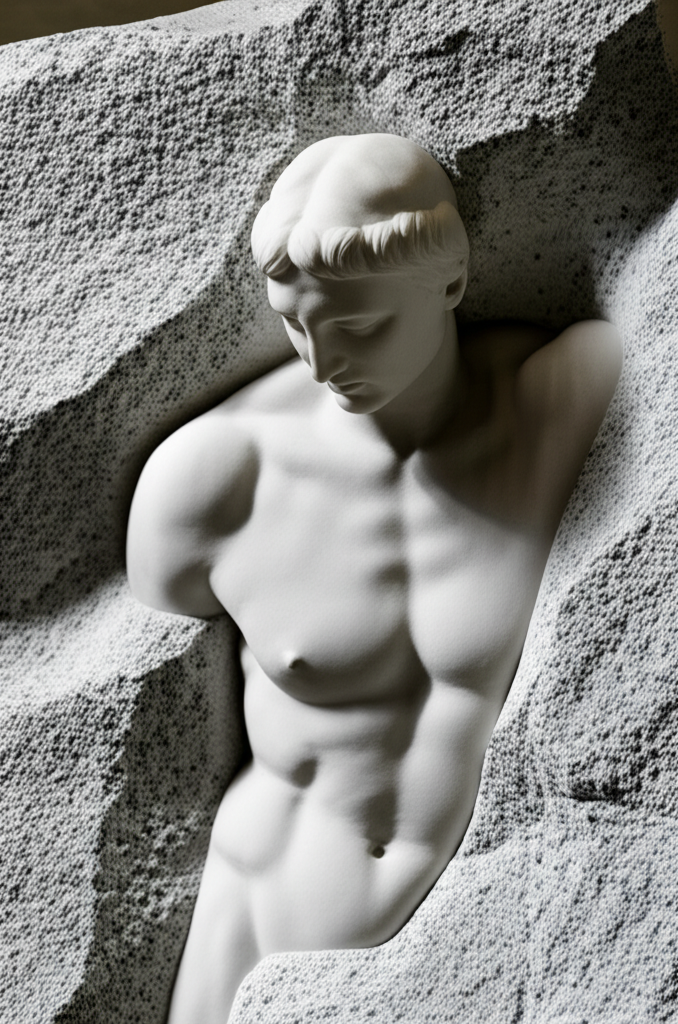
Consider a bronze statue:
- The matter is the bronze itself – a malleable metal with the potential to be shaped.
- The form is the specific shape of a person, an animal, or an abstract design that the bronze takes on.
Without the bronze, there would be no statue. Without the specific form, the bronze would just be an amorphous lump of metal. Both are essential for the statue's existence as that specific thing.
Delving Deeper: The Nature of Matter and Form
Let's break down these two principles further:
1. Matter: The Principle of Potentiality
Matter is the indeterminate "stuff" that underlies all physical objects. It's not something we can ever encounter in its pure, unformed state, because as soon as it exists, it has some form. Instead, we understand matter through its potentiality – its capacity to receive and sustain various forms.
- Indeterminate: Lacks specific qualities on its own.
- Underlying Substratum: The "what-it's-made-of" for any given object.
- Potentiality: It can be a chair, a table, a statue, or anything else, given the right form.
- Examples: Wood for a chair, clay for a pot, flesh and bones for a human.
Think of it as the raw material. A pile of lumber is matter for a house; water is matter for ice or steam.
2. Form: The Principle of Actuality and Essence
Form, in Aristotle's view, is what gives matter its specific identity, its structure, its organization, and its essence. It's what makes a thing actually what it is, actualizing the potential inherent in the matter.
- Determinate: Provides specific qualities and characteristics.
- Structure & Organization: The arrangement of matter.
- Essence: What makes a thing that particular kind of thing.
- Actuality: It is a chair, a table, a statue, etc.
- Examples: The design and function of a chair, the specific shape and purpose of a pot, the soul (as the form) of a living human.
The form isn't just the outward shape; it's the defining principle, the "what-it-is." The form of a human is what makes it a human, not just a collection of organic matter.
The Inseparable Dance: Why They Need Each Other
Crucially, for Aristotle, matter and form are not typically found in separation in the physical world. They are two sides of the same coin, two inseparable principles that together constitute a physical substance.
- A form without matter is an abstract concept, not a physical object. (e.g., the idea of "chairness" without an actual chair).
- Matter without form is an unthinkable, pure potentiality – it cannot exist in reality as an identifiable thing. (e.g., "pure stuff" with no shape, size, or quality).
They exist in a dynamic relationship, where form organizes and actualizes matter, and matter provides the substrate for form to inhere. This co-dependence allows for change: a thing changes its form while its underlying matter persists (e.g., wood burning, changing from log-form to ash-form).
Bridging Physics and Metaphysics: Modern Relevance
While the terminology of modern Physics has evolved, the underlying philosophical challenge posed by the matter-form distinction remains incredibly relevant. When physicists investigate the fundamental particles and forces that constitute the universe, they are, in a sense, exploring the ultimate "matter." Yet, these particles and forces combine into complex structures, systems, and phenomena – from atoms to galaxies, from chemical reactions to biological life – which represent different "forms" or organizations of that underlying matter.
The distinction helps us ponder questions like:
- What gives an object its identity despite changes in its constituent parts? (e.g., the ship of Theseus paradox).
- How do emergent properties arise from simpler components? (e.g., consciousness from brain matter).
- What is the difference between a living organism and a mere collection of chemicals? (The "form" of life).
The matter-form distinction, therefore, serves as a powerful conceptual tool that bridges the empirical observations of Physics with the fundamental inquiries of Metaphysics into the nature of being and reality itself. It reminds us that understanding the world requires looking beyond mere components to the organizing principles that give them meaning and identity.
Key Aspects of the Matter-Form Distinction
| Aspect | Matter | Form |
|---|---|---|
| Principle | Potentiality (What it can be) | Actuality (What it is) |
| Role | Substratum, raw material | Structure, essence, defining characteristic |
| Nature | Indeterminate, passive | Determinate, active |
| Existence | Cannot exist in pure state in physical world | Cannot exist independently of matter in physical world |
| Change | Persists through change in form | What is gained or lost during change |
| Understanding | "What it's made of" | "What it is" |
YouTube: Aristotle Matter and Form Explained
YouTube: Hylomorphism Philosophy Introduction
The matter-form distinction, born in ancient Greece, continues to offer a profound framework for understanding the fundamental architecture of reality, inviting us to look beyond the surface and grasp the intricate relationship between potential and actuality, substance and essence, in every physical object we encounter.
📹 Related Video: What is Philosophy?
Video by: The School of Life
💡 Want different videos? Search YouTube for: "The Matter-Form Distinction in Physical Objects philosophy"