

The Enduring Essence: Unpacking the Matter-Form Distinction in Physical Objects
The world around us, in all its tangible glory, presents a fascinating puzzle: what are things fundamentally made of, and what makes them what they are? For millennia, philosophers have grappled with this question, and one of the most foundational and enduring answers comes from the ancient Greeks, particularly Aristotle, through his profound concept of the matter-form distinction. This isn't merely an academic exercise; it's a powerful lens through which to understand not just the Physics of objects, but their very Metaphysics – their nature and being.
At its core, the matter-form distinction posits that every physical object is a composite of two fundamental principles: matter and form. Matter is the undifferentiated stuff, the potentiality, out of which something is made, while form is the organizing principle, the essence, that gives that matter its specific structure, function, and identity. Without both, an object simply wouldn't exist as we know it.
The Aristotelian Blueprint: Origins in Ancient Greece
Our journey into this distinction invariably begins with Aristotle, whose works, prominently featured in the Great Books of the Western World, lay the groundwork for much of Western philosophy. In his Physics and Metaphysics, Aristotle meticulously analyzes change and being, arguing that understanding how things come to be and cease to be requires this dual perspective.
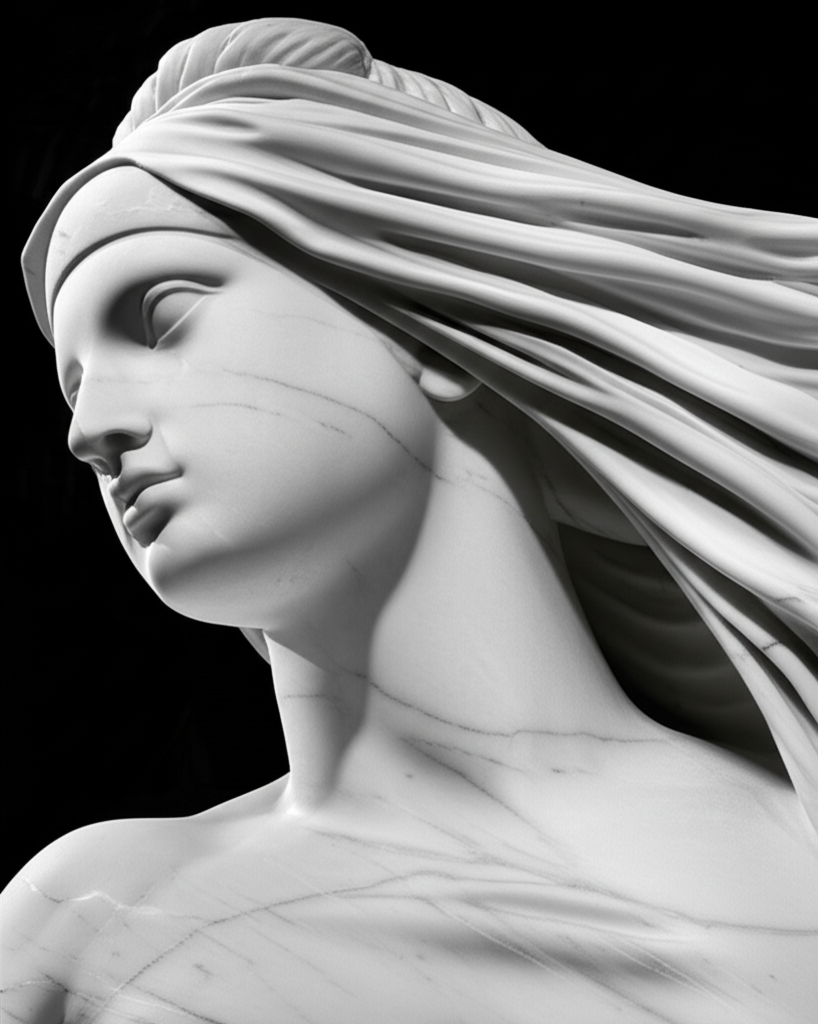
- Change as the Key: Aristotle observed that things change. A block of marble can become a statue, an acorn can become an oak tree. What persists through the change (the marble, the organic material) he called matter, and what defines the new state (the shape of the statue, the structure of the tree) he called form.
- Substance and Essence: For Aristotle, a complete substance (like a human, a chair, or a tree) is an inseparable union of matter and form. The form is what makes a thing what it is – its essence.
Understanding the Components: Matter and Form Defined
Let's break down these two pivotal concepts:
1. Matter (Hyle): The Principle of Potentiality
In this philosophical context, matter isn't merely the "stuff" we think of in modern Physics (atoms, quarks, energy). Instead, it's a more abstract concept:
- Indeterminate Substratum: It's the underlying, undifferentiated potentiality that receives form. Think of clay before it's molded, or bronze before it's cast into a bell.
- Potentiality: Matter, by itself, is pure potential. It has the capacity to become many different things, but it isn't actually any of them until form is imposed upon it.
- Passive Principle: It's the receptive element; it doesn't organize itself.
- Individualization: While form provides the universal essence, matter is often seen as the principle of individuation – what makes this specific chair different from that specific chair, even if they share the same form.
2. Form (Morphe/Eidos): The Principle of Actuality
Form is the counterpoint to matter, providing definition, structure, and actuality:
- Organizing Principle: It's what gives matter its specific shape, structure, and function. It's the blueprint, the design, the essence.
- Actuality: Form actualizes the potential inherent in matter. The clay becomes an actual pot, the bronze becomes an actual bell.
- Active Principle: It's the defining, structuring element.
- Essence/Nature: The form of a thing is its essence, what makes it belong to a particular kind. The form of a human being is what makes it human, distinct from a cat or a rock.
The Indissoluble Union: Why They Matter Together
It's crucial to understand that for Aristotle, matter and form are not separate entities that exist independently and then combine. In a physical object, they are co-principles, two aspects of a single reality. You cannot have unformed matter (pure potentiality) in the physical world, nor can you have disembodied form (except perhaps in the case of a pure intellect, which is a different discussion for Metaphysics).
Consider a wooden table:
- Matter: The wood (fibers, cellulose, etc.)
- Form: The specific arrangement of the wood that makes it a table – its flat surface, legs, height, and function for eating or working.
The table is wood formed into a table. The wood without the form is just wood; the form of a table without wood is just an idea.
Beyond the Physical: Metaphysical Implications
The matter-form distinction extends far beyond simple physical objects. It's a foundational concept for understanding:
- Change: All change involves a substratum (matter) losing one form and acquiring another.
- Causality: Aristotle's four causes (material, formal, efficient, final) are deeply intertwined with this distinction. The material cause is the matter, the formal cause is the form.
- Substance: The very nature of what makes a thing a stable, identifiable entity.
- Soul and Body: In Aristotle's view, the soul is the form of the body, giving it life, organization, and function. They are not two separate things but two aspects of a living being.
Modern Echoes and Continued Relevance
While modern Physics has moved on to analyze matter at subatomic levels, and contemporary philosophy often uses different terminology, the underlying intuition of the matter-form distinction remains powerful. When we talk about:
- Information and Data: Information can be seen as a kind of form imposed on raw data (matter).
- Biological Structures: DNA provides the "form" or blueprint for the "matter" of organic molecules.
- Artificial Intelligence: Algorithms (form) operate on computational resources (matter).
The enduring power of Aristotle's insight is that it provides a coherent framework for understanding how things are both persistent and changeable, how they possess both potential and actuality. It invites us to look beyond the surface and ponder the deeper Metaphysics of existence.
YouTube Video Suggestions:
- YouTube: "Aristotle Matter and Form Explained"
- YouTube: "Aristotle's Metaphysics: Substance and Change"
📹 Related Video: What is Philosophy?
Video by: The School of Life
💡 Want different videos? Search YouTube for: "The Matter-Form Distinction in Physical Objects philosophy"