

The Mathematics of Astronomical Quantity: A Philosophical Inquiry into the Cosmos
The universe, in its dizzying expanse, presents humanity with perhaps its greatest intellectual and philosophical challenge: comprehending the sheer quantity of its contents and the vastness of its space. From the earliest stargazers to modern cosmologists, the endeavor to understand the cosmos has been inextricably linked to mathematics. It is through the rigorous application of mathematical principles that astronomy has transcended mere observation, allowing us to measure, model, and ultimately, to grasp the otherwise unfathomable scales of celestial phenomena. This pillar page delves into the profound relationship between mathematics and astronomical quantity, exploring how numbers have unveiled the universe's secrets and, in doing so, have continually reshaped our philosophical understanding of existence itself.
The Ancient Roots of Cosmic Measurement: From Myth to Measure
Before telescopes and advanced calculus, humanity's engagement with the heavens was often steeped in myth and qualitative observation. Yet, even in antiquity, the seeds of mathematical astronomy were sown. Figures like Plato, whose Timaeus posits a universe constructed according to geometric principles, and Aristotle, who meticulously cataloged celestial motions, laid conceptual groundwork. However, it was the Hellenistic Greeks who truly began to apply mathematics with vigor to astronomy.
- Eratosthenes' Earth: A prime example is Eratosthenes' remarkably accurate calculation of the Earth's circumference around 240 BCE. Using simple geometry and observations of shadows in two different cities, he demonstrated that the Earth was not an infinite plane, but a measurable sphere. This was a monumental leap in understanding quantity on a cosmic scale, even if it was just our own planet.
- Ptolemy's Almagest: Claudius Ptolemy's Almagest, a towering work from the 2nd century CE, codified centuries of Greek astronomical knowledge. It presented a comprehensive geocentric model of the universe, employing complex mathematical constructs—epicycles, deferents, and equants—to explain the observed motions of planets. While the model itself was ultimately incorrect in its premise, its mathematical sophistication allowed for predictions of celestial events that held sway for over 1400 years. It was an intricate dance of geometry and arithmetic designed to quantify the space and motion of the celestial spheres.
These ancient efforts underscore a crucial philosophical point: the universe, far from being chaotic, appeared to operate on discernible, quantifiable principles. This insight, gleaned through mathematics, provided a profound sense of order and predictability to what might otherwise seem an arbitrary and infinite space.
A Revolution in Scale: From Geocentrism to Heliocentrism
The Renaissance marked a profound shift in our understanding of the universe, driven by new observations and, crucially, new mathematical approaches. The transition from a geocentric to a heliocentric model was not just a change in perspective; it was a radical re-evaluation of cosmic quantity and the true space we inhabit.
-
Copernicus's De Revolutionibus: Nicolaus Copernicus, drawing upon earlier ideas, proposed a heliocentric model in De Revolutionibus Orbium Coelestium (1543). While still retaining circular orbits, his model offered a more elegant mathematical explanation for planetary motions. Critically, it vastly expanded the perceived size of the universe. If the Earth orbited the Sun, the stars must be at an immense, previously unimagined distance to show no observable parallax. This immediately introduced a new order of quantity to space.
-
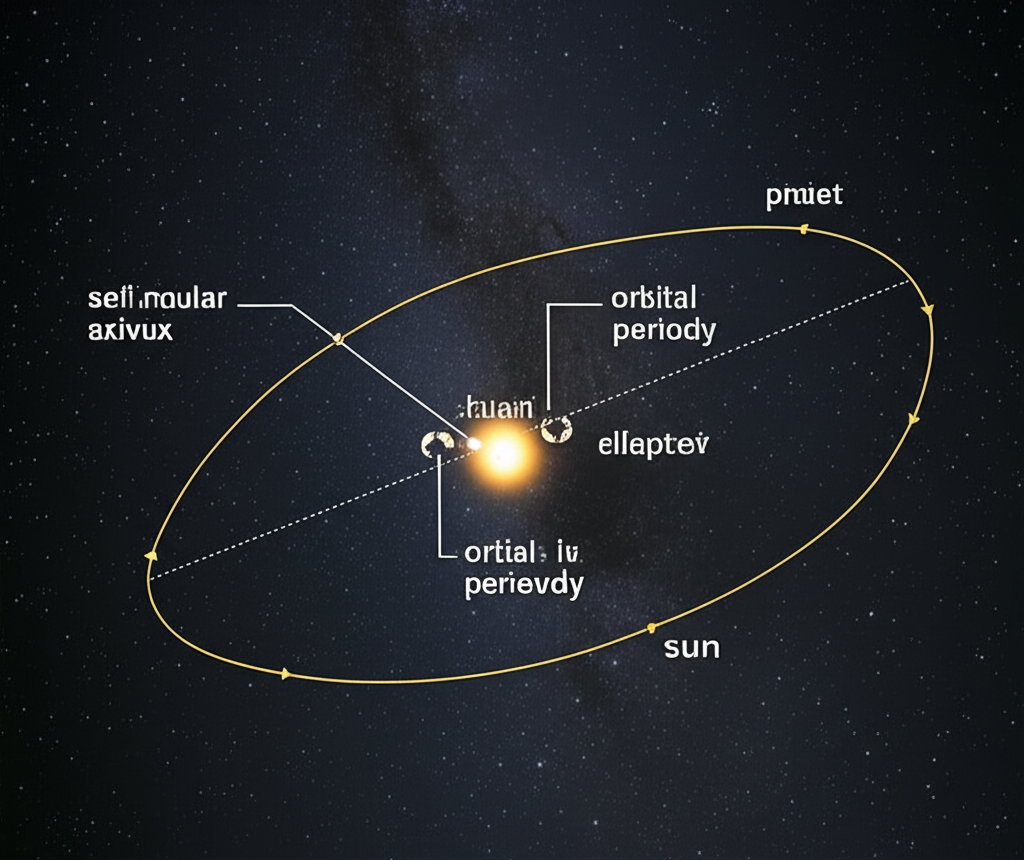
Kepler's Laws of Planetary Motion: Johannes Kepler, building on Tycho Brahe's meticulous observations, applied rigorous mathematical analysis to planetary orbits. His three laws, published between 1609 and 1619, shattered the ancient dogma of perfect circles. Instead, planets moved in ellipses, their speeds varying according to precise mathematical relationships. This was a triumph of mathematics in describing the true quantity and dynamics of celestial motion, revealing an underlying order far more intricate than previously conceived.
Ancient Models (Ptolemy) Renaissance Models (Kepler) Geocentric (Earth-centered) Heliocentric (Sun-centered) Circular orbits, epicycles Elliptical orbits Complex geometric constructs Simpler mathematical laws Limited perceived space Vastly expanded space -
Galileo's Telescopic Discoveries: Galileo Galilei, through his pioneering use of the telescope, provided empirical evidence that supported the heliocentric view. His observations of the phases of Venus, the moons of Jupiter, and the mountains on the Moon demonstrated that the heavens were not perfect, unchanging spheres but dynamic worlds. While not purely mathematical, his work provided the observational data that mathematics would then be used to explain and quantify, further expanding our understanding of celestial quantity and the nature of space.
Newton and the Universal Language of Gravitation
The culmination of this scientific revolution arrived with Isaac Newton, whose Philosophiæ Naturalis Principia Mathematica (1687) stands as one of the most influential works in human history. Newton unified terrestrial and celestial mechanics under a single, elegant mathematical framework, profoundly altering our perception of astronomy, quantity, and space.
Newton's Law of Universal Gravitation, expressed through a deceptively simple formula, explained why planets orbit the Sun, why objects fall to Earth, and why tides rise and fall. It demonstrated that the same fundamental mathematical laws governed all matter, everywhere in the universe.
- Quantifying Force and Motion: Newton's calculus, developed concurrently with his physics, provided the mathematical tools necessary to describe continuous change. This allowed for the precise quantification of forces, accelerations, and trajectories, enabling astronomers to predict celestial motions with unprecedented accuracy. The quantity of mass, distance, and time became fundamental variables in understanding the cosmic dance.
- Infinite Space and Absolute Time: Philosophically, Newton's universe was one of absolute space and absolute time—an infinite, unchanging stage upon which the drama of the cosmos unfolded according to immutable mathematical laws. This deterministic view, born from the power of mathematics, had profound theological and philosophical implications, suggesting a clockwork universe designed by a divine mathematician. The very quantity of the universe, though still unknown in its full extent, was now understood to be governed by a universal, quantifiable logic.
Modern Cosmology: Unfathomable Numbers and the Expanding Universe
The 20th century ushered in an era of astronomy where the quantity of the universe expanded beyond anything Newton could have imagined. Einstein's theories of relativity, Hubble's observations, and subsequent cosmological discoveries have revealed a universe of truly mind-boggling scale, where mathematics remains our only guide.
- Einstein's Relativistic Space-Time: Albert Einstein's theories of special and general relativity fundamentally altered our understanding of space and time, showing them to be interwoven into a single "space-time" fabric that can be warped by mass and energy. This required entirely new mathematical frameworks (non-Euclidean geometry, tensor calculus) to describe the universe. The quantity of mass-energy dictates the geometry of space itself.
- Hubble's Expanding Universe: Edwin Hubble's observations in the 1920s, showing that galaxies are receding from us and that the universe is expanding, provided a new, dynamic picture of cosmic quantity. The distances involved are so immense that new units, like the light-year and parsec, became necessary to express these unfathomable quantities of space. The "observable universe" now spans billions of light-years, containing hundreds of billions of galaxies, each with hundreds of billions of stars.
- Dark Matter and Dark Energy: Modern cosmology grapples with the quantity of unseen matter and energy. Mathematics and astronomy reveal that the visible matter in the universe accounts for only a small fraction of its total mass-energy content. The existence of "dark matter" and "dark energy" is inferred through their gravitational effects, which can only be quantified through mathematical models. These mysterious components constitute the vast majority of the universe's quantity, challenging our understanding of what fills space.
The Philosophical Weight of Astronomical Quantity
The journey from ancient observations to modern cosmology is, at its heart, a philosophical journey enabled by mathematics. The relentless pursuit of quantifying the astronomical has continually forced humanity to confront its place in the cosmos.
- Humility and Wonder: The sheer quantity of stars, galaxies, and the vastness of space evokes both profound humility and boundless wonder. Mathematics allows us to articulate these scales, but the human mind struggles to truly grasp them. What does it mean to be a speck on a speck in an infinitely expanding void?
- The Search for Order: Despite the overwhelming quantity, mathematics consistently reveals an underlying order. From Kepler's laws to the equations of relativity, the universe speaks a language of numbers, suggesting a deep, inherent rationality. This raises enduring philosophical questions about the nature of this order: Is it imposed by us, discovered by us, or inherent in the fabric of reality itself?
- Limits of Comprehension: While mathematics provides the tools to describe astronomical quantity, it also highlights the limits of our intuitive comprehension. Our brains evolved to navigate a small, three-dimensional world, not the multi-dimensional, relativistic space-time of the cosmos. The abstract nature of mathematics becomes essential to bridge this gap, allowing us to conceptualize what we cannot directly perceive or imagine.
- Meaning in the Immense: Ultimately, the mathematics of astronomical quantity is not just about numbers; it's about meaning. It forces us to reconsider our definitions of life, intelligence, and purpose within an unimaginably grand cosmic context. The universe, as revealed by mathematics and astronomy, is a canvas of immense quantity and profound mystery, inviting continuous philosophical reflection.
The ongoing quest to quantify the cosmos is a testament to the enduring power of human intellect and curiosity. Through the lens of mathematics, astronomy continues to unveil the universe's secrets, pushing the boundaries of our understanding of quantity and the nature of space, forever shaping our philosophical outlook on existence.
📹 Related Video: What is Philosophy?
Video by: The School of Life
💡 Want different videos? Search YouTube for: ""philosophy of mathematics in astronomy", "cosmic scale and human perception""