

The Unseen Architecture: Logic at the Heart of Scientific Hypotheses
Unpacking the Foundational Reasoning Behind Scientific Discovery
Summary: At its core, science is a quest for understanding, driven by carefully constructed hypotheses. This article delves into the indispensable role of logic in shaping these foundational statements, exploring how principles of reasoning – both inductive and deductive – dictate their formation, testing, and ultimate contribution to our knowledge. From the ancient philosophers of the Great Books of the Western World to modern scientific inquiry, the logical structure of a hypothesis is the unseen architecture supporting every breakthrough.
The Invisible Framework: Why Logic Matters in Science
Hello, fellow seekers of wisdom! Chloe Fitzgerald here, and today, I want us to ponder something truly fundamental to how we understand the world: the scientific hypothesis. Often, we marvel at the grand discoveries of science – the universe's expanse, the intricacies of life, the marvels of technology. But beneath all these impressive feats lies a bedrock of rigorous reasoning and structure. It's logic, my friends, that breathes life into the very first spark of an idea, transforming it into a testable hypothesis.
Without a sound logical structure, a hypothesis is merely a guess, a fleeting thought. With it, it becomes a powerful tool, a beacon guiding empirical investigation. This isn't just about laboratory procedures; it's about the very philosophy of how we build knowledge.
What Exactly Is a Hypothesis? A Philosophical Interrogation
Before we dissect its logical components, let's clarify what a hypothesis truly represents. In science, a hypothesis is more than just an educated guess; it's a proposed explanation for an observable phenomenon. It's a statement that is:
- Testable: We must be able to design an experiment or observation to check its validity.
- Falsifiable: It must be possible, in principle, to prove it wrong. If a hypothesis cannot be disproven, it tells us little.
- Specific: It clearly defines the relationship between variables.
Think of it as a question posed to nature, but formulated in a way that demands a clear "yes" or "no" answer, or at least a quantifiable measurement. The reasoning embedded within this question is what gives it power.
The Twin Pillars of Reasoning: Induction and Deduction
The Great Books of the Western World offer profound insights into the nature of reasoning that are still profoundly relevant to science today. Two forms of logic stand out:
1. Inductive Reasoning: From Specifics to Generalities
Induction is the process of moving from specific observations to broader generalizations.
- Example: Observing that every swan you've ever seen is white (specific observations) leads to the hypothesis that "All swans are white" (generalization).
Philosophers like Francis Bacon, whose work emphasized empirical observation and systematic experimentation, were champions of inductive reasoning. Bacon's emphasis on gathering data before drawing conclusions laid crucial groundwork for the scientific method. While induction is powerful for generating hypotheses, it's important to remember that inductive conclusions are probabilistic, not absolute. One black swan is enough to falsify the "all swans are white" hypothesis.
2. Deductive Reasoning: From Generalities to Specifics
Deduction, conversely, moves from general principles to specific predictions. It's about drawing logically certain conclusions from premises.
- Example (Syllogism, as championed by Aristotle):
- Premise 1 (General Rule): All mammals have lungs.
- Premise 2 (Specific Case): A whale is a mammal.
- Conclusion (Prediction): Therefore, a whale has lungs.
In science, once a hypothesis is formed (often inductively), deductive reasoning is crucial for deriving testable predictions. If our hypothesis (H) is true, then we deduce that a particular observation (O) should occur under specific experimental conditions. If O doesn't occur, then H might be false. This is the essence of hypothesis testing.
Table: Inductive vs. Deductive Reasoning in Hypothesis Formation
| Feature | Inductive Reasoning | Deductive Reasoning |
|---|---|---|
| Direction | Specific observations to general hypothesis | General hypothesis to specific predictions |
| Primary Use | Hypothesis generation, pattern recognition | Hypothesis testing, prediction |
| Certainty | Probabilistic, open to revision | Logically certain (if premises are true) |
| Philosophical Link | Francis Bacon (empiricism) | Aristotle (syllogisms, formal logic) |
Crafting a Logically Sound Hypothesis
The journey from a curious observation to a robust hypothesis is paved with careful reasoning. Here's how logic guides the construction:
- Observation: We notice something intriguing. ("My car won't start.")
- Question: We formulate a question about the observation. ("Why won't my car start?")
- Hypothesis Formulation (Inductive Leap): Based on prior knowledge or preliminary observations, we propose an explanation. This often involves an inductive leap. ("Perhaps the battery is dead.")
- Prediction (Deductive Step): We deduce a specific, testable consequence if our hypothesis is true. ("If the battery is dead, then jump-starting the car should make it start.")
- Experiment/Observation: We design and conduct a test to see if the prediction holds. ("I will try to jump-start the car.")
- Analysis & Conclusion: We analyze the results and determine if they support or refute the hypothesis. ("The car started! The hypothesis that the battery was dead is supported.")
This iterative process, deeply rooted in both inductive and deductive logic, is the engine of scientific progress.
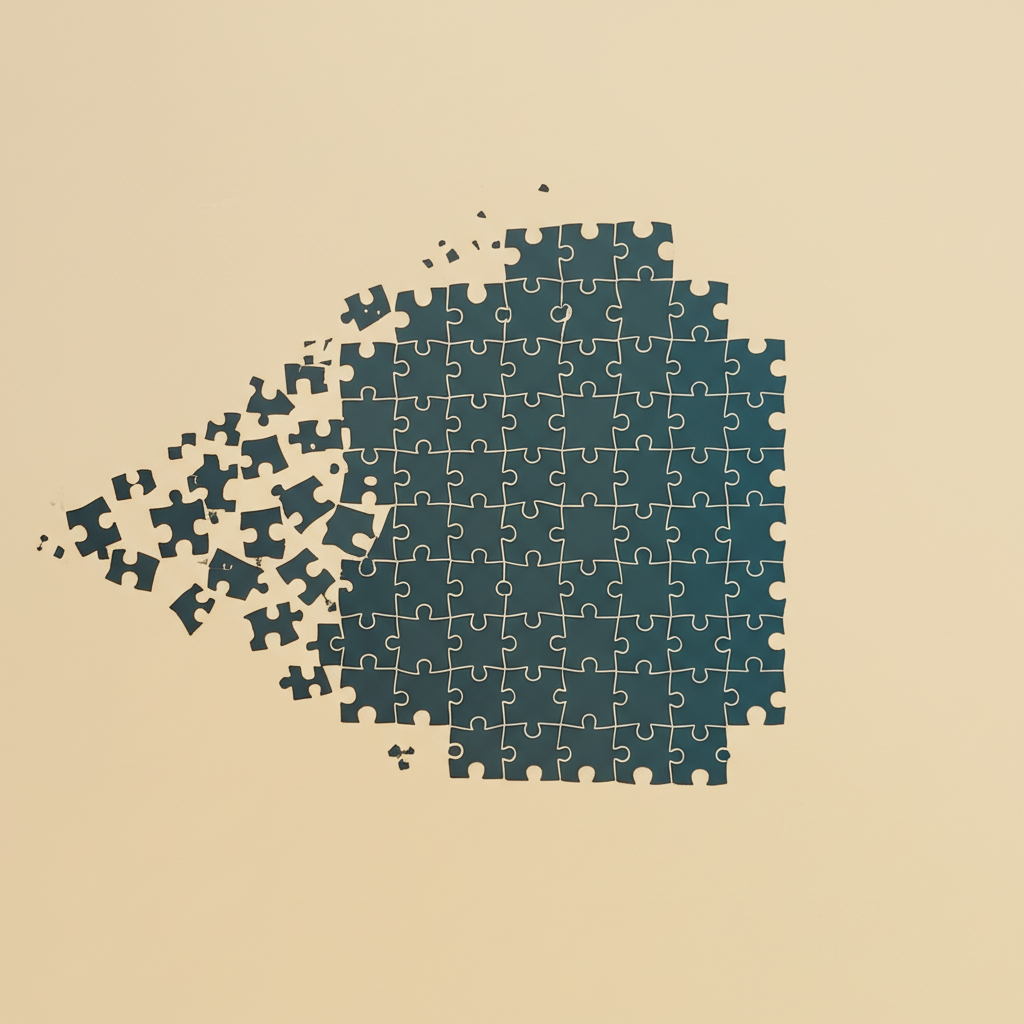 to a coherent scientific hypothesis (a partially assembled puzzle forming a question mark), with arrows indicating the flow of inductive and deductive reasoning. The background features subtle classical architectural elements, nodding to the "Great Books" and the enduring structure of logic.)
The Unseen Strength: Why Logic is the Backbone of Science
Ultimately, the logical structure of scientific hypotheses is what lends science its immense power and credibility. It allows us to move beyond mere belief or anecdote, towards explanations that can be rigorously tested and, if necessary, revised or discarded. It’s a testament to the enduring insights of thinkers from millennia past, whose foundational work on logic continues to illuminate the path of scientific discovery. The pursuit of truth, it seems, always begins with sound reasoning.
YouTube:
- "Crash Course Philosophy: Deductive and Inductive Arguments"
- "Karl Popper: The Logic of Scientific Discovery Explained"
📹 Related Video: What is Philosophy?
Video by: The School of Life
💡 Want different videos? Search YouTube for: "The Logical Structure of Scientific Hypotheses philosophy"