

The Logical Structure of Scientific Hypotheses: Building Blocks of Knowledge
The journey of scientific discovery, from the simplest observation to the most groundbreaking theory, hinges upon a deceptively simple yet profoundly powerful concept: the scientific hypothesis. Far from being a mere guess, a robust hypothesis is a meticulously crafted statement, deeply rooted in logic and rigorous reasoning. It serves as the intellectual scaffolding upon which all science is built, directing our inquiries, shaping our experiments, and ultimately advancing our understanding of the world. In this article, we'll delve into the intricate logical structure that makes a hypothesis the cornerstone of scientific progress, exploring how reasoning transforms curiosity into verifiable knowledge.
The Foundation of Inquiry: What is a Hypothesis, Really?
At its heart, a hypothesis is a testable proposition – a proposed explanation for an observable phenomenon. It's an educated conjecture, not a definitive answer, designed to be either supported or refuted through systematic investigation. Unlike a casual assumption, a scientific hypothesis emerges from a careful examination of existing data, previous theories, and often, a flash of insightful reasoning.
Consider the foundational texts compiled in the Great Books of the Western World; figures like Aristotle, though not formulating hypotheses in the modern sense, laid the groundwork for systematic observation and classification, which are critical precursors to hypothesis generation. Later thinkers, building on these traditions, began to articulate specific, testable claims about the natural world.
- Not a Theory: A hypothesis is a specific, limited statement, whereas a theory is a well-substantiated, comprehensive explanation of a broad range of phenomena, supported by extensive evidence.
- Not a Law: A scientific law describes an observed phenomenon, often mathematically, without necessarily explaining why it occurs. A hypothesis seeks to explain.
Logic at the Core: Deduction and Induction in Hypothesis Formulation
The very act of forming and testing a hypothesis is an exercise in applied logic. Two primary forms of reasoning are indispensable here: induction and deduction.
Inductive Reasoning: From Observation to Generalization
Inductive reasoning is the initial spark. It's the process of moving from specific observations to broader generalizations. When a scientist notices a recurring pattern or an unexplained phenomenon, they use induction to formulate a preliminary explanation – the hypothesis.
Example:
- Observation 1: Every time I drop an apple, it falls to the ground.
- Observation 2: Every time I drop a stone, it falls to the ground.
- Observation 3: Every time I drop a feather, it falls to the ground (albeit slowly).
- Inductive Hypothesis: All objects, when released, tend to fall towards the Earth. (This then leads to more refined hypotheses about gravity).
This form of reasoning allows us to infer general principles from specific instances, acting as the creative engine for new ideas in science.
Deductive Reasoning: Testing the Hypothesis
Once a hypothesis is formulated, deductive reasoning takes over. This involves moving from a general statement (the hypothesis) to specific, testable predictions. If the hypothesis is true, then certain observable outcomes must follow. This is where the rubber meets the road in science.
Example:
- Hypothesis (General Statement): All objects, when released, tend to fall towards the Earth due to a force called gravity.
- Deductive Prediction (Specific Testable Outcome): If this hypothesis is true, then if I drop a bowling ball and a feather in a vacuum (removing air resistance), they should hit the ground at the same time.
The experiment is then designed to test this prediction. If the prediction holds true, it lends support to the hypothesis. If it fails, the hypothesis must be revised or rejected. This systematic process, often attributed to figures like Karl Popper, emphasizes falsifiability – the idea that a hypothesis must be capable of being proven wrong to be truly scientific.
The Anatomy of a Good Hypothesis
Not all proposed explanations are equally useful. A strong hypothesis possesses several key characteristics that make it amenable to scientific inquiry:
| Characteristic | Description |
|---|---|
| Testable | It must be possible to design an experiment or make observations that could either support or refute the hypothesis. Untestable claims (e.g., "invisible gnomes cause bad luck") fall outside science. |
| Falsifiable | There must be some potential observation or experimental outcome that could prove the hypothesis wrong. A hypothesis that can explain everything explains nothing. |
| Clear and Concise | Stated in simple, unambiguous language, often as an "If...then..." statement, making its predictions explicit. |
| Specific | Focuses on a particular relationship or phenomenon, avoiding vague or overly broad claims. |
| Grounded in Knowledge | Builds upon existing scientific knowledge, observations, or theories, rather than being purely speculative. |
| Measurable | The variables involved in the hypothesis should ideally be quantifiable or observable. |
The Role of Hypothesis in the Scientific Method
The hypothesis is the linchpin of the scientific method, acting as the bridge between question and answer.
- Observation/Question: A phenomenon is observed, and a question arises.
- Research: Existing knowledge is consulted.
- Hypothesis Formulation: An educated, testable explanation is proposed using inductive reasoning.
- Prediction: Deductive reasoning is used to derive specific, testable predictions from the hypothesis.
- Experimentation: An experiment is designed and conducted to test the predictions.
- Analysis: Results are analyzed to see if they support or refute the hypothesis.
- Conclusion: The hypothesis is either supported (leading to further testing and potential theory development) or rejected/revised.
This cyclical process, driven by the logical structure of the hypothesis, is how science incrementally builds its vast edifice of knowledge.
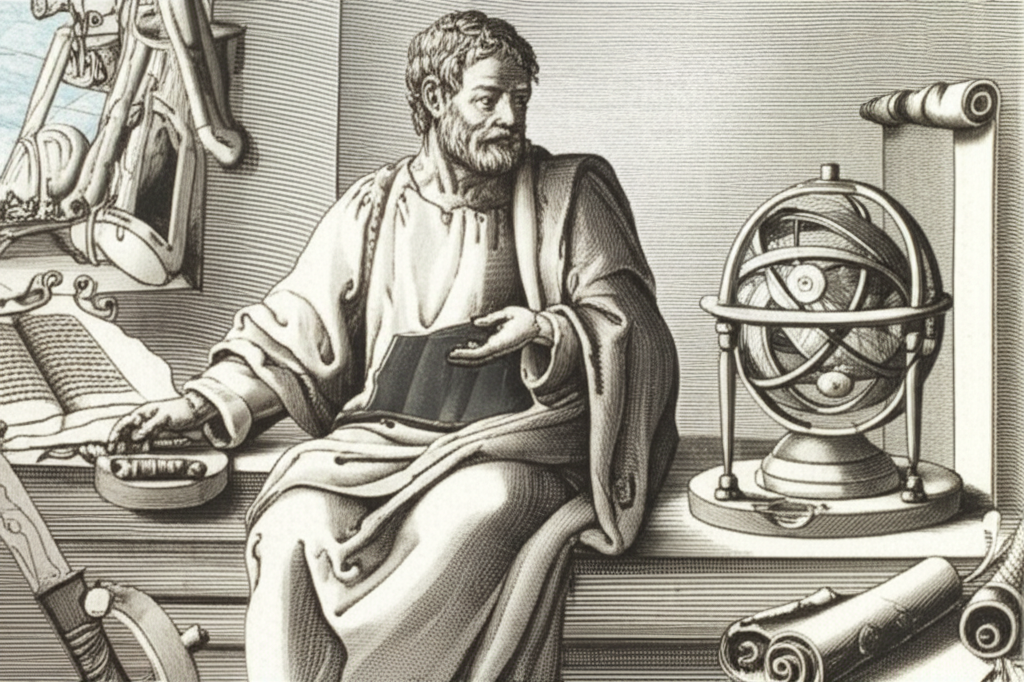 , deeply engrossed in thought, symbolizing the synthesis of empirical observation and rigorous logical deduction in the pursuit of knowledge.)
Beyond the Lab: Philosophical Implications of Hypothesis Construction
The logical structure of scientific hypotheses isn't just a methodological tool; it has profound philosophical implications. It forces us to confront questions about the nature of truth, the limits of human knowledge, and the reliability of our reasoning. The problem of induction, for instance, a topic explored by philosophers from David Hume to Bertrand Russell, highlights that no matter how many times an experiment confirms a hypothesis, we can never logically prove it will always be true in the future. We rely on the uniformity of nature, a philosophical assumption.
This constant interplay between observation, logic, and the formulation of testable ideas demonstrates science's commitment to an open, self-correcting process. It's a testament to the power of human reasoning to not only question the world but also to devise systematic ways of answering those questions, one carefully constructed hypothesis at a time.
**## 📹 Related Video: ARISTOTLE ON: The Nicomachean Ethics
Video by: The School of Life
💡 Want different videos? Search YouTube for: "Karl Popper Falsifiability explained"**
**## 📹 Related Video: What is Philosophy?
Video by: The School of Life
💡 Want different videos? Search YouTube for: "Inductive vs Deductive Reasoning Philosophy"**