

The Logical Structure of Scientific Hypotheses
The pursuit of knowledge, particularly in the realm of science, hinges profoundly on our ability to formulate and test propositions about the world. At the heart of this endeavor lies the scientific hypothesis – a provisional explanation that guides investigation. This article explores the indispensable role of logic in constructing, evaluating, and refining these hypotheses, demonstrating how rigorous reasoning transforms mere speculation into a powerful engine for discovery. From the inductive leaps that spark an idea to the deductive tests that scrutinize its validity, the logical framework is the bedrock upon which all scientific progress is built.
The Foundation of Inquiry: What is a Hypothesis?
Before delving into the intricacies of its structure, it is crucial to define what a scientific hypothesis truly is. Far from a wild guess, it is an informed, testable, and falsifiable statement that proposes a relationship between phenomena. It serves as a starting point for further investigation, a bridge between observed facts and potential explanations. Without a clearly articulated hypothesis, scientific inquiry lacks direction and purpose, becoming an aimless collection of data rather than a systematic quest for understanding.
A strong hypothesis typically possesses several key characteristics:
- Explanatory Power: It offers a plausible reason for an observed phenomenon.
- Predictive Power: It allows for specific predictions to be made about future observations or experimental outcomes.
- Testability: It can be investigated through experimentation or further observation.
- Falsifiability: There must be a conceivable outcome that could prove the hypothesis incorrect. This critical aspect, championed by philosophers like Karl Popper, differentiates scientific hypotheses from untestable assertions.
The Interplay of Reasoning: Induction and Deduction
The formation and testing of scientific hypotheses are deeply intertwined with two fundamental modes of reasoning: induction and deduction. These are not mutually exclusive but rather complementary processes that drive the scientific method.
Inductive Reasoning: From Observation to Generalization
Induction is the process by by which we move from specific observations to broader generalizations. When a scientist notices a recurring pattern in nature – for instance, all observed swans are white – they might formulate a hypothesis that "all swans are white." This inductive leap is crucial for generating new ideas and potential explanations.
Francis Bacon, in his Novum Organum, vehemently argued for the supremacy of empirical observation and inductive methods over purely deductive scholasticism. He believed that by systematically gathering data and identifying patterns, one could build knowledge from the ground up, leading to more reliable scientific understanding. While powerful for discovery, inductive reasoning always carries a degree of uncertainty, as future observations could potentially contradict past generalizations (e.g., the discovery of black swans).
Deductive Reasoning: From Hypothesis to Testable Prediction
Once a hypothesis is formed, deductive reasoning takes center stage in its evaluation. Deduction involves moving from a general statement (the hypothesis) to specific, testable predictions. If our hypothesis is "all swans are white," then a deductive prediction would be: "If I observe another swan, it will be white."
The logical structure here often mirrors classic syllogisms, as explored by Aristotle in his Organon. Consider this structure:
- Premise 1 (Hypothesis): If H is true, then P should be observed.
- Premise 2 (Observation/Experiment): P is observed (or not observed).
- Conclusion: Therefore, H is supported (or refuted).
This deductive framework allows scientists to design experiments where the failure of a prediction directly challenges the hypothesis, demonstrating the power of falsification.
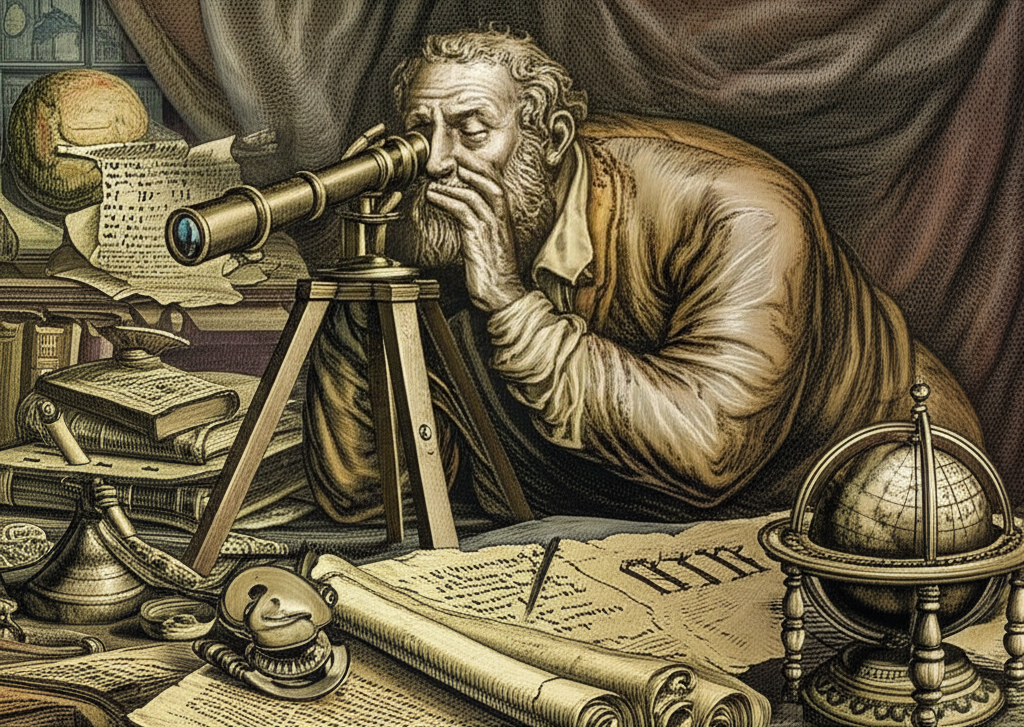
The Logical Architecture of Hypothesis Evaluation
The scientific method, at its core, is a sophisticated application of logic to empirical data. When we test a hypothesis, we are essentially constructing a logical argument.
Confirmation vs. Falsification
While scientists often speak of "confirming" a hypothesis, it's more accurate to say that data supports or fails to falsify it. Absolute confirmation is logically elusive due to the problem of induction – no finite number of positive instances can definitively prove a universal statement. David Hume famously highlighted this challenge, showing that our belief in cause-and-effect relationships is ultimately based on habit rather than strict logical necessity.
However, falsification, through modus tollens, offers a more definitive logical pathway:
- If H (Hypothesis) is true, then P (Prediction) must be observed.
- P is not observed.
- Therefore, H is not true.
This logical asymmetry means that while we can never definitively prove a hypothesis, a single contradictory observation can definitively disprove it. This makes falsifiability a cornerstone of sound scientific reasoning.
The Great Books and the Evolution of Scientific Logic
The philosophical underpinnings of scientific hypotheses and their logical structure can be traced through the "Great Books of the Western World."
- Aristotle's Organon: Laid the groundwork for deductive logic, providing the tools for rigorous reasoning that would later be applied to scientific predictions. His emphasis on syllogisms, while not directly addressing modern scientific hypotheses, provided the foundational logical structures.
- Francis Bacon's Novum Organum: Revolutionized the approach to science by advocating for inductive methods, emphasizing systematic observation and experimentation to build knowledge, thereby laying the groundwork for how hypotheses are generated.
- René Descartes' Discourse on Method: Stressed the importance of clear and distinct ideas, methodical doubt, and rigorous deduction in arriving at truth. While his method was more philosophical, its emphasis on systematic inquiry and logical coherence deeply influenced the scientific pursuit.
These thinkers, among others, collectively shaped the understanding of how we move from observation to explanation, from conjecture to testable theory, always with logic as the guiding principle.
Conclusion: Logic, the Unseen Hand of Science
The logical structure of scientific hypotheses is not merely an academic concern; it is the very engine that drives scientific progress. From the initial inductive spark that generates a hypothesis to the rigorous deductive tests that scrutinize its validity, logic provides the indispensable framework. It allows us to distinguish between mere speculation and genuinely testable propositions, guiding our reasoning through the complex landscape of empirical data. By understanding and adhering to these logical principles, science continues its relentless march towards a deeper and more accurate understanding of the natural world, ever refining our knowledge through the disciplined application of human intellect.
📹 Related Video: ARISTOTLE ON: The Nicomachean Ethics
Video by: The School of Life
💡 Want different videos? Search YouTube for: ""Karl Popper Falsifiability Explained" or "Inductive vs Deductive Reasoning in Science""