

The Architectonics of Inquiry: Dissecting the Logical Structure of Hypothesis
A Foundation for Understanding Our World
At the heart of every significant discovery, every scientific advancement, and indeed, much of our everyday problem-solving, lies the humble yet powerful concept of the hypothesis. It is more than just a guess; it is a structured proposition, a provisional statement awaiting the rigorous test of reasoning and evidence. This article delves into the precise logic that underpins a well-formed hypothesis, exploring how we construct these intellectual frameworks to navigate towards truth, drawing insights from the enduring wisdom found within the Great Books of the Western World. Understanding this logical architecture is crucial, for it equips us with the tools to critically evaluate claims and build knowledge on solid ground.
The Genesis of an Idea: What is a Hypothesis?
Before we dissect its structure, let's firmly establish what a hypothesis is. In its most fundamental sense, a hypothesis is a proposed explanation for a phenomenon, a tentative answer to a research question, or a predictive statement about the relationship between two or more variables. It's a statement that is:
- Testable: It must be possible to observe, experiment, or gather data to either support or refute it.
- Falsifiable: There must be a conceivable outcome that would prove the hypothesis incorrect. This is a critical distinction from mere belief.
- Specific: It should be clear and unambiguous, leaving little room for subjective interpretation.
- Grounded: While imaginative, it often arises from existing knowledge, observations, or theoretical frameworks.
A hypothesis is the bridge between the unknown and the known, a starting point for systematic inquiry. It’s the intellectual scaffolding upon which we build our understanding, always subject to revision or outright demolition if the evidence demands it.
Logic: The Blueprint of Hypothesis
The very possibility of forming a coherent hypothesis rests upon the bedrock of logic. Without a logical framework, a hypothesis would be nothing more than an unfounded assertion. Our reasoning process, whether inductive or deductive, is what lends shape and potential validity to our proposed explanations.
Inductive Reasoning: From Observation to Generalization
Historically, particularly championed by figures like Francis Bacon in his Novum Organum, inductive reasoning is the process by which we move from specific observations to broader generalizations. When forming a hypothesis, we often begin inductively:
- Observation: Noticing patterns or anomalies in the world. (e.g., "All swans I have seen are white.")
- Pattern Recognition: Identifying recurring connections.
- Generalization/Hypothesis Formation: Proposing a general rule or explanation. (e.g., "All swans are white.")
The weakness of induction, as famously highlighted by David Hume, is that no matter how many confirming instances we observe, we can never logically prove a universal statement with absolute certainty. One black swan, and the hypothesis crumbles. Yet, it remains an indispensable tool for generating hypotheses worthy of further investigation.
Deductive Reasoning: From Generalization to Prediction
Once a hypothesis is formed, deductive reasoning takes center stage in the testing phase. Drawing heavily from the classical logic systematized by Aristotle in his Organon, deduction allows us to derive specific predictions from our general hypothesis. If the hypothesis is true, then certain observable consequences must follow.
Consider a simple deductive structure, a syllogism:
- Premise 1 (Hypothesis): If all living things require water to survive.
- Premise 2 (Specific Case): And this plant is a living thing.
- Conclusion (Prediction): Then this plant requires water to survive.
The strength of deduction is its certainty: if the premises are true and the argument is logically valid, the conclusion must be true. This is the power we leverage when designing experiments to test our hypotheses.
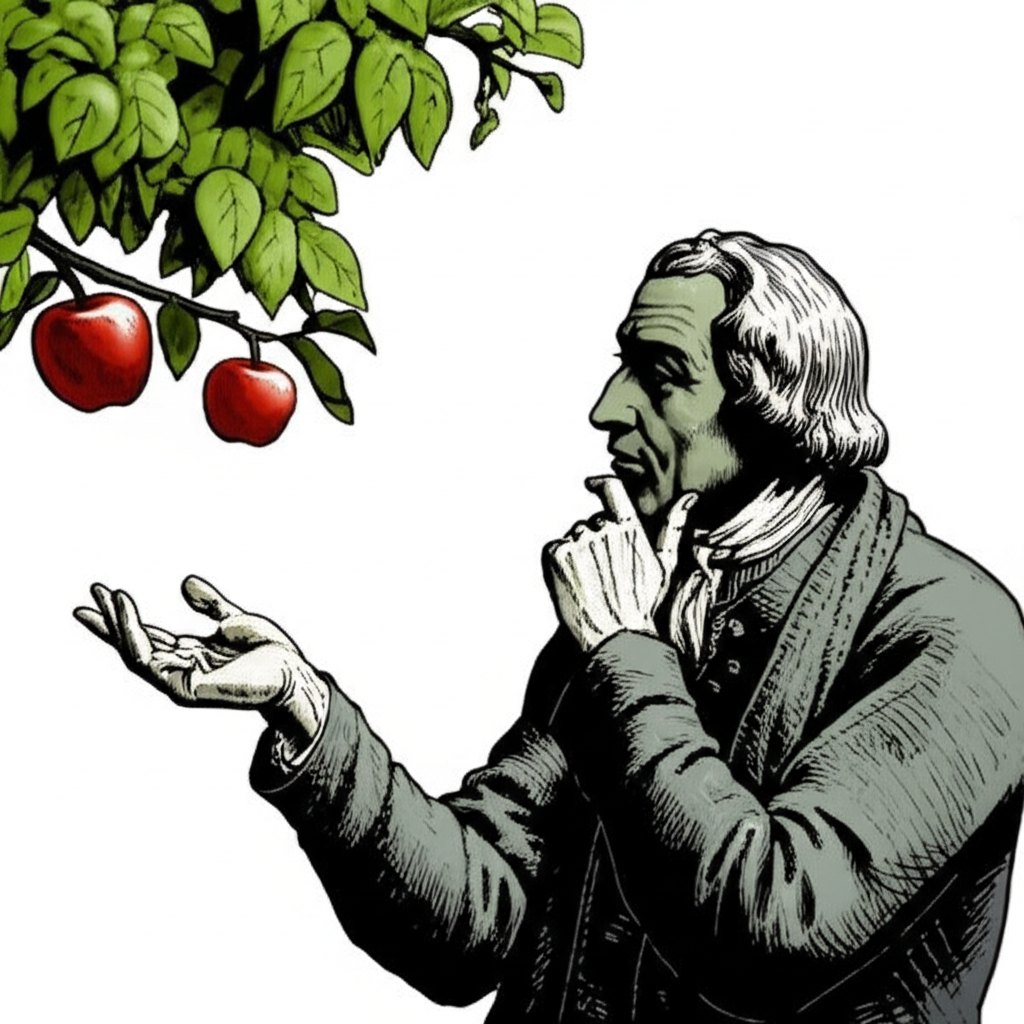 , then sketching out a series of logical steps leading to a testable hypothesis. The background subtly includes ancient Greek architectural elements blending into a modern scientific laboratory setting, symbolizing the continuity of logical inquiry from classical philosophy to contemporary science. Diagrams of inductive and deductive reasoning are subtly overlaid, showing arrows moving from specific observations to general statements, and vice-versa.)
The Path to Truth: Testing and Falsification
The logical structure of a hypothesis isn't merely about its formation; it's crucially about its engagement with reality. The pursuit of truth is not about confirming what we want to be true, but about rigorously testing what might be true.
The Role of Evidence
Evidence acts as the arbiter. When predictions derived deductively from a hypothesis are met by observation or experiment, the hypothesis gains support. However, it is vital to remember that support does not equate to absolute proof. A hypothesis can always be overturned by new evidence, a concept emphasized by philosophers of science like Karl Popper, who argued that falsifiability is the hallmark of a truly scientific hypothesis.
Key Steps in Testing a Hypothesis:
- Formulate a Null Hypothesis (H₀) and an Alternative Hypothesis (H₁):
- H₀: Often states there is no effect or no relationship (e.g., "There is no difference in growth between plants watered with tap water and those watered with distilled water.").
- H₁: The hypothesis you are trying to support (e.g., "Plants watered with distilled water will grow taller than those watered with tap water.").
- Design an Experiment/Observation: Create a method to gather data that can differentiate between H₀ and H₁.
- Collect and Analyze Data: Use statistical or qualitative methods to interpret the results.
- Draw a Conclusion: Based on the data, either reject the null hypothesis (thus supporting the alternative hypothesis) or fail to reject the null hypothesis.
It's a continuous cycle of observation, hypothesis, prediction, testing, and refinement, pushing us closer to a more accurate understanding of the world.
Challenges to Certainty: The Nuances of Reasoning
Even with a robust logical structure, the path to truth through hypothesis testing is fraught with philosophical challenges.
- The Problem of Induction (Hume): As mentioned, no amount of past observation guarantees future outcomes. Our confidence in inductive generalizations is based on habit, not logic. This inherent uncertainty means all empirical hypotheses remain provisional.
- Underdetermination of Theory by Evidence: Sometimes, multiple different hypotheses can equally explain the same set of evidence. This means that even strong evidence doesn't always uniquely point to one truth.
- The Influence of Background Theories: Our very perception and interpretation of evidence are often shaped by the existing theories and conceptual frameworks we hold, a notion explored by philosophers like Thomas Kuhn. This means that a "neutral" observation is often an elusive ideal.
These philosophical considerations remind us that the logical structure of hypothesis, while powerful, operates within the broader context of human reasoning and its inherent limitations.
The Enduring Significance of Logical Hypothesis
Understanding the logical structure of hypothesis is not just an academic exercise for scientists; it is a fundamental skill for anyone seeking to make sense of the world. From evaluating political claims to understanding personal relationships, the ability to:
- Identify the underlying assumptions.
- Formulate testable propositions.
- Critically assess evidence.
- Understand the provisional nature of knowledge.
...is paramount. It fosters intellectual humility and equips us to engage in more rigorous and productive reasoning. The Great Books, from Plato's dialogues to Descartes' meditations, consistently challenge us to question, to seek clarity, and to build our understanding on principles of sound logic. The hypothesis, in its structured elegance, is one of our most potent instruments in this timeless pursuit of truth.
**## 📹 Related Video: ARISTOTLE ON: The Nicomachean Ethics
Video by: The School of Life
💡 Want different videos? Search YouTube for: ""Karl Popper Falsifiability Explained," "Aristotle Logic Syllogism Introduction""**