

The Blueprint of Clarity: Unpacking the Logical Structure of Definition
In the vast landscape of philosophical inquiry, few tools are as fundamental and yet as frequently misused as definition. Far from a mere linguistic exercise, a well-constructed definition forms the bedrock of all sound Reasoning and Logic. Without a clear understanding of what we mean, our arguments crumble into ambiguity, and our discussions become exercises in talking past one another. This article delves into the precise mechanics of constructing a robust definition, exploring its essential components and its indispensable role in intellectual pursuit, drawing insights from the intellectual titans preserved in the Great Books of the Western World.
The Indispensable Foundation of Clear Thought
At its heart, Logic is the study of valid Reasoning, and valid Reasoning demands clarity of terms. Before we can evaluate an argument or even formulate a coherent thought, we must first establish what we are talking about. This is where the logical structure of definition comes into play. A good definition is not just a description; it is a statement that captures the essence of a thing, distinguishing it from all other things. It provides the intellectual boundaries necessary for precise thought.
Consider the Socratic dialogues, where Socrates relentlessly pursued the definition of virtues like justice or courage. His method implicitly highlighted that without a shared, rigorous definition, any subsequent discussion or moral Reasoning was fundamentally flawed. Aristotle, in his logical treatises, meticulously laid out the framework for constructing these essential intellectual tools.
Anatomy of a Sound Definition: Genus and Differentia
The classical and most enduring model for a logical definition comes from Aristotle, who posited that a complete definition consists of two primary elements: the genus and the differentia.
- Genus: This is the broader class or category to which the thing being defined belongs. It answers the question, "What kind of thing is it?" The genus represents the Universal aspect, encompassing many different species. For example, if we are defining "human," the genus might be "animal."
- Differentia: This is what distinguishes the thing being defined from all other members of its genus. It answers the question, "What makes this particular thing unique within that class?" The differentia narrows the Universal genus down to the Particular species. For "human," the differentia might be "rational" or "featherless biped" (as Plato famously quipped, before Diogenes added a plucked chicken).
Together, the genus and differentia provide a concise and precise statement that captures the essence of the term.
Characteristics of a Good Definition: A Checklist
For a definition to be logically sound and maximally useful, it should adhere to several key principles:
- Coextensiveness: The definition must apply to all and only the things being defined. It should be neither too broad nor too narrow.
- Clarity: It should use terms that are clearer and more familiar than the term being defined. Avoid circularity.
- Non-Negativity: Wherever possible, define what a thing is, rather than what it is not. (Though sometimes, negative definitions are unavoidable for certain concepts, e.g., "infinite" as "not finite").
- Essence-Capturing: It should identify the fundamental, distinguishing characteristics, not just accidental properties.
- Conciseness: While thorough, a definition should be as brief as possible without sacrificing clarity or completeness.
The Dance of Universal and Particular in Definition
The interplay between the Universal and the Particular is central to the logical structure of definition. The genus provides the Universal category, a concept that applies to many individual instances. The differentia, on the other hand, isolates the Particular species or individual by highlighting its specific attributes.
For instance, "democracy" (the particular) is defined as "a form of government" (the universal genus) "in which the supreme power is vested in the people and exercised by them directly or indirectly through a system of representation usually involving periodically held free elections" (the differentia). This structure allows us to understand how a specific concept fits within a broader framework while simultaneously identifying its unique characteristics. This movement from the broad Universal to the specific Particular is a fundamental act of Logic and Reasoning.
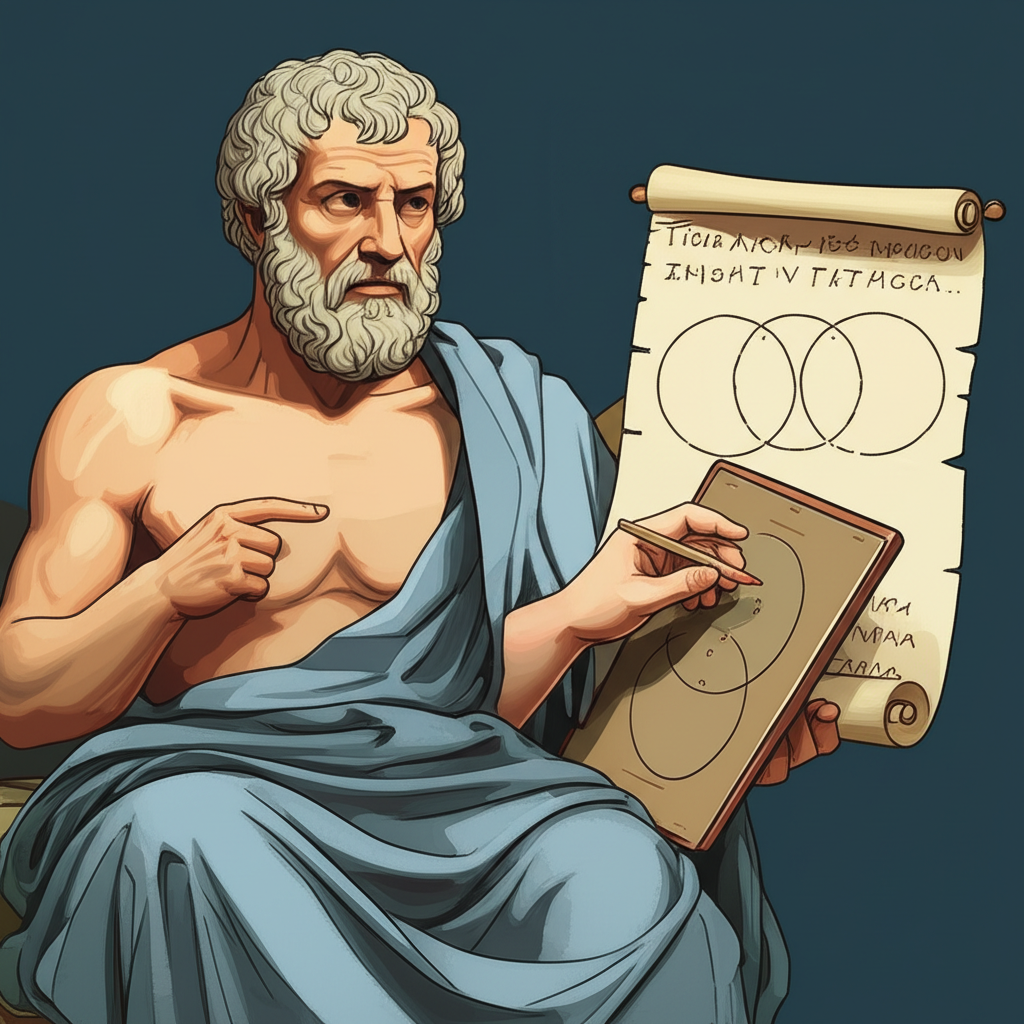
Definition as the Cartographer of Thought
In philosophical discourse, the stakes of proper definition are incredibly high. Many enduring philosophical debates, from the nature of justice to the essence of reality, often hinge on a lack of agreement on fundamental definitions. When we fail to logically structure our terms, we risk:
- Ambiguity: Words with multiple meanings lead to misinterpretation.
- Vagueness: Terms without clear boundaries make precise Reasoning impossible.
- Fallacies of Equivocation: Using the same word with different meanings within a single argument.
- Unresolvable Disagreements: Parties arguing about the same concept but operating with different implicit definitions.
Think of John Locke's meticulous efforts in An Essay Concerning Human Understanding to define terms like "idea," "substance," and "identity" to lay the groundwork for his theory of knowledge. Or Kant's rigorous definitions of concepts like "analytic" and "synthetic" judgments, crucial for his critique of pure Reasoning. These thinkers understood that intellectual progress is impossible without first mapping the terrain of our concepts with precision.
Conclusion: The Power of Precision
The logical structure of definition is more than an academic exercise; it is a vital practice for anyone seeking clarity in thought and effectiveness in Reasoning. By understanding and applying the principles of genus and differentia, by moving deliberately between the Universal and the Particular, we equip ourselves with the primary tool for dissecting complex ideas, avoiding logical pitfalls, and building robust arguments. In a world saturated with information and opinion, the ability to clearly define our terms is perhaps the most radical act of intellectual honesty, a cornerstone of genuine philosophical inquiry and a testament to the enduring power of Logic.
Suggested Video Resources:
-
📹 Related Video: ARISTOTLE ON: The Nicomachean Ethics
Video by: The School of Life
💡 Want different videos? Search YouTube for: "Aristotle Logic Definition Genus Differentia"
-
📹 Related Video: What is Philosophy?
Video by: The School of Life
💡 Want different videos? Search YouTube for: "The Importance of Defining Your Terms Philosophy"