

The Enduring Enigma: Unpacking the Logical Connection Between Cause and Effect
The universe, as we perceive it, is a grand tapestry of events, each seemingly leading to the next. From the simplest flick of a light switch to the most complex cosmological phenomena, we instinctively seek out the Cause for every Effect. But what, precisely, is the nature of this connection? Is it a mere observation of regular succession, or is there a deeper, unbreakable logical bond that compels one event to follow another? This article delves into the philosophical quest to understand the Relation between cause and effect, exploring whether it is a fundamental Principle of our reasoning or an intricate illusion born of habit.
The Inescapable Quest for Causality
From the earliest inquiries into the nature of reality, humanity has been driven by the question "Why?" Aristotle, in his Metaphysics, famously delineated four types of causes: material, formal, efficient, and final. While these categories provided a comprehensive framework for understanding why things are the way they are, the precise mechanism or Logic by which an efficient cause brings about its effect remained a profound mystery. We observe a hammer striking a nail, and the nail sinking; we see a spark, and then an explosion. Our minds immediately establish a Relation of causality. But is this Relation truly necessary, or merely contingent?
Hume's Radical Challenge: A Skeptical Inquiry
It was David Hume, a giant of the Scottish Enlightenment, who launched the most incisive attack on the perceived logical necessity of the causal Relation. In his A Treatise of Human Nature and later An Enquiry Concerning Human Understanding, Hume argued that our belief in cause and effect is not derived from reason, but from experience and custom.
Hume's core argument rests on a few key observations:
- Contiguity: The cause and effect are typically close in space and time.
- Priority: The cause always precedes the effect.
- Constant Conjunction: We observe the same types of causes consistently followed by the same types of effects.
However, Hume contended that while we observe these regularities, we never actually perceive the "necessary connection" itself. We don't see the force that compels the effect to follow the cause. Our expectation that the sun will rise tomorrow, or that fire will burn, is a product of habit, not a deductive logical inference.
Table: Hume's Components of Causality vs. Perceived Necessity
| Component of Causality | Hume's Interpretation | Our Perceived Interpretation |
|---|---|---|
| Contiguity | Observed proximity | Often interpreted as part of the Relation |
| Priority | Observed sequence | Essential for establishing Cause |
| Constant Conjunction | Empirical regularity | Leads to the Principle of uniform causation |
| Necessary Connection | Never observed | Assumed to exist, but without Logic |
For Hume, to say that "A causes B" is merely to say that "A has always been followed by B" in our experience. The Logic of causation, if it exists, is not one of deduction, but of induction, and inductive inferences, by their nature, are never strictly necessary.
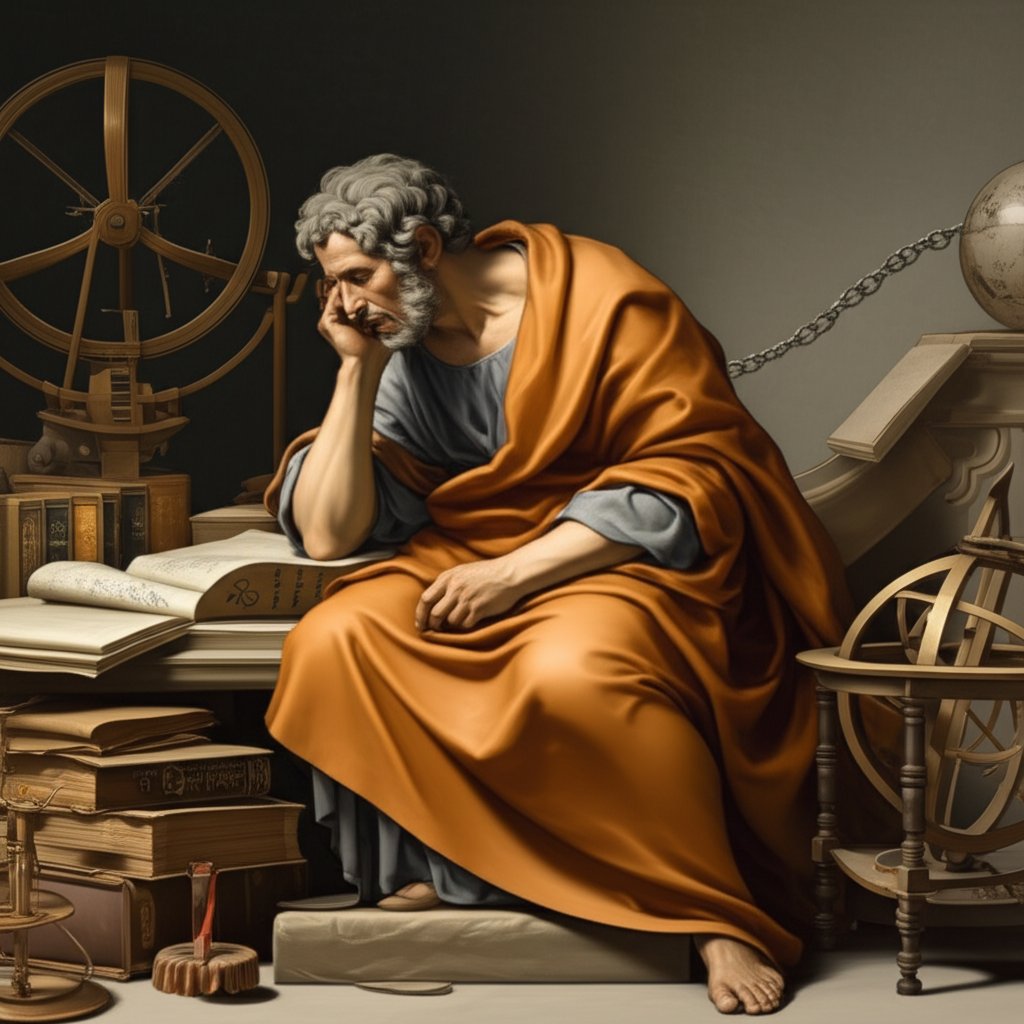
Kant's Transcendental Response: The A Priori Principle
The philosophical community, shaken by Hume's skepticism, sought to restore a firmer foundation for the Principle of causality. Immanuel Kant, in his monumental Critique of Pure Reason, offered a profound counter-argument. Kant agreed with Hume that we do not derive the concept of necessary connection purely from experience. However, he argued that the Principle of causality is not merely a habit of thought, but an a priori condition for experience itself.
For Kant, causality is one of the "categories of understanding" – an innate structure of the human mind that we impose upon the raw data of sensation to make sense of the world. We don't find causality in the world; rather, we bring causality to the world to organize our perceptions into coherent experience. Without the Principle that every event must have a Cause, our experience would be a chaotic, meaningless succession of impressions.
Therefore, for Kant, the logical connection between cause and effect is not something we discover empirically, but something our minds necessarily apply. It is a synthetic a priori judgment – a truth that is not purely definitional (a priori) but also expands our knowledge (synthetic), and is necessary for any coherent experience.
The Enduring Debate: Logic, Relation, and Principle
The debate between Hume and Kant highlights the enduring complexity of the logical connection between cause and effect.
- Is it an empirical Relation? If so, its necessity is always open to doubt, relying on the uniformity of nature.
- Is it a fundamental Principle of reason? If so, it is necessary, but perhaps only within the confines of human cognition, not necessarily an objective feature of reality independent of us.
- What kind of Logic governs it? Is it deductive, where the effect must follow the cause given certain premises? Or is it inductive, where we infer a high probability based on past observations?
Modern philosophy continues to grapple with these questions. From scientific determinism to quantum indeterminacy, the Principle of causality remains a cornerstone of scientific inquiry, even as its precise logical status continues to be debated. The very fabric of our understanding of the world, our ability to predict, plan, and act, rests on our implicit or explicit belief in the Relation between cause and effect. To truly understand this connection is to understand a fundamental aspect of both the universe and our place within it.
📹 Related Video: PLATO ON: The Allegory of the Cave
Video by: The School of Life
💡 Want different videos? Search YouTube for: "Hume's Problem of Induction Explained"
📹 Related Video: KANT ON: What is Enlightenment?
Video by: The School of Life
💡 Want different videos? Search YouTube for: "Kant's Categories of Understanding and Causality"