

The Logic of Same and Other in Metaphysics: Unpacking the Fabric of Reality
In the grand tapestry of metaphysics, few distinctions are as fundamental, yet as elusive, as that between the Same and the Other. This article delves into the profound logical structure that underpins our very understanding of existence, exploring how philosophers, from ancient Greece to modern thought, have grappled with identifying what is by distinguishing it from what it is not, and how this interplay shapes our conception of Being itself. We'll navigate the intellectual currents that reveal the Same and Other not merely as abstract concepts, but as the very warp and weft of reality.
Introduction: The Fundamental Distinction
At the heart of all inquiry, especially within metaphysics, lies the imperative to categorize, to define, and ultimately, to understand. This process invariably relies on a foundational logical operation: discerning what something is (its sameness, its identity) from what it is not (its otherness, its difference). Without this distinction, the very concept of Being dissolves into an undifferentiated void. The "Logic of Same and Other" is not merely an academic exercise; it's the invisible framework through which we perceive, articulate, and make sense of the world, allowing us to identify individual entities, understand change, and grasp the nature of reality's persistent and mutable aspects.
Ancient Echoes: Parmenides and Plato's Interrogation
The philosophical journey into the Same and Other begins with the profound challenges posed by the Presocratics, particularly Parmenides of Elea. His radical monism asserted that Being is, and Non-Being is not. For Parmenides, change and difference were illusions, as they would require Being to become Non-Being, an impossibility. Everything that is must, therefore, be eternally the Same, indivisible and unchanging. This perspective presented a formidable challenge: how could we account for the evident multiplicity and flux of the world if only the Same truly exists?
Plato, profoundly influenced by Parmenides, took up this gauntlet, most notably in his dialogue Parmenides and later in the Sophist. He recognized that to deny difference entirely was to render thought and language meaningless. If everything is the Same, then we cannot even say "A is different from B" without contradicting Parmenides' premise. Plato's solution involved a sophisticated understanding of difference as a form of Otherness that does not equate to Non-Being in an absolute sense.
Consider Plato's approach:
- The Forms: For Plato, the Forms (e.g., the Form of Beauty, the Form of Justice) represent eternal, unchanging essences – the ultimate Same for all particular instances. A beautiful object is beautiful because it participates in the Form of Beauty.
- Participation and Otherness: Yet, a beautiful object is also other than the Form of Beauty itself; it is also other than a just object. This "otherness" is not a lack of being, but a distinct mode of being.
- The Sophist and "Relative Not-Being": In the Sophist, Plato introduces the crucial idea that when we say something is not X, we don't mean it absolutely does not exist, but rather that it is different from X. This "relative not-being" or "otherness" is essential for distinguishing Forms from each other and for distinguishing particular things from their Forms. It allows for the possibility of predication and the very structure of thought.
Aristotle's System of Identity
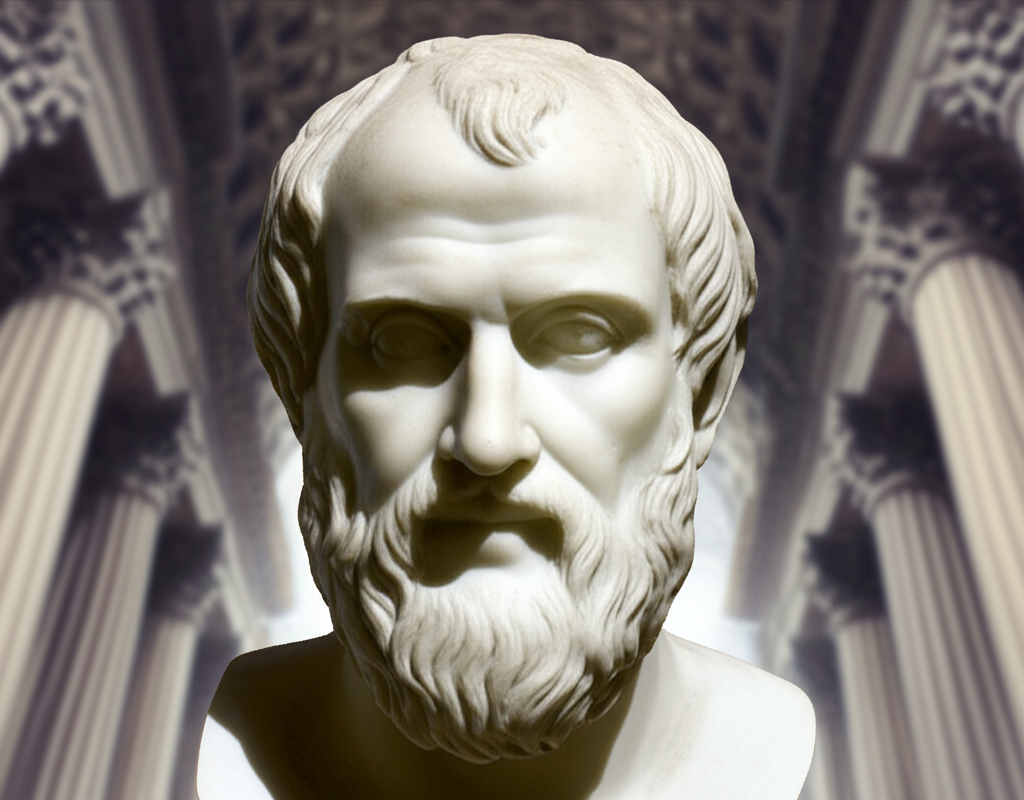
Aristotle, Plato's most famous student, further systematized the logic of Same and Other through his meticulous work on categories, substance, and predication. While rejecting Plato's separate realm of Forms, Aristotle grounded identity in individual substances.
For Aristotle, an individual substance (e.g., this specific horse, Socrates) is the primary Being. It is what remains the Same through change, the ultimate subject of all predication. The "Logic of Same" here is tied to the concept of ousia (essence or substance), which defines what something fundamentally is.
Aristotle's contribution to the "Logic of Other" is found in his Categories:
| Category | Description | Example (for a "human") |
|---|---|---|
| Substance | What it is fundamentally; exists in itself. | Human |
| Quantity | How much or how many. | Five feet tall |
| Quality | What kind; its inherent characteristics. | Pale, intelligent |
| Relation | How it stands in relation to other things. | Taller than John |
| Place | Where it is. | In the market |
| Time | When it is. | Yesterday |
| Position | Its posture or arrangement. | Sitting |
| Having | What it possesses or wears. | Wearing shoes |
| Doing | What it is doing. | Walking |
| Undergoing | What is being done to it. | Being cut |
These categories represent the various ways in which something can be other than its substance, yet still be. A human is the Same human, but can be other in terms of height, color, location, or action. Aristotle's framework provided a robust logical apparatus for understanding how individual beings can possess diverse attributes without losing their fundamental identity.
The Dialectical Unfolding: Hegel and Beyond
The philosophical journey continued, with thinkers like G.W.F. Hegel profoundly re-imagining the relationship between the Same and the Other. For Hegel, the distinction was not static but dynamic, a driving force of intellectual and historical development. His dialectic posits that a concept (thesis, the Same) inevitably generates its negation (antithesis, the Other). This tension is then resolved in a higher synthesis, which incorporates aspects of both, becoming a new Same that then generates its own Other.
This dialectical process illustrates:
- Identity through Difference: For Hegel, true identity isn't a simple, static self-sameness but an identity that has absorbed and overcome its own differences.
- Becoming: The interplay of Same and Other is central to the concept of Becoming, the process of change and development, which is ultimately more fundamental than static Being for Hegel.
This dynamic understanding laid groundwork for subsequent philosophical movements that explored identity, difference, and alterity in various contexts, from existentialism's focus on individual uniqueness to post-structuralist critiques of fixed identities.
📹 Related Video: PLATO ON: The Allegory of the Cave
Video by: The School of Life
💡 Want different videos? Search YouTube for: ""Plato Sophist dialogue explained" and "Hegel's Dialectic simplified""
The Enduring Significance for Being
Why does this ancient logical dance of Same and Other continue to resonate in contemporary metaphysics? Because it's inextricably linked to the very concept of Being.
- Defining Being: To say something is requires us to distinguish it from what is not. This act of differentiation is the very act of defining its Being.
- Understanding Change: If everything were eternally the Same, there would be no change, no process, no history. The Other allows for the emergence of novelty, the transformation of existence.
- Personal Identity: Even our own sense of self, our personal Being, is a constant interplay between what remains the Same within us (our core identity, memories) and what is Other (our changing experiences, evolving perspectives, bodily alterations).
- Language and Thought: Our language, with its subjects and predicates, nouns and verbs, inherently structures reality through the lens of identity and difference. To speak is to categorize, to distinguish, to relate—all operations rooted in the logic of Same and Other.
Conclusion: A Foundation of Thought
The Logic of Same and Other is far more than a dry academic exercise; it is the fundamental scaffolding upon which all metaphysical inquiry is built. From Parmenides' stark assertion of unified Being to Plato's nuanced understanding of difference as relative not-being, and Aristotle's systematic categorization of existence, to Hegel's dynamic dialectic, philosophers have consistently returned to this primal distinction. It reveals that to understand what is, we must simultaneously grasp what it is not. This enduring philosophical quest into the heart of identity and difference continues to illuminate the profound complexities of Being itself, demonstrating that the fabric of reality is woven from these two inseparable, yet distinct, threads.