

The Enduring Logic of Same and Other in Metaphysics
Understanding the fundamental nature of reality, or Metaphysics, often hinges on seemingly simple distinctions that, upon closer inspection, reveal profound complexities. Among the most crucial of these are the concepts of Same and Other. This article delves into the logic underpinning these distinctions, exploring how philosophers, from antiquity to the modern era, have grappled with identity, difference, and their profound implications for our comprehension of Being itself. Far from being mere linguistic quirks, the relationship between Same and Other forms the bedrock upon which our understanding of individuality, multiplicity, and change is built.
The Philosophical Genesis: Defining Reality Through Distinction
At its core, metaphysics seeks to answer "What is Being?" But to answer this, we immediately encounter the need to distinguish. What makes something the same as itself, and different from everything else? The logic of Same and Other provides the framework for this inquiry.
Parmenides and the Monism of the Same
One of the earliest and most radical takes on the "Same" comes from Parmenides of Elea, a figure central to the Great Books of the Western World. For Parmenides, Being is unequivocally one, eternal, indivisible, and unchanging. The very idea of "Other" – of difference, change, or non-being – is logically impossible. To speak of "other" would be to speak of "what is not," which, for Parmenides, is unthinkable and unutterable.
- Parmenidean Logic:
- What is must be.
- What is not cannot be thought or spoken.
- Therefore, change (becoming what one is not) is impossible.
- Multiplicity (different things) is impossible, as it implies "otherness" from the one.
- Being is thus pure, undifferentiated Sameness.
This stark monism presented a significant challenge to subsequent philosophers: how to account for the world of apparent change and multiplicity if Parmenides' logic was so compelling?
Heraclitus: The Flux of the Other
In stark contrast, Heraclitus of Ephesus, another titan of early Greek thought, emphasized the primacy of "Other." For Heraclitus, everything is in a state of constant flux; "you cannot step into the same river twice." Here, identity is not found in static sameness, but in the dynamic interplay of opposites. The logos (reason or underlying principle) is what gives coherence to this ceaseless becoming, but it is a logos of change and difference.
- Heraclitean Perspective:
- Change is the fundamental reality.
- Opposites (Same and Other) are in constant tension and interrelation.
- Identity is fluid, defined by its continuous transformation.
Plato's Sophist: Reconciling Sameness and Otherness
The tension between Parmenides and Heraclitus found a profound resolution in Plato, particularly in his dialogue The Sophist. Plato recognized that simply denying "Other" (as Parmenides did) made all discourse, all thought, and all distinctions impossible. If everything is the "Same," then nothing can be distinguished from anything else, including Being from Non-Being.
Plato's ingenious move was to argue that Otherness is not Non-Being in an absolute sense, but rather being different from. To say "X is not Y" is not to say "X does not exist," but rather "X is other than Y." This distinction is critical for the logic of how we understand Being.
| Concept | Parmenides' View | Plato's View (in Sophist) | Implications |
|---|---|---|---|
| Non-Being | Absolutely impossible, unthinkable | Not absolute non-existence, but "being other than" | Allows for distinction, falsehood, and multiplicity |
| Otherness | Denied | A "Greatest Kind," co-equal with Sameness, Motion, Rest, Being | Essential for defining identity and relations |
| Identity | Undifferentiated Sameness | Defined by both what it is (Same) and what it is not (Other) | Dynamic, relational, allows for coherent thought |
By establishing "Otherness" as a form of Being (a "greatest kind"), Plato provided the philosophical architecture for understanding how things can be both themselves (Same) and distinct from others (Other) without falling into logical contradiction or denying the reality of change and multiplicity.
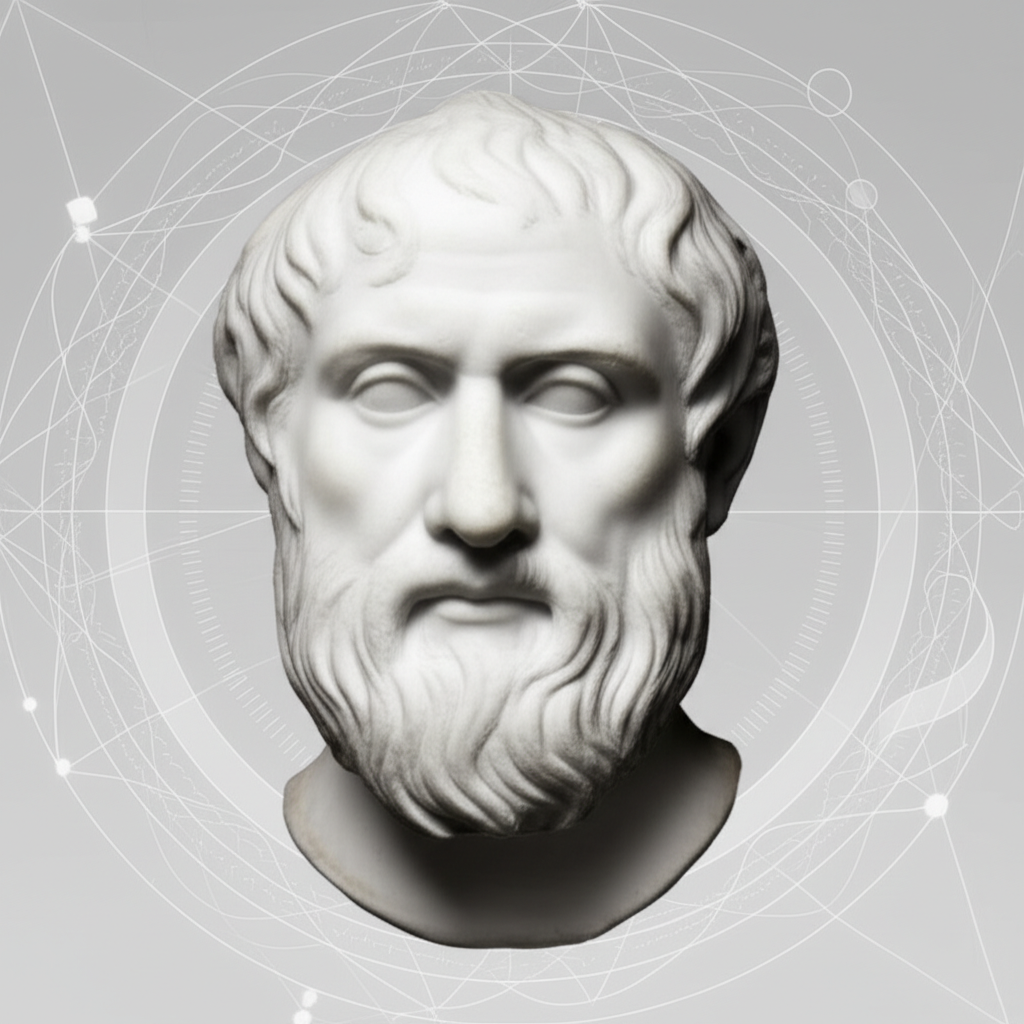
Aristotle and the Substance of Identity
Aristotle, building upon Plato's insights, further refined the logic of Same and Other through his concept of substance and accidents. For Aristotle, a substance (e.g., a specific human, a particular tree) is that which is fundamentally the same throughout its changes. It is the underlying "whatness" that persists. Accidents (e.g., color, size, location) are properties that can change without altering the fundamental identity of the substance.
- Aristotle's Contribution:
- Substance: The primary Being, that which is same over time.
- Accidents: Properties that are other than the substance itself, and can vary.
- Principle of Identity: A thing is identical with itself (A=A).
- Principle of Non-Contradiction: A thing cannot be A and not-A at the same time and in the same respect. This principle is deeply embedded in the logic of distinguishing Same from Other.
Aristotle's framework allowed for a robust understanding of how individual entities retain their identity (Same) even as they undergo continuous change and relate to other entities (Other) in the world.
Modern Perspectives: Hegel and the Dialectic of Difference
The logic of Same and Other continued to evolve, reaching a pinnacle in the philosophy of G.W.F. Hegel. For Hegel, difference (Other) is not merely external to identity (Same), but is essential for its very formation. His famous dialectical method posits that Being (thesis) immediately implies Non-Being (antithesis), and their tension leads to Becoming (synthesis). Here, "Other" is not just "not-A," but a constitutive element of A's self-realization.
- Hegel's Dialectical Logic:
- Thesis (Same): A concept in its immediate, undifferentiated form.
- Antithesis (Other): The negation or opposite of the thesis, inherent within it.
- Synthesis (Becoming): The reconciliation of thesis and antithesis, leading to a higher, more complex form of Being.
- Difference is the engine of conceptual development and the unfolding of reality.
For Hegel, the logic of Same and Other is a dynamic process. To truly understand something as Same, one must also grasp what it is Other than. Identity is thus a relational concept, constantly defined and redefined through its distinctions.
Why This Matters: The Enduring Logic for Understanding Being
The philosophical journey through the logic of Same and Other reveals its profound importance for metaphysics:
- Defining Identity: How do we know something is what it is? The principles of identity and non-contradiction, rooted in distinguishing Same from Other, are fundamental to all thought.
- Explaining Change: If everything were merely the Same, change would be impossible. If everything were merely Other, there would be no continuity. The interplay allows for coherent understanding of processes.
- Structuring Knowledge: Our ability to categorize, classify, and relate concepts depends entirely on our capacity to identify similarities (Same) and differences (Other).
- Understanding Reality's Structure: Is reality fundamentally one or many? Static or dynamic? The answers provided by philosophers concerning Same and Other directly inform these core metaphysical questions.
From the Eleatic challenge to Hegelian dialectics, the interplay of Same and Other remains a cornerstone of metaphysical inquiry. It forces us to confront the very nature of existence, compelling us to articulate not just what things are, but also what they are not, thereby revealing the intricate tapestry of Being in all its complexity.
📹 Related Video: PLATO ON: The Allegory of the Cave
Video by: The School of Life
💡 Want different videos? Search YouTube for: ""Plato Sophist Same Other Being Non-Being Explained""
📹 Related Video: PLATO ON: The Allegory of the Cave
Video by: The School of Life
💡 Want different videos? Search YouTube for: ""Hegel Dialectic Explained Being Non-Being Becoming""