

The Enduring Puzzle of Becoming: Navigating the Logic of Same and Other in Change
Summary: The problem of change is one of philosophy's most persistent and fascinating logical puzzles: how can something undergo transformation yet remain fundamentally itself? This article delves into the core of this conundrum, exploring the intricate logic that governs the interplay of Same and Other within the phenomenon of Change. We'll examine how philosophers, from ancient Greece to modern thought, have grappled with the relation between enduring identity and fleeting difference, revealing that understanding change requires a sophisticated framework that reconciles these seemingly contradictory elements.
The Shifting Sands of Identity: An Introduction
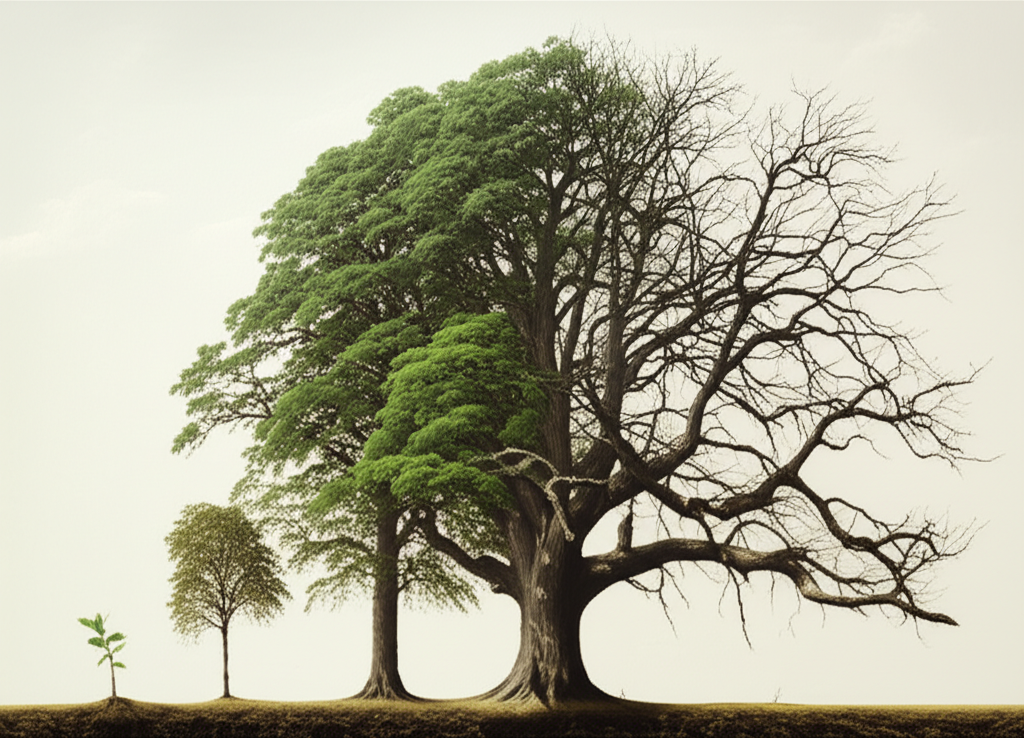
Have you ever stopped to consider what it truly means for something to change? It seems simple enough: a sapling grows into a mighty oak, a child matures into an adult, or water freezes into ice. Yet, beneath this apparent simplicity lies a profound philosophical challenge. If the sapling becomes an oak, is it still the same entity? If it's the same, how can it be so different? And if it's entirely different, then how can we say it changed at all? This is the heart of the "Logic of Same and Other in Change," a central theme throughout the Great Books of the Western World that continues to provoke deep thought.
I. Ancient Roots of a Modern Quandary
The tension between "Same" and "Other" in the context of "Change" is not a new discovery; it's a foundational question that has shaped philosophical inquiry for millennia.
- Heraclitus's River and Parmenides's Being: The ancient Greeks famously captured this tension. Heraclitus famously declared that "you cannot step into the same river twice," emphasizing the constant flux of existence where everything is perpetually becoming "other." In stark contrast, Parmenides argued that true Being is unchanging, eternal, and indivisible, making change an illusion of the senses. How do we reconcile these two powerful, seemingly contradictory, visions of reality? The logic of change demands an answer.
- Plato's Forms and the Realm of Becoming: Plato, grappling with this Heraclitean-Parmenidean dilemma, posited his theory of Forms. For Plato, true knowledge resided in eternal, unchanging Forms (the "Same"), while the sensible world we experience was a realm of "Becoming" (the "Other"), merely imperfect copies of these Forms. Change, then, was the participation of the material world in these perfect blueprints, a complex relation between ideal stability and sensory flux.
- Aristotle's Potency and Act: Perhaps one of the most robust logical frameworks for understanding change came from Aristotle. Rejecting Plato's separate realms, Aristotle introduced the concepts of potentiality and actuality. A sapling is an oak in potentiality, and its growth is the process of that potentiality becoming actualized. Here, the "Same" is the underlying substance (the living organism), while the "Other" is the particular form or quality it takes on at any given moment. This framework provides a crucial logic for how something can change without ceasing to be itself.
II. Deconstructing Change: When Does Same Become Other?
The paradox of persistence is central to our understanding. How can an entity persist through transformations that make it profoundly different?
The Paradox of Persistence:
Consider a ship. If you replace every plank, every mast, and every sail over time, is it still the same ship? This isn't just a thought experiment; it's a deeply logical question about identity through change. For something to change, there must be something that does the changing – something that remains "Same" – otherwise, we're not witnessing a transformation but merely the disappearance of one thing and the appearance of another. Yet, for change to occur, there must also be an element of "Other" – a difference from its previous state.
Key Distinctions in the Logic of Change:
To navigate this logical landscape, philosophers have developed crucial distinctions:
-
Numerical vs. Qualitative Identity:
- Numerical Identity: Refers to being the exact same individual thing (e.g., this specific apple).
- Qualitative Identity: Refers to having the same properties or qualities (e.g., two apples that are identical in color, size, and taste).
- During change, an entity typically maintains its numerical identity (it's still the apple) even as its qualitative identity shifts (it ripens, its color changes). This distinction is fundamental to understanding how something can be "Same" while becoming "Other."
-
Substance and Accident (Aristotle Revisited):
- Aristotle argued that an entity has an underlying substance (what it essentially is) and accidents (its non-essential properties like color, size, or location).
- Change often involves alterations in accidents while the substance remains the "Same." For instance, a person changes their hair color (an accident), but they remain the same person (the substance). This provides a powerful logical tool for explaining persistence through transformation.
-
Internal vs. External Relations:
- An entity's relation to itself (its internal structure, its history) vs. its relation to other things in its environment.
- Change can be understood as an alteration in these relations, both internal (how its parts relate to each other) and external (how it relates to its surroundings).
III. The Crucial Role of Relation in Understanding Transformation
The concept of relation is the bridge that connects "Same" and "Other" within the dynamic process of Change. Change is not merely a succession of static states; it's a continuous unfolding where identity and difference are inextricably linked.
The Interplay of Identity and Difference:
Change isn't just about something becoming different; it's about a relation between what was and what is now, anchored by a persisting "same." The oak tree is related to the sapling it once was. The adult is related to the child they once were. This relation of historical continuity allows us to speak of the same entity undergoing transformation. Without this relational thread, we would simply have a series of disconnected entities, and the very concept of "change" would dissolve.
Process Philosophy:
In more contemporary thought, process philosophy (e.g., Alfred North Whitehead) emphasizes that reality itself is fundamentally about change and becoming, rather than static being. Entities are not unchanging substances but rather dynamic processes, constantly in a state of flux and relation. Here, the "Same" is not a fixed core but a continuous, self-organizing pattern of "Otherness" emerging through time. This perspective offers a radical re-evaluation of the logic of existence, where relation is primary.
IV. Navigating the Logical Landscape of Becoming
To truly grasp the logic of change, we must embrace the necessity of both "Same" and "Other."
- The Necessity of Both: We cannot have change without both concepts. If everything were eternally "Same," there would be no change. If everything were utterly "Other" at every moment, there would be no enduring entity to do the changing. The dynamic tension between these two poles is what makes change possible and comprehensible.
- Temporal Dimensions: Time is the medium in which this complex relation unfolds. It allows for the continuous emergence of difference from a persisting identity. The "Same" entity exists across time, while the "Other" manifests at different points in time. Understanding change thus requires a temporal logic that accounts for continuity and discontinuity simultaneously.
Conclusion: The Unfolding Dialogue of Existence
The logic of Same and Other in Change is not just an abstract philosophical problem; it's a fundamental aspect of how we understand ourselves, the natural world, and the very fabric of reality. From the ancient river of Heraclitus to Aristotle's careful distinctions between potency and act, and on to modern process philosophies, this enduring puzzle has spurred humanity to develop ever more sophisticated ways of thinking about how things become. It teaches us that existence is a dynamic, relational dialogue where identity is forged not in stasis, but in the continuous, fascinating dance with difference.
📹 Related Video: ARISTOTLE ON: The Nicomachean Ethics
Video by: The School of Life
💡 Want different videos? Search YouTube for: ""Aristotle on Change and Motion" and "Heraclitus vs Parmenides explained""