

The Enduring Riddle: Understanding the Logic of Same and Other in Change
The world around us is in a constant state of flux – from the growth of a sapling into a mighty oak to the shifting sands of human thought and society. Yet, amidst this ceaseless transformation, we intuitively recognize continuity. How can something change so profoundly and still be considered the same thing? This fundamental philosophical inquiry, deeply explored within the Great Books of the Western World, lies at the heart of "The Logic of Same and Other in Change." It's a journey into understanding how Logic grapples with the paradox of persistence through alteration, examining the intricate Relation between what remains constant and what becomes different.
At its core, this exploration seeks to unravel the mechanisms by which identity is maintained or lost during Change, demanding a precise comprehension of how "the Same" and "the Other" coexist and interact within any given phenomenon. It's not merely an academic exercise but a profound attempt to grasp the very nature of reality and our place within it.
The Paradox of Persistence: Navigating Identity Through Flux
From the moment we perceive anything, we engage in an act of categorization and identification. We call a river the "same" river, even as its waters constantly flow. We recognize a person as the "same" individual, despite their physical and psychological evolution over decades. But what is this "sameness" that persists through "otherness"? This is the central logical dilemma that has captivated thinkers for millennia.
The problem arises because Change inherently introduces "the Other" – something new, something different from what was. If a thing completely becomes "other," then it ceases to be the "same." But if it never truly becomes "other," then no change has occurred. The Logic then demands: how can a thing be both itself (the Same) and not itself (the Other) in the process of transformation? This isn't just semantics; it delves into the very fabric of being and becoming.
Ancient Echoes: Heraclitus, Parmenides, and the Dawn of Dilemma
The earliest philosophical inquiries into Change from the Great Books of the Western World immediately highlight this tension:
-
Heraclitus of Ephesus (c. 535 – c. 475 BCE): The Doctrine of Flux
- Famously declared, "No man ever steps in the same river twice, for it is not the same river, and he is not the same man."
- For Heraclitus, Change was the only constant. Everything is in a state of becoming, a perpetual fire.
- His emphasis was heavily on "the Other," suggesting that "the Same" is an illusion or a fleeting moment in a continuous flow. Identity is dynamic, not static.
-
Parmenides of Elea (born c. 515 BCE): The Immutability of Being
- Starkly contrasted Heraclitus, arguing that Change is an illusion.
- For Parmenides, "what is, is." Being is uncreated, indestructible, eternal, indivisible, and motionless.
- Any talk of "becoming" or "passing away" implies that something comes from nothing or goes into nothing, which he deemed logically impossible.
- His philosophy championed "the Same" to such an extent that "the Other" (or difference) was denied any true existence.
These two foundational figures set the stage for centuries of debate, forcing subsequent philosophers to reconcile the undeniable reality of Change with the logical demands of identity.
Plato and Aristotle: Seeking Synthesis and Substance
Plato and Aristotle, building on these early insights, offered more nuanced approaches to the Logic of Same and Other in Change.
Plato's Realm of Forms and the World of Becoming
Plato, as seen in dialogues like Phaedo and Timaeus, attempted to bridge the gap between Heraclitus' flux and Parmenides' stasis:
- He posited a realm of eternal, unchanging Forms (e.g., the Form of Beauty, the Form of Justice) which represent true "the Same."
- The sensible world we experience, the world of "Becoming," is merely an imperfect reflection of these Forms. It is here that Change occurs, where things participate in or imitate the Forms.
- Thus, for Plato, "the Same" resides in the transcendent Forms, while "the Other" is characteristic of the empirical world, where objects are constantly changing their Relation to the Forms they imperfectly embody.
Aristotle's Potentiality and Actuality
Aristotle, in works like Physics and Metaphysics, provided perhaps the most robust framework for understanding Change while preserving identity:
- Substance (Ousia): He argued that a thing's "substance" is what makes it the Same throughout its changes. A tree remains a tree, even as it grows. Its substance persists.
- Categories of Change: Aristotle identified different types of change (e.g., change in quality, quantity, place) but maintained that these are changes of a substance, not a change in the substance itself to the point of complete annihilation and recreation.
- Potentiality and Actuality: This was his critical insight. A seed has the potential to become a tree (its "other" state). When it becomes a tree, its potentiality has been actualized. The Logic here is that the "other" state was already implicitly contained within the "same" initial state as a potential. This allows for a coherent Relation between the beginning and end of a transformation, where the underlying "same" substance moves from one actual state to another.
The Dialectical Dance: Hegel and the Unity of Opposites
Centuries later, G.W.F. Hegel, a pivotal figure in modern philosophy found in the Great Books, brought a new dimension to the Logic of Same and Other in Change through his concept of dialectics.
Hegel argued that Change is not merely an external process but an internal, logical necessity driven by contradictions:
- Thesis, Antithesis, Synthesis: A concept (thesis) inherently contains its opposite (antithesis). The struggle or Relation between these two leads to a higher, more complex unity (synthesis).
- For Hegel, "the Same" and "the Other" are not merely opposed but are fundamentally interconnected and drive each other. Identity is not static but is constantly being constituted and reconstituted through its engagement with difference.
- The "other" is not simply external negation but an internal moment of the "same," necessary for its self-development and realization. This dynamic process is Change, and it is profoundly logical.
The Enduring Questions: What Persists?
The Logic of Same and Other in Change continues to provoke profound questions in various domains:
- Personal Identity: What makes me the "same" person from childhood to old age, given the constant cellular and psychological changes? Is it memory, consciousness, a soul, or a narrative?
- Objects and Artifacts: Is a ship that has had all its parts replaced still the "same" ship (e.g., Theseus's paradox)?
- Societies and Cultures: How does a society maintain its identity while undergoing radical political, technological, or demographic shifts?
- Scientific Understanding: How do we categorize and understand evolving species or changing physical phenomena?
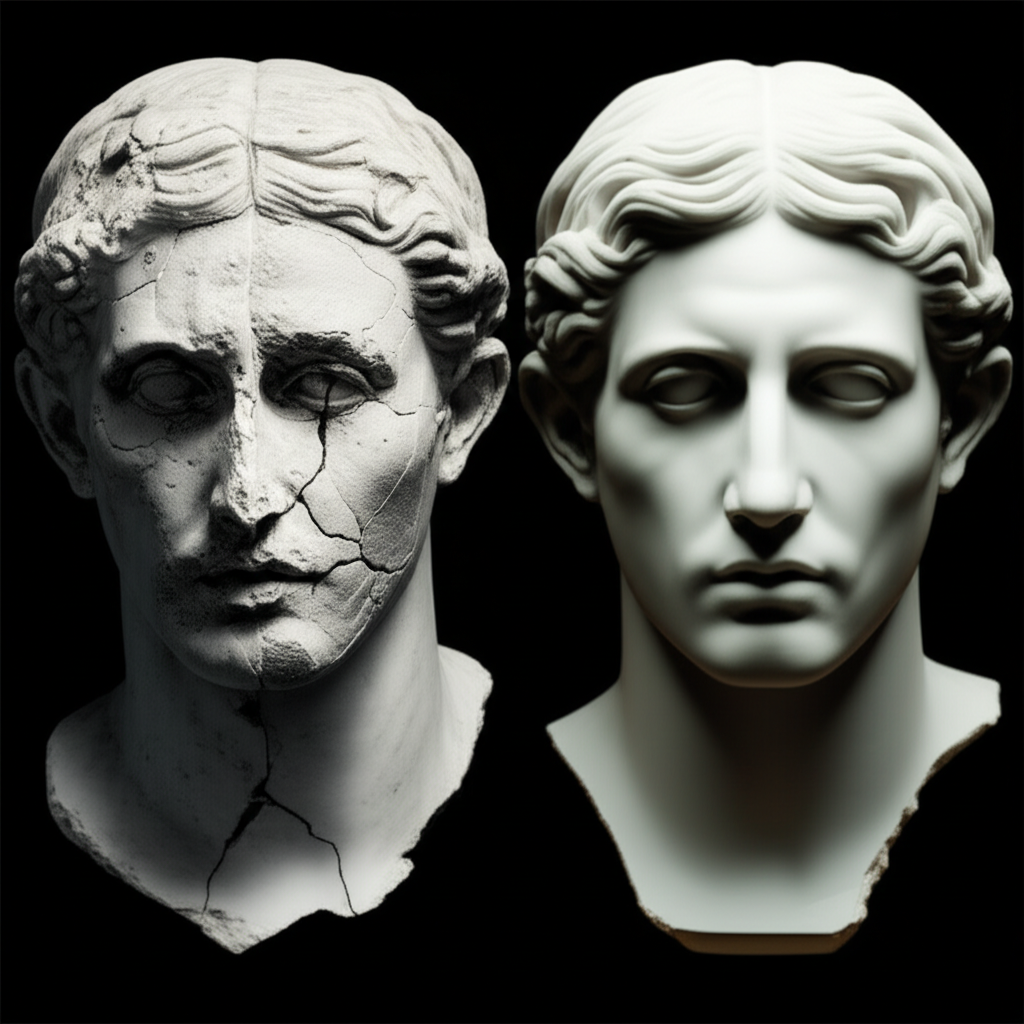
These questions highlight that understanding the Relation between "the Same" and "the Other" is not just an ancient puzzle but a living, breathing challenge for our contemporary understanding of reality. The Logic of how things transform while retaining some core identity is central to how we perceive, categorize, and make sense of our experiences.
Conclusion: The Dynamic Nature of Identity
Ultimately, the philosophical journey through "The Logic of Same and Other in Change" reveals that identity is rarely a simple, static concept. From the flowing river of Heraclitus to Aristotle's potentiality and actuality, and Hegel's dialectical unfolding, the most compelling accounts acknowledge the intricate Relation between persistence and transformation. To truly understand Change is to understand how something can be itself and, at the very same moment, be becoming something else, weaving a continuous tapestry of being from threads of sameness and difference.
YouTube Video Suggestions:
-
📹 Related Video: What is Philosophy?
Video by: The School of Life
💡 Want different videos? Search YouTube for: "Heraclitus vs Parmenides explained philosophy"
2. ## 📹 Related Video: ARISTOTLE ON: The Nicomachean Ethics
Video by: The School of Life
💡 Want different videos? Search YouTube for: "Aristotle's Metaphysics potentiality actuality explained"