

The Logic of Opinion and Belief: Navigating the Landscape of the Mind
Summary: In an age awash with information, discerning the true from the merely plausible has never been more critical. This article delves into the philosophical distinctions between opinion, belief, and knowledge, exploring how logic serves as our indispensable compass in this intellectual journey. Drawing insights from the Great Books of the Western World, we will examine the nature of our convictions, the subjective terrain of the mind, and the rigorous path required to transcend mere assent toward genuine understanding.
Introduction: Setting the Stage for Understanding
From the casual assertion about the weather to deeply held convictions about the universe, our mind is a crucible of ideas. But what is the true nature of these ideas? Are they fleeting opinions, steadfast beliefs, or something more enduring and verifiable—genuine knowledge? The pursuit of clarity in this distinction is not merely an academic exercise; it is fundamental to how we engage with the world, make decisions, and construct our understanding of reality. As thinkers throughout history, from Plato to Descartes, have grappled with these questions, they have consistently pointed to logic as the essential tool for navigation.
The Spectrum of Assent: From Conjecture to Conviction
Our intellectual landscape is rarely static. We move through various states of acceptance, from tentative agreement to unwavering certainty. This spectrum is where opinion and belief primarily reside, often intermingling and influencing one another.
An opinion might be described as a judgment or view about something, not necessarily based on fact or knowledge. It's often subjective, provisional, and open to debate. "The best coffee is black" is an opinion. It reflects a personal preference, not an objective truth.
A belief, on the other hand, often carries a deeper personal commitment. It's an acceptance that a statement is true or that something exists, often without absolute proof. We might believe in a particular political ideology, a scientific theory (even if we don't fully grasp the underlying evidence), or a spiritual doctrine. While beliefs can be buttressed by evidence, they frequently stem from trust, experience, or cultural conditioning.
Doxa vs. Episteme: A Classical Distinction
The ancient Greeks, particularly Plato, offered a powerful framework for understanding this spectrum with their distinction between doxa and episteme.
- Doxa (Opinion/Belief): For Plato, doxa represented the realm of appearances, conjecture, and common sense. It was the understanding derived from the senses, which he considered unreliable and prone to illusion. People holding doxa might be convinced of something, but their conviction lacks true justification or grounding in immutable truth. Think of the prisoners in Plato's Allegory of the Cave, mistaking shadows for reality. Their understanding is based on mere opinion.
- Episteme (Knowledge): In contrast, episteme signified true knowledge—understanding that is certain, justified, and immutable. It is graspable through reason and contemplation of the Forms, independent of the shifting world of sensory experience. This is the knowledge of universal truths, principles, and essences.
This distinction highlights a fundamental philosophical challenge: how do we move from the subjective, potentially flawed realm of doxa to the objective, verifiable realm of episteme?
The Role of Logic in Shaping Opinion and Belief
Herein lies the profound importance of logic. Logic is the study of correct reasoning, providing the rules and principles by which we can evaluate arguments, identify fallacies, and construct sound inferences. It acts as a filter, allowing us to scrutinize the foundations of our opinions and beliefs.
Consider the following:
- Deductive Logic: Moves from general premises to specific conclusions. If the premises are true and the argument is valid, the conclusion must be true. This is the bedrock of mathematical and philosophical proofs.
- Inductive Logic: Moves from specific observations to general conclusions. While not guaranteeing truth, strong inductive arguments make conclusions highly probable. This is often how scientific hypotheses are formed.
Without logic, our opinions are mere assertions, and our beliefs can be nothing more than prejudices. Logic compels us to ask: What evidence supports this? Does the conclusion truly follow from the premises? Are there alternative explanations? It is the discipline that helps us construct coherent arguments and dismantle faulty ones, moving us beyond mere gut feelings.
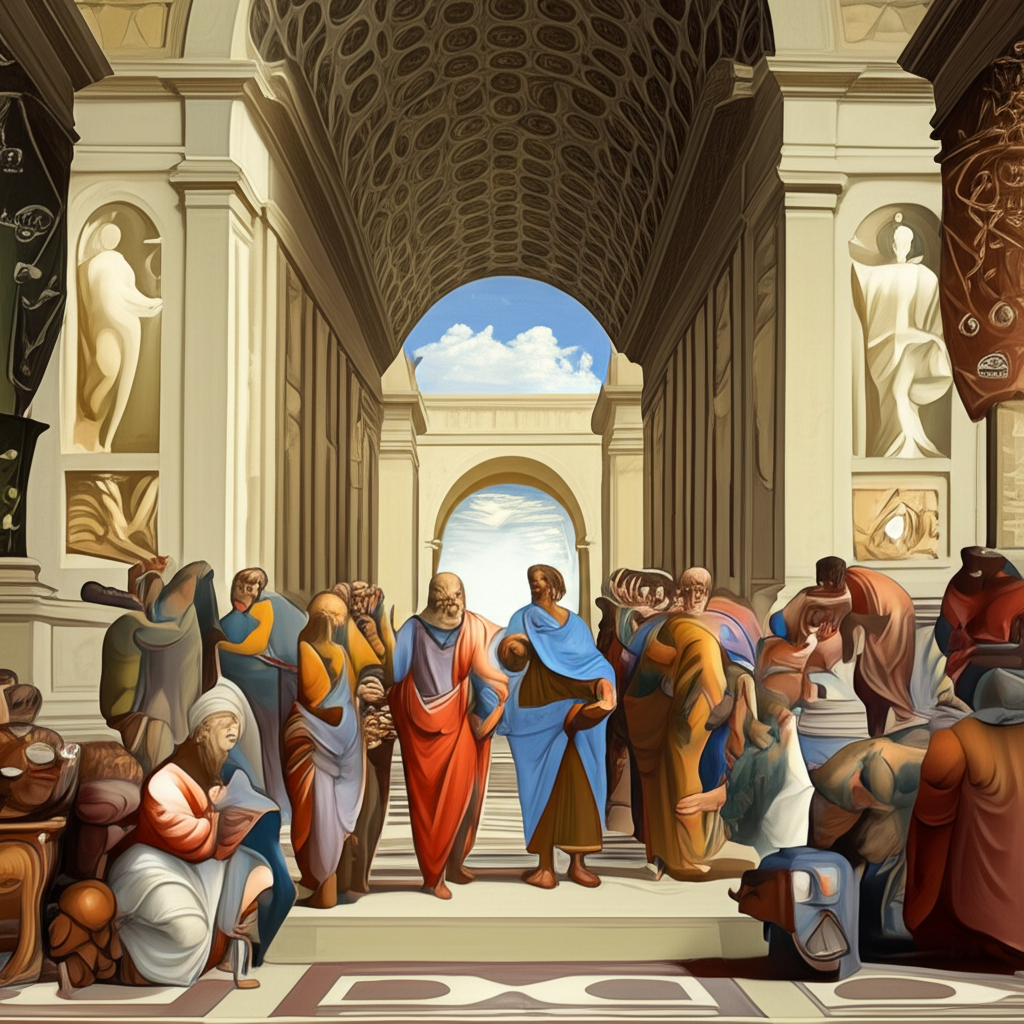
The Subjectivity of Belief: A Personal Landscape of the Mind
While logic offers an objective framework, the formation of belief is deeply intertwined with the subjective landscape of the mind. Our personal experiences, cultural background, emotions, values, and even cognitive biases significantly shape what we find credible.
John Locke, in his Essay Concerning Human Understanding, explored how our mind acquires ideas through sensation and reflection, forming the basis of our knowledge and beliefs. However, he also acknowledged that our assent to propositions is not always based on clear and distinct perception. We often believe things on the testimony of others, or because they fit neatly into our existing worldview, even if the logic is weak.
This highlights a tension: while logic strives for universality, belief often resides in the particularities of individual experience. The challenge, then, is to allow logic to critically examine even our most cherished beliefs, to ensure they are not merely comfortable illusions.
Moving Towards Knowledge: The Pursuit of Justified True Belief
The philosophical consensus often defines knowledge as "justified true belief." This tripartite definition, though debated, encapsulates the journey from mere conviction to genuine understanding:
- Belief: You must believe the proposition to be true.
- Truth: The proposition must actually be true.
- Justification: You must have good reasons or evidence for your belief. This is where logic becomes paramount. Justification means you can articulate why you believe something, providing sound arguments and empirical support.
Without sound logic, the justification component remains elusive. A belief might be true by accident, but without justification, it doesn't constitute knowledge. This rigorous standard compels us to move beyond superficial acceptance and demand robust evidence and coherent reasoning.
Navigating the Modern World of Information
In an era saturated with information, misinformation, and competing narratives, the principles governing opinion, belief, and knowledge are more vital than ever. Social media platforms, echo chambers, and the sheer volume of data can easily obscure the path to reasoned understanding.
Here, the lessons from the Great Books resonate profoundly. The call for critical thinking, the careful evaluation of premises, and the relentless pursuit of justification—all guided by logic—are our best defenses against intellectual confusion. To develop a discerning mind is to actively engage with evidence, challenge assumptions, and be willing to revise one's opinions and beliefs in the face of superior logic and evidence.
Conclusion: The Enduring Quest for Clarity
The journey from fleeting opinion to steadfast belief, and ultimately to verifiable knowledge, is a continuous and demanding one. It requires more than just intellectual curiosity; it demands the discipline of logic, the humility to acknowledge the limits of our own mind, and the courage to critically examine our deepest convictions. By embracing the principles of sound reasoning, we not only sharpen our individual intellect but also contribute to a more informed and rational discourse, fulfilling the timeless philosophical quest for truth and clarity.
YouTube Video Suggestions:
-
📹 Related Video: PLATO ON: The Allegory of the Cave
Video by: The School of Life
💡 Want different videos? Search YouTube for: "Plato's Allegory of the Cave explained"
2. ## 📹 Related Video: What is Philosophy?
Video by: The School of Life
💡 Want different videos? Search YouTube for: "Introduction to Deductive and Inductive Reasoning Philosophy"