

The Logic of Monarchy and Law
Have you ever paused to consider why, for millennia, monarchy stood as the predominant form of government across civilizations? It wasn't merely tradition; a compelling logic underpinned its endurance, particularly concerning the establishment and enforcement of law. This article delves into the philosophical arguments that championed monarchy, exploring how thinkers, many found within the Great Books of the Western World, articulated its rational basis for maintaining order, dispensing justice, and ensuring the stability of the state. From the perceived efficiency of a single ruler to the idea of the monarch as the embodiment of law itself, we'll unravel the intricate reasoning behind a system that, for a significant stretch of human history, was seen as the most logical path to a well-ordered society.
The Enduring Appeal of Single Rule: A Historical Perspective
When we cast our gaze back through the annals of history, from the ancient city-states to vast empires, the figure of a monarch often emerges as the central pillar of authority. It’s fascinating to consider that this wasn't always viewed as an arbitrary power structure, but rather as a highly rational solution to the inherent challenges of human coexistence.
Roots in Ancient Philosophy
Thinkers like Plato and Aristotle, while often critical of tyranny, recognized the potential for a virtuous monarch or "king" to embody the ideal ruler. For Aristotle, monarchy (rule by one) could be the best form of government when that one ruler governs for the common good, distinguishing it from tyranny (rule by one for self-interest). This initial philosophical framing laid groundwork for later justifications, emphasizing the logic of centralized authority as a means to achieve societal harmony and justice.
The Logical Case for Monarchy: Unity, Efficiency, and Order
The arguments for monarchy often hinge on its purported ability to deliver stability and effective government more reliably than other systems. Let's break down some of these key logical tenets.
1. Unity and Stability: Preventing Factionalism
One of the most potent arguments for monarchy is its capacity to foster national unity and prevent the divisive struggles of competing factions.
- A Single Head: A monarch, by definition, represents a singular point of authority. This centralized power can act as a unifying force, transcending regional, class, or ideological divides.
- Hobbes and the Leviathan: Thomas Hobbes, in his seminal work Leviathan, famously argued for an absolute sovereign as the only escape from the "state of nature," a war of all against all. While not exclusively endorsing monarchy, his logic for a single, indivisible sovereign power to enforce law and maintain peace strongly resonates with the monarchical ideal. He posited that the alternative – a divided government – inevitably leads to chaos.
2. Efficiency in Decision-Making
In times of crisis or when swift action is required, the monarchical system theoretically offers unparalleled efficiency.
- Unfettered Executive Power: A monarch, unburdened by parliamentary debates or electoral cycles, can make decisions and implement policies rapidly. This logic suggests that a single, decisive will is more effective than the often-slow machinery of deliberative assemblies.
- Long-Term Vision: A hereditary monarch, ruling for life, might be perceived as having a longer-term perspective on the nation's welfare, free from the short-term pressures of re-election.
3. The Monarch as the Source and Embodiment of Law
Perhaps the most profound philosophical connection between monarchy and law lies in the idea that the monarch is not just an enforcer of law, but its very fount.
- Divine Right and Natural Law: Historically, many monarchies claimed divine right, asserting that their authority, and thus the laws they promulgated, derived directly from God. Even without this religious underpinning, the idea persisted that the monarch, through their unique position, could best discern and enact laws that aligned with natural justice or the common good.
- The King's Two Bodies: This medieval concept suggests that a monarch possesses both a natural, mortal body and a mystical, immortal body politic, embodying the state and its laws. The monarch, in this view, literally is the law in action.
4. Orderly Succession: Avertiing Chaos
The hereditary principle, a cornerstone of most monarchies, was often justified as a pragmatic solution to the problem of succession.
| Advantage of Hereditary Succession | Rationale |
|---|---|
| Prevents Power Struggles | A clear line of succession avoids civil wars and internal conflicts that might arise from elections. |
| Ensures Continuity | Provides a stable transition of power, preserving the integrity and direction of the government. |
| Cultivates Expertise (theoretically) | Heirs are groomed from birth for their role, receiving extensive education in statecraft and law. |
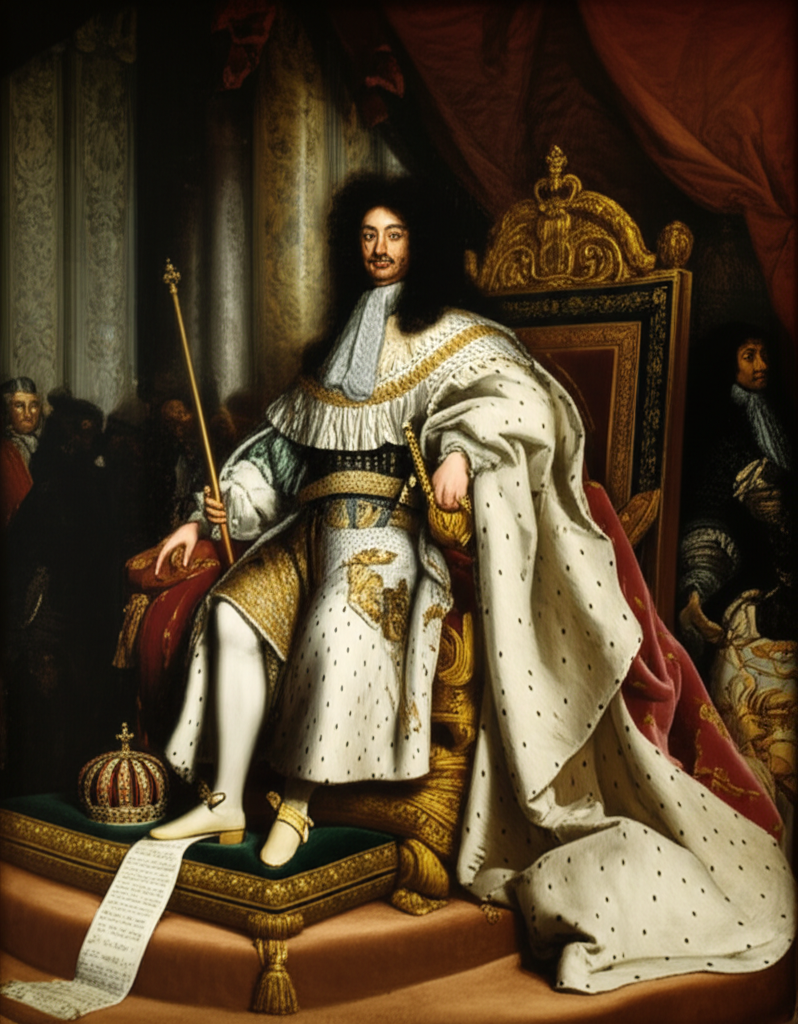
Monarchy and the Rule of Law: A Complex Relationship
While monarchy presented a compelling logic for establishing law and order, its relationship with the rule of law – the principle that all, including rulers, are subject to the law – has been historically complex and contentious.
Absolute vs. Constitutional Monarchy
- Absolute Monarchy: In this model, the monarch's will is the law. Thinkers like Jean Bodin (another figure in the Great Books) argued for absolute sovereignty as essential for state stability, where the sovereign is above human law but perhaps bound by divine or natural law. The logic here is that to limit the sovereign is to weaken the state.
- Constitutional Monarchy: This form evolved as a response to the potential for tyranny in absolute rule. Here, the monarch's power is limited by a constitution and established laws. The logic shifts from the monarch as the fount of law to the monarch as a symbol of national unity, operating within a framework of laws created and enforced by other branches of government. John Locke's ideas on limited government and the consent of the governed were instrumental in shaping the philosophical underpinnings of constitutionalism, even for monarchical systems.
Conclusion: A Legacy of Logical Inquiry
The logic of monarchy, as a system of government profoundly intertwined with the creation and enforcement of law, has been a cornerstone of political philosophy for centuries. From Aristotle's early classifications to Hobbes's stark warnings against anarchy, the arguments for a single, powerful ruler were rooted in the desire for stability, efficiency, and a clear source of authoritative law. While modern democratic ideals have largely superseded these arguments in many parts of the world, understanding the historical and philosophical logic behind monarchy offers crucial insights into the enduring human quest for effective government and the establishment of a just legal order. It reminds us that the questions surrounding power, authority, and the rule of law are as old as civilization itself, continually prompting us to examine the very foundations of how we choose to be governed.
YouTube Video Suggestions:
-
📹 Related Video: What is Philosophy?
Video by: The School of Life
💡 Want different videos? Search YouTube for: "Hobbes Leviathan explained philosophy"
2. ## 📹 Related Video: ARISTOTLE ON: The Nicomachean Ethics
Video by: The School of Life
💡 Want different videos? Search YouTube for: "Aristotle forms of government monarchy aristocracy polity"