

The Logic of Judicial Judgment: A Quest for Reasoned Justice
At the heart of any just society lies a profound and often challenging question: how do we arrive at a sound judicial judgment? It's a question that compels us to consider the very foundations of law, the intricate workings of human logic, and the elusive pursuit of justice. This article delves into the philosophical underpinnings of judicial decision-making, exploring how judges, armed with legal texts and precedents, strive to apply reasoned logic to the messy realities of human disputes, all in service of a higher ideal of justice. We shall see that while the ideal is a purely logical application of law, the reality demands a nuanced judgment that transcends mere syllogism, drawing deeply from the wellsprings of Western thought.
The Immutable Framework: Logic as the Skeleton of Law
The aspiration for law to be a rational and predictable system is as old as philosophy itself. From the rigorous deductive reasoning of Aristotle, whose Organon laid the groundwork for formal logic, to the systematic codifications of Roman law, the expectation has been that legal decisions should follow a discernible, defensible chain of reasoning. This is the bedrock of judicial judgment: the idea that a conclusion (the verdict) must logically follow from premises (the facts and the applicable law).
Consider the classic legal syllogism:
- Major Premise: All those who commit murder shall be punished.
- Minor Premise: John Doe committed murder.
- Conclusion: John Doe shall be punished.
This seemingly straightforward application of logic provides the skeleton for judicial decisions, ensuring a measure of consistency and fairness. Without this underlying logical structure, law would devolve into arbitrary decree, utterly undermining the very concept of justice. Thinkers across the Great Books of the Western World, from Plato's pursuit of an ideal form of governance to Aquinas's discussions of natural law, have grappled with the necessity of a rational order to human affairs, with law serving as its most tangible expression.
Beyond Pure Deduction: The Human Element in Judicial Judgment
While logic provides the framework, the reality of judicial judgment is rarely as neat as a perfect syllogism. Human affairs are complex, facts are often contested, and laws themselves can be ambiguous, contradictory, or insufficient for novel situations. This is where the art of judgment transcends mere mechanical application. Judges are not automatons; they are interpreters, weighing evidence, assessing credibility, and sometimes even filling gaps in the existing law through careful reasoning and an appeal to broader principles of justice.
- Interpretation and Context: A statute's wording, while seemingly clear, may take on different meanings depending on the context of a case. A judge must interpret the legislative intent, often drawing on historical understanding and societal values—a process that requires more than simple deduction.
- Equity and Fairness: There are instances where a strict adherence to the letter of the law, while logically sound, might lead to an outcome widely perceived as unjust. Here, the principle of equity, a concept explored by Aristotle in his Nicomachean Ethics as a corrective to legal generality, allows for a more nuanced judgment that aims for substantive justice.
- Precedent and Evolution: Legal systems built on common law rely heavily on precedent. However, precedents are not immutable. A judge's judgment may involve distinguishing a current case from previous ones or, in rare but significant instances, overturning outdated precedents to reflect evolving societal understandings of justice.
This dynamic interplay highlights that the logic of judicial judgment is not static. It is a living, breathing process that constantly seeks to reconcile the ideal with the practical, the abstract rule with the concrete human story.
Navigating the Labyrinth: Challenges to Pure Judicial Logic
The path to a just judgment is often fraught with complexities. Judges frequently face dilemmas where the application of logic becomes a delicate balancing act.
Challenges to Unambiguous Judicial Logic:
- Conflicting Laws or Principles: What happens when two valid laws or legal principles point to different outcomes? The judge must then engage in a higher form of logic, weighing the importance and applicability of each.
- Ambiguous Facts: The "truth" in a courtroom is often a reconstruction based on imperfect evidence. A judge's judgment involves assessing the credibility of witnesses and the weight of evidence, which is inherently a probabilistic and interpretative endeavor, not a purely deductive one.
- Novel Cases: For situations not explicitly covered by existing law, judges must reason by analogy, principle, and policy—essentially extending the logic of the legal system to new frontiers.
- Ethical and Moral Dimensions: While judges are bound by law, cases often touch upon fundamental ethical and moral questions that shape public understanding of justice. A good judgment implicitly or explicitly addresses these dimensions.
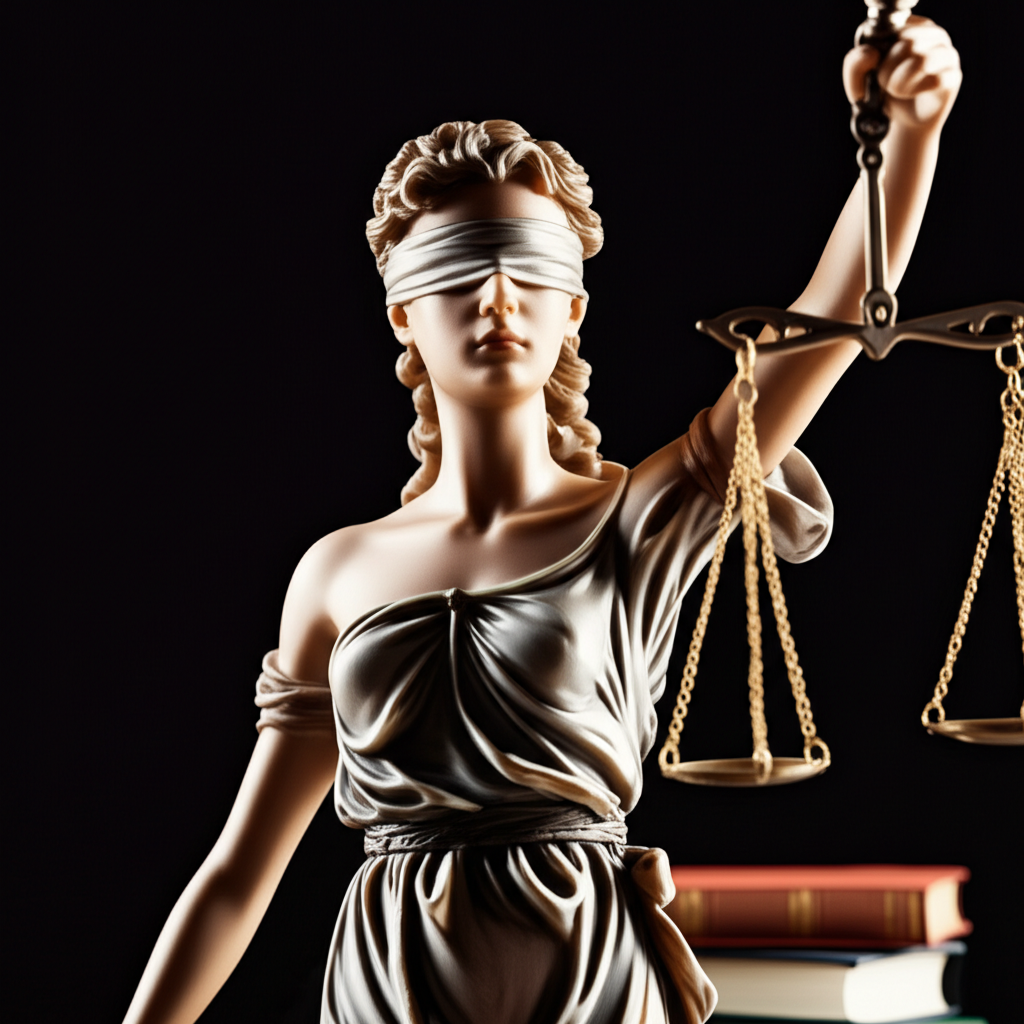
The quest for justice within the framework of law demands that judges not only apply logic but also exercise prudence and wisdom. This echoes the classical philosophical emphasis on practical reason (phronesis), a virtue lauded by Aristotle, which enables one to discern the right course of action in specific circumstances. A judge, in essence, is a philosopher of the practical, striving to render a judgment that is both legally sound and morally defensible.
The Virtue of Prudence in Judgment
Ultimately, the logic of judicial judgment is not merely about reaching a correct conclusion; it's about reaching a just conclusion. This requires more than intellectual prowess; it demands a deep understanding of human nature, societal values, and the profound implications of legal decisions. The Great Books remind us that justice is not just a concept but a virtue, something to be actively pursued and embodied.
A judge's judgment is a continuous act of balancing: between the letter and the spirit of the law, between individual rights and societal good, between precedent and progress. It is a testament to the enduring human endeavor to create order, fairness, and reason in a world often characterized by chaos and passion. The aspiration for logic in law is precisely what elevates judicial judgment from mere opinion to a cornerstone of civil society, ensuring that justice remains not just an ideal, but a tangible outcome.
YouTube Suggestions:
-
📹 Related Video: ARISTOTLE ON: The Nicomachean Ethics
Video by: The School of Life
💡 Want different videos? Search YouTube for: ""Aristotle Nicomachean Ethics Justice Law""
2. ## 📹 Related Video: What is Philosophy?
Video by: The School of Life
💡 Want different videos? Search YouTube for: ""Philosophy of Law Judicial Reasoning""