

The Unseen Machinery of Justice: Exploring the Logic of Judgment in Law
The courtroom, to the casual observer, appears as a stage where facts are presented, arguments are made, and a verdict is delivered. Yet, beneath this visible drama lies an intricate philosophical and intellectual process: the logic of judgment in law. This pillar page delves into the profound reasoning that underpins legal decisions, exploring how logic shapes the interpretation of law, the evaluation of evidence, and the ultimate pronouncements of justice. From the ancient philosophies of the Great Books of the Western World to the complexities of modern jurisprudence, we will uncover the systematic thought processes that transform raw information into authoritative judgments, revealing the enduring quest to imbue legal outcomes with rationality and fairness.
Foundational Concepts: Pillars of Legal Thought
Before we dissect the intricacies of legal reasoning, it's essential to establish a firm grasp of the core concepts at play. Logic, judgment, and law are not mere terms; they are the philosophical bedrock upon which entire legal systems are built.
What is Logic in a Legal Context?
At its heart, logic in law is the systematic application of reasoning to legal problems. It provides the framework for constructing coherent arguments, evaluating evidence, and deriving conclusions from established legal principles.
- Deductive Reasoning: This is perhaps the most familiar form of logic in law, often seen in the application of statutes. It moves from general principles to specific conclusions.
- Example: If all trespassers will be prosecuted (major premise) and John is a trespasser (minor premise), then John will be prosecuted (conclusion). This mirrors the Aristotelian syllogism, a cornerstone of Western thought found in the Organon.
- Inductive Reasoning: Often employed in fact-finding, this moves from specific observations to broader generalizations. Juries, for instance, infer guilt or innocence from a collection of evidence.
- Analogical Reasoning: Particularly prevalent in common law systems, this involves comparing a current case to past precedents. If the logic of a previous judgment applies to the current facts, a similar outcome is expected.
Understanding Judgment: More Than Just a Verdict
While we often associate judgment with the final decision in a case, it is, in fact, a multifaceted process involving critical evaluation and discernment. It's the moment where reasoning crystallizes into a definitive pronouncement.
- Factual Judgment: This involves determining what actually happened, based on the presented evidence. It requires evaluating credibility, weighing probabilities, and sifting through conflicting accounts.
- Normative Judgment: This is about applying legal rules and principles to the established facts to determine the legal rights and obligations of the parties. It often involves interpretation and the exercise of discretion.
- The Role of Discretion: Judges are not automatons; they possess a degree of discretion in applying the law. This discretion, however, is not arbitrary but is guided by legal principles, precedent, and a commitment to justice, reflecting a form of practical wisdom (phronesis) discussed by Aristotle.
The Nature of Law Itself: A Philosophical Lens
The very definition of law profoundly influences how judgment is exercised. Philosophical perspectives offer crucial insights:
- Natural Law: Proponents like Thomas Aquinas (from Summa Theologica) argue that law derives from universal moral principles accessible through reason. Judgment in this view seeks alignment with these higher truths.
- Legal Positivism: Thinkers like Thomas Hobbes (Leviathan) and John Locke (Two Treatises of Government) emphasize that law is a human construct, enacted by sovereign authority. Here, judgment primarily focuses on the faithful application of established rules, regardless of their perceived moral content.
- Legal Realism: This perspective highlights the practical realities of legal decision-making, acknowledging that judicial judgment is often influenced by social context, policy considerations, and even individual biases, moving beyond a purely formal logic.
The Process of Legal Reasoning: From Precedent to Principle
The actual mechanics of how legal professionals arrive at a judgment involve a sophisticated interplay of different reasoning methods.
Judicial Reasoning and Stare Decisis
The principle of stare decisis – "to stand by things decided" – is central to common law systems. It mandates that courts adhere to precedents established in previous judgments.
| Method of Reasoning | Description | Application in Law |
|---|---|---|
| Deductive | Applying a general rule to specific facts. | A statute defines "assault." If the proven facts of a case meet all elements of that definition, the judgment deductively concludes an assault occurred. |
| Inductive | Deriving a general principle from specific instances. | A pattern of similar cases where certain types of evidence consistently led to convictions might inductively suggest the strength of that evidence in future cases. |
| Analogical | Comparing a current case to a past, similar case to infer a similar outcome. | If a court previously ruled on liability for a novel form of online harassment, a new case involving a slightly different form of digital misconduct might be judged by analogy to the precedent, seeking similarities in logic and harm. |
| Abductive | Forming the "best explanation" for a set of observations, often used in fact-finding. | Given various pieces of circumstantial evidence, a jury or judge might conclude that the most plausible reasoning for their existence is the defendant's guilt (or innocence). |
Statutory Interpretation
When law is codified in statutes, judgment often hinges on interpreting the legislative text. This requires specific forms of reasoning:
- Textualism: Emphasizes the plain meaning of the words used in the statute, adhering to the logic of grammar and dictionary definitions.
- Purposivism: Seeks to understand the underlying purpose or intent of the legislature when enacting the law. Judgment here is guided by the spirit, rather than just the letter, of the law.
- Originalism: A form of interpretation that attempts to discern the original meaning or intent of the framers of a constitutional or statutory provision.
Fact-Finding and Evidentiary Logic
Before law can be applied, the facts must be established. This process is deeply rooted in evidentiary logic.
- Burden of Proof: The legal standard (e.g., "beyond a reasonable doubt" in criminal cases, "preponderance of the evidence" in civil cases) dictates the level of certainty required for a factual judgment.
- Credibility Assessment: Judges and juries use a form of inductive and abductive reasoning to assess witness credibility, considering consistency, demeanor, and corroborating evidence.
- Probabilistic Reasoning: While rarely explicit, legal judgment often involves weighing the probabilities of different factual scenarios based on the evidence presented.
Challenges to Pure Logic in Legal Judgment
Despite the structured nature of legal reasoning, the path to judgment is rarely purely linear or purely logical. Inherent complexities introduce variables that challenge a detached, objective application of logic.
The Human Element
The ideal of objective logic often confronts the realities of human nature.
- Bias and Emotion: Judges and juries, as human beings, are susceptible to unconscious biases, personal experiences, and emotional responses, which can subtly, or overtly, influence their judgment.
- Intuition: Sometimes, a legal professional’s "gut feeling" about a case can steer their reasoning, though this intuition is often an internalized summation of vast experience and legal knowledge rather than pure whim.
- Ethical Dilemmas: Cases often present situations where strict adherence to law might lead to an outcome perceived as unjust, forcing a difficult judgment that balances legal logic with moral considerations.
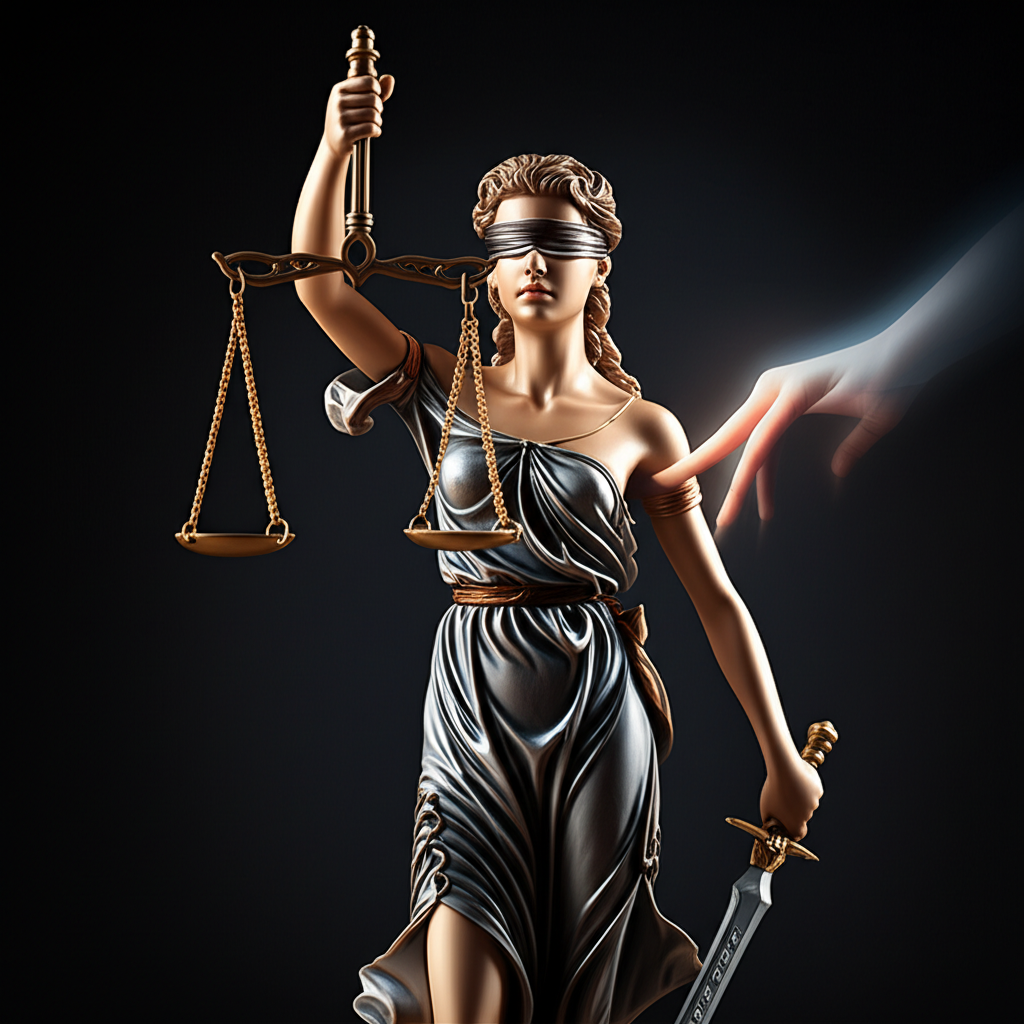
Ambiguity and Vagueness in Language
Law is expressed through language, and language, by its very nature, is often imprecise.
- Semantic Ambiguity: Words can have multiple meanings. Judgment requires selecting the appropriate meaning within the legal context.
- Syntactic Ambiguity: The structure of a sentence can lead to different interpretations.
- Open Texture of Legal Concepts: Concepts like "reasonable person," "due diligence," or "fair use" are inherently open-ended, requiring judgment to define their boundaries in specific cases. This reflects the philosophical challenge of applying universal concepts to particular instances.
Moral and Ethical Considerations
The law is not merely a set of rules; it aims, ultimately, for justice. This introduces a moral dimension to judgment.
- Justice vs. Legality: What happens when a legally sound judgment feels morally wrong? Philosophers from Plato (Republic) to Kant (Critique of Practical Reason) have grappled with the tension between what is lawful and what ought to be just.
- Public Policy: Judges sometimes consider the broader societal impact of their judgments, especially in areas where the law is developing or ambiguous. This involves a form of consequentialist reasoning.
Philosophical Perspectives on Legal Judgment
Throughout history, philosophers have offered profound insights into the nature of judgment, many of which directly inform legal reasoning.
Aristotle and Practical Wisdom (Phronesis)
Aristotle, in his Nicomachean Ethics, distinguishes between theoretical wisdom (sophia) and practical wisdom (phronesis). Phronesis is the intellectual virtue concerned with action, with discerning the right course in particular situations.
- Relevance to Law: Legal judgment is not merely about applying abstract rules (sophia); it requires the practical wisdom to know how to apply those rules to unique facts, considering context, consequences, and ethical implications. A judge with phronesis understands not just the letter, but the spirit of the law.
Kant and Categorical Imperatives
Immanuel Kant's moral philosophy, particularly his concept of the categorical imperative, proposes that moral actions are those that could be universalized without contradiction.
- Relevance to Law: Kantian reasoning encourages judges to consider whether the logic of their judgment could be consistently applied to all similar cases. It emphasizes impartiality, universalizability, and the inherent dignity of individuals, influencing concepts like "equality before the law."
Hegel and the Spirit of Law
Georg Wilhelm Friedrich Hegel, in works like Philosophy of Right, viewed law as an evolving manifestation of human freedom and reason within a historical and social context.
- Relevance to Law: Hegel's perspective suggests that legal judgment is not static but reflects the developing reason and values of a society. It implies that law and its interpretation must adapt to changing societal norms while maintaining a coherent internal logic.
The Future of Legal Judgment: AI and Beyond
As technology advances, questions arise about the role of artificial intelligence in legal judgment. Can machines replicate the complex interplay of logic, reasoning, and discretion that human judges employ?
- Algorithmic Logic: AI can excel at processing vast amounts of data, identifying patterns, and applying rules deductively. It can analyze precedents, predict outcomes, and even draft legal documents with impressive accuracy.
- The Challenge of Discretion: However, the human element of judgment—the exercise of discretion, the navigation of moral ambiguities, the understanding of nuanced social context, and the application of phronesis—remains a significant hurdle for AI. Can an algorithm truly "understand" justice or fairness in the way a human judge, steeped in the Great Books and lived experience, can?
- Implications for Justice: The integration of AI into legal judgment promises efficiency but raises profound ethical questions about accountability, transparency, and the very definition of a just outcome. The logic of machines, while powerful, may lack the adaptive, empathetic reasoning essential for truly human judgment.
Conclusion: The Enduring Quest for Just Judgment
The logic of judgment in law is a rich and multifaceted field, extending far beyond simple rule application. It is a dynamic interplay of rigorous reasoning, philosophical principles, human discretion, and an unwavering commitment to justice. From the syllogisms of Aristotle to the ethical dilemmas of modern courts, the process of legal judgment stands as a testament to humanity's ongoing quest to order society rationally and fairly. Understanding this intricate machinery of logic, judgment, law, and reasoning is not just an academic exercise; it is fundamental to appreciating the very foundations of our legal systems and the enduring pursuit of a just society.
Further Exploration
📹 Related Video: ARISTOTLE ON: The Nicomachean Ethics
Video by: The School of Life
💡 Want different videos? Search YouTube for: ""Aristotle's Logic and Legal Reasoning""
📹 Related Video: What is Philosophy?
Video by: The School of Life
💡 Want different videos? Search YouTube for: ""Legal Philosophy: Natural Law vs. Positivism Explained""