

The Logic of Judgment and Opinion: Navigating the Path to Truth
As thinkers, we constantly engage with the world, forming beliefs, making decisions, and interpreting experiences. At the heart of this engagement lies the fascinating interplay between judgment and opinion, both deeply rooted in logic and relentlessly striving, sometimes unknowingly, towards truth. This article delves into the philosophical distinctions and connections between these two fundamental modes of thought, drawing insights from the timeless wisdom found within the Great Books of the Western World. We will explore how a robust understanding of logic allows us to discern the weight and validity of what we hold to be true, distinguishing between reasoned conviction and mere personal preference.
The Unseen Hand of Logic: Architect of Thought
Before we dissect judgment and opinion, it's crucial to acknowledge the foundational role of logic. From Aristotle's meticulous Organon to the rigorous deductions of later philosophers, logic has always been the scaffolding upon which coherent thought is built. It provides the rules for valid inference, the principles for constructing sound arguments, and the framework for evaluating propositions. Without a grasp of logic, our judgments can become arbitrary, and our opinions can drift aimlessly, unmoored from reason.
Logic, in its essence, is the study of correct reasoning. It teaches us how to move from premises to conclusions, how to identify fallacies, and how to structure our thoughts in a way that maximizes clarity and minimizes error. When we speak of "the logic of judgment and opinion," we are examining how these mental acts conform to, or deviate from, these universal principles of sound reasoning.
Judgment: The Assertive Act in Pursuit of Truth
A judgment is a mental act by which we affirm or deny something about reality. It is a declarative statement, a proposition that asserts a relationship between concepts. When we say, "The sky is blue," we are making a judgment. Implicit in every judgment is a claim to truth. We believe that what we are asserting corresponds to reality.
Key Characteristics of Judgment:
- Aims at Truth: The primary goal of a judgment is to accurately reflect reality.
- Requires Evidence/Reason: Sound judgments are ideally supported by verifiable facts, logical deductions, or compelling evidence.
- Can Be Objective: While the act of judging is subjective, the content of a judgment often strives for objective validity.
- Forms the Basis of Knowledge: Accumulated and verified judgments contribute to our body of knowledge.
Philosophers throughout history, from Plato distinguishing episteme (knowledge) from doxa (opinion) to Descartes seeking indubitable truths through methodical doubt, have emphasized the rigorous path required for genuine judgment. A true judgment is not merely believed; it is known to be true through a process of verification and reasoned assent.
Opinion: The Realm of Belief and Probability
In contrast, an opinion is a belief or view that is not necessarily based on certainty or proof. While an opinion can be well-reasoned and logically coherent, it often exists in a realm where absolute truth is either unattainable, unknown, or irrelevant to its formation. Opinions are frequently shaped by personal experience, cultural background, values, and probabilities rather than definitive evidence.
Key Characteristics of Opinion:
- Based on Belief: Opinions are expressions of what one believes to be true or preferable.
- May Lack Definitive Proof: While evidence might support an opinion, it often doesn't meet the stringent criteria for absolute certainty.
- Can Be Subjective: Opinions are often personal and can vary widely between individuals.
- Often Deals with Values or Preferences: "Chocolate is better than vanilla" is an opinion, not a judgment about objective fact.
- Can Be Probabilistic: We might hold an opinion that "it will probably rain tomorrow" based on weather patterns, but it's not a definitive judgment until it happens.
Plato, in his Republic, famously used the Allegory of the Cave to illustrate the difference between mere opinion (the shadows on the wall) and true knowledge (the forms outside the cave). For him, opinion, or doxa, was a lower form of cognition, susceptible to illusion and lacking the stable foundation of truth. However, it's important to note that not all opinions are baseless; many are reasonable and informed, even if not absolutely certain.
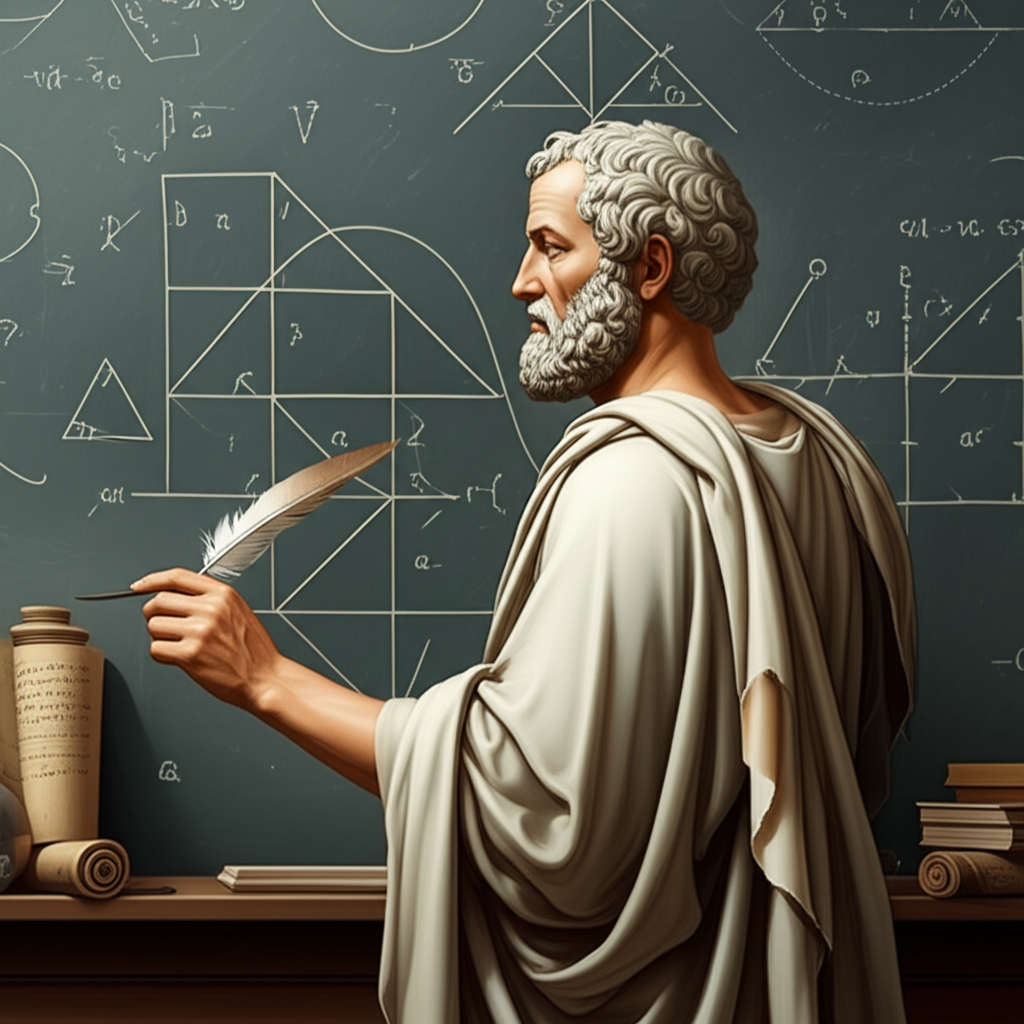
The Interplay and Distinctions: When Do Opinions Become Judgments?
The line between judgment and opinion is not always starkly drawn; rather, it's a spectrum. A well-informed opinion, buttressed by compelling evidence and sound logic, can approach the status of a judgment. Conversely, a poorly reasoned judgment, based on prejudice or insufficient data, can devolve into mere opinion.
Consider the following table to highlight their core differences:
| Feature | Judgment | Opinion |
|---|---|---|
| Primary Aim | Objective Truth, Factual Accuracy | Belief, Preference, Probability |
| Basis | Evidence, Proof, Logical Deduction | Personal Experience, Values, Inference, Likelihood |
| Nature | Assertive, Declarative, Universalizing | Subjective, Tentative, Context-Dependent |
| Verification | Observable, Testable, Demonstrable | Persuasive, Discussable, Open to Revision |
| Rigour of Logic | High – Essential for Validity | Variable – Can be logical, but not necessarily conclusive |
The critical factor in moving from opinion to judgment is the application of rigorous logic and the pursuit of demonstrable truth. When we subject our beliefs to critical scrutiny, seeking empirical evidence, logical consistency, and robust argumentation, we elevate them from the realm of personal preference to potentially verifiable assertions.
YouTube: "Plato's Allegory of the Cave Explained"
YouTube: "Aristotle's Logic and Syllogisms Tutorial"
Navigating the Modern Landscape: A Call for Critical Thought
In an age saturated with information and often conflicting viewpoints, understanding the logic of judgment and opinion is more vital than ever. Social media, echo chambers, and the rapid dissemination of unverified claims constantly challenge our ability to distinguish between well-founded assertions and mere popular beliefs.
The insights from the Great Books of the Western World remind us that the pursuit of truth is an enduring human endeavor, one that demands intellectual humility, a commitment to reasoned discourse, and an unwavering application of logic. By consciously striving to base our judgments on solid evidence and sound reasoning, and by recognizing the inherent subjectivity and probabilistic nature of many of our opinions, we can navigate the complexities of knowledge with greater clarity and integrity. Ultimately, cultivating this distinction strengthens our capacity for critical thinking, allowing us to build a more robust understanding of ourselves and the world around us.
📹 Related Video: What is Philosophy?
Video by: The School of Life
💡 Want different videos? Search YouTube for: "The Logic of Judgment and Opinion philosophy"