

The Architecture of Thought: Logic, Judgment, and Opinion
In the vast landscape of human thought, few concepts are as fundamental yet often conflated as logic, judgment, and opinion. This article will explore their intricate relationship, arguing that while judgment strives for the affirmation or denial of truth through reasoned logic, opinion often resides in the realm of probability and belief. Drawing insights from the enduring wisdom of the Great Books of the Western World, we will delve into how these distinct modes of understanding shape our worldview, guide our decisions, and ultimately, define our pursuit of knowledge. Understanding these distinctions, guided by rigorous logical principles, is crucial for navigating complex ideas and refining our understanding of the world around us.
Logic: The Guiding Hand of Reason
At the heart of any meaningful inquiry lies logic – the systematic study of valid inference. From Aristotle's foundational Organon to the intricate syllogisms that structure rational thought, logic provides the framework through which we can assess arguments, identify fallacies, and construct coherent pathways to understanding. It is the invisible architect of reason, dictating the rules by which premises lead to conclusions, ensuring that our thoughts, when properly aligned, move with a certain inevitability. Without this bedrock of logical principles, both judgment and opinion would be adrift, mere flotsam on the sea of subjective impressions. Logic compels us to seek consistency, clarity, and coherence, acting as the ultimate arbiter of intellectual integrity.
Judgment: The Act of Affirming Truth
Judgment, in its most robust philosophical sense, is the mental act of affirming or denying something about reality. When we make a judgment, we are asserting a proposition as true or false. This act carries with it an inherent claim to truth and often implies a degree of certainty or conviction. Think of Descartes' methodical doubt in his Meditations, where he sought an indubitable truth upon which to build all knowledge. A judgment is not merely a preference; it is a declaration that "X is Y" or "X is not Y," often arrived at through a process of reasoning and evidence. For instance, the judgment "all men are mortal" is a universal affirmation that, when properly understood, aims at an objective truth. It is here that logic plays its most direct role, guiding us toward judgments that are sound and well-founded, minimizing the sway of emotion or prejudice.
Opinion: The Shifting Sands of Belief
In contrast to judgment, opinion often occupies a more tentative and personal space. An opinion is a belief, a view, or an appraisal formed in the mind about a particular matter. While it can be informed by reason, it frequently lacks the same degree of certainty or universal applicability as a well-formed judgment. Plato, in his Republic, famously distinguished between doxa (opinion) and episteme (knowledge), portraying opinion as a lower form of understanding, often tied to the sensory world and susceptible to change. Montaigne, in his Essays, celebrated the fluidity and diversity of opinions, suggesting a healthy skepticism toward absolute claims of truth. Opinions are often probabilistic, reflecting what we believe to be likely, plausible, or personally agreeable, rather than what we have rigorously demonstrated to be true. They are valuable in discourse, fostering dialogue and exploring possibilities, but they must be recognized for their inherent provisionality.
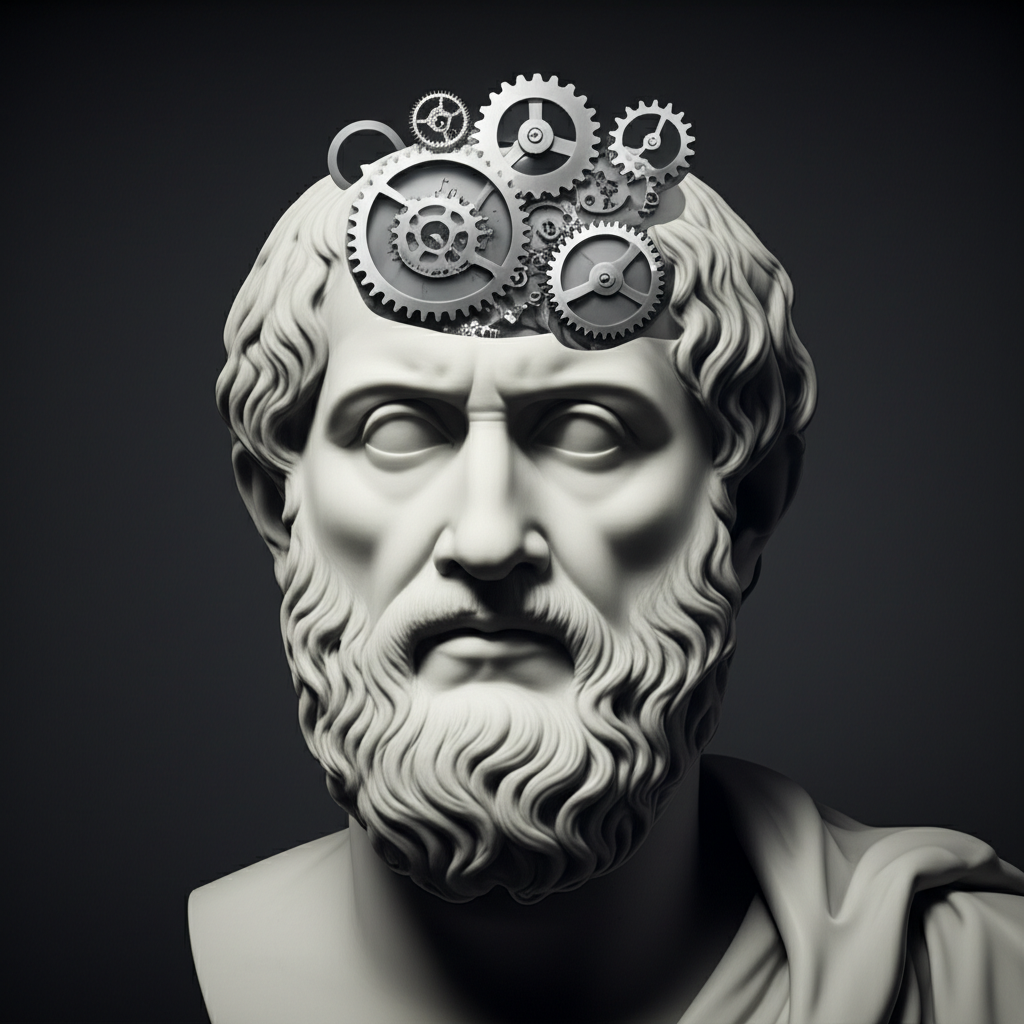
Navigating the Spectrum: From Certainty to Probability
The interplay between logic, judgment, and opinion is not always a clear-cut dichotomy but rather a spectrum of understanding. Our intellectual journey often begins with opinions, which, through the application of logic and further inquiry, can evolve into more robust judgments, and ideally, knowledge.
The Pursuit of Truth: An Enduring Quest
The quest for truth remains the ultimate horizon for both logic and judgment. Whether we speak of correspondence truth (what aligns with reality), coherence truth (what fits consistently within a system), or pragmatic truth (what works in practice), the impulse to understand things as they truly are is a driving force of philosophy. Logic provides the tools to test our propositions against reality and against each other, while judgment is the act of declaring what we believe to be true based on that testing. Opinions, while not necessarily false, exist outside this direct pursuit of objective truth, content to dwell in the realm of the plausible or the personally held.
Distinguishing Our Declarations: Judgment vs. Opinion
To clarify these crucial distinctions, consider the following table:
| Feature | Judgment | Opinion |
|---|---|---|
| Aim | To affirm or deny a truth | To express a belief, view, or appraisal |
| Basis | Logic, evidence, reasoned argument | Personal belief, probability, experience |
| Claim | Objective validity, universal applicability | Subjective validity, personal perspective |
| Certainty | High degree of certainty (ideally) | Provisional, open to debate, less certain |
| Philosophical Root | Aristotle's syllogisms, Descartes' certainty | Plato's doxa, Montaigne's skepticism |
| Example | "The sum of angles in a triangle is 180 degrees." | "Vanilla ice cream is the best flavor." |
Refining Our Worldview Through Logical Scrutiny
Ultimately, the value of understanding the logic of judgment and opinion lies in our ability to refine our own worldview and engage more thoughtfully with others. By applying logical scrutiny, we can elevate our opinions, transforming them into more considered judgments, or at least recognizing their limitations. This process involves:
- Identifying Premises: What assumptions am I making?
- Evaluating Evidence: Is there sufficient, reliable support for my claim?
- Checking for Consistency: Do my beliefs cohere without contradiction?
- Considering Alternatives: What other perspectives or explanations exist?
This rigorous application of logic, as championed by the great thinkers of the past, empowers us not only to form better judgments but also to engage with the opinions of others with greater clarity and intellectual honesty. It is through this ongoing philosophical exercise that we move closer to a more profound and truthful understanding of existence itself.
YouTube: Aristotle Logic Judgment Opinion
YouTube: Plato Doxa Episteme Truth
📹 Related Video: What is Philosophy?
Video by: The School of Life
💡 Want different videos? Search YouTube for: "The Logic of Judgment and Opinion philosophy"