

The Logic of Judgment and Opinion: Navigating the Labyrinth of Belief
Summary: In our daily lives, we constantly form judgments and hold opinions. This article explores the philosophical underpinnings of these cognitive acts, distinguishing their nature, their relationship to truth, and the indispensable role of logic in evaluating their validity. We will delve into how logic provides the framework for discerning robust conclusions from mere subjective leanings, guiding us on the arduous path towards genuine understanding.
The Human Predicament: Forming Beliefs
As sentient beings, we are perpetually engaged in the fascinating, yet often fraught, process of making sense of the world. From the simplest observation to the most complex moral dilemma, our minds are ceaselessly constructing understandings, forming beliefs, and drawing conclusions. But what truly differentiates a carefully considered judgment from a casual opinion? And how do we, in our pursuit of knowledge, ensure that our intellectual constructs align with truth? This is where the profound discipline of logic enters, offering a compass in the often-turbulent waters of human thought.
Judgment: The Act of Affirmation
A judgment in philosophy is more than just a passing thought; it's a decisive act of the intellect that affirms or denies something about reality. When we make a judgment, we are asserting a proposition as true or false. This act implies a certain level of commitment and, ideally, a foundation in reason or evidence. Think of a scientist concluding that "water boils at 100°C at standard atmospheric pressure" – this is a judgment, backed by empirical observation and repeatable experiments.
The formation of a judgment is often seen as a critical step in the journey towards knowledge. It involves:
- Deliberation: Careful consideration of available information.
- Evaluation: Assessing the strength and relevance of evidence.
- Assertion: A definitive statement of belief or disbelief.
For a judgment to be considered sound, it must adhere to principles of logic. It must be internally consistent, coherent with other established facts, and ideally, demonstrable or verifiable. The pursuit of truth is inherently linked to the formation of sound judgments.
Opinion: The Realm of the Probable and Subjective
In contrast to judgment, an opinion often carries a connotation of subjectivity and less rigorous scrutiny. An opinion is a belief or view held by an individual, which may or may not be based on evidence or argument. While judgments aim for universal applicability (e.g., "the sky is blue"), opinions are frequently personal preferences or interpretations (e.g., "blue is the best color").
The distinction between judgment and opinion has been a cornerstone of philosophical inquiry since antiquity. Plato, in particular, emphasized the difference between doxa (opinion) and episteme (knowledge), suggesting that opinions reside in the shifting realm of appearances, whereas knowledge grasps unchanging truths.
Here’s a brief comparison to highlight the differences:
| Feature | Judgment | Opinion |
|---|---|---|
| Foundation | Reason, evidence, logical inference | Belief, feeling, personal preference, convention |
| Aim | Objectivity, truth, knowledge | Expression of individual viewpoint |
| Verifiability | Generally verifiable or falsifiable | Often subjective, difficult to prove/disprove |
| Commitment | Strong assertion of truth | Personal view, less definitive |
| Scope | Aims for universal applicability | Typically individual or group-specific |
The Crucial Role of Logic
This is where logic becomes our most vital tool. Logic is the study of correct reasoning, providing the rules and principles for sound inference and valid argumentation. It acts as the arbiter, helping us to evaluate whether a judgment is well-founded or an opinion is merely an unsubstantiated belief.
How Logic Guides Us:
- Consistency: Logic demands that our judgments do not contradict themselves. If we hold two conflicting beliefs, at least one of them must be false.
- Coherence: Our judgments should fit together into a sensible, unified understanding of the world. Isolated beliefs, however true, gain strength when integrated into a coherent system.
- Validity of Inference: Logic provides rules (like those found in syllogisms) to ensure that conclusions genuinely follow from their premises. If the premises are true and the inference is valid, the conclusion must be true.
- Sufficiency of Evidence: While logic doesn't directly provide evidence, it helps us assess whether the evidence presented is sufficient and relevant to support a particular judgment.
- Identification of Fallacies: Logic equips us to spot common errors in reasoning, known as fallacies, which often underpin weak judgments and baseless opinions.
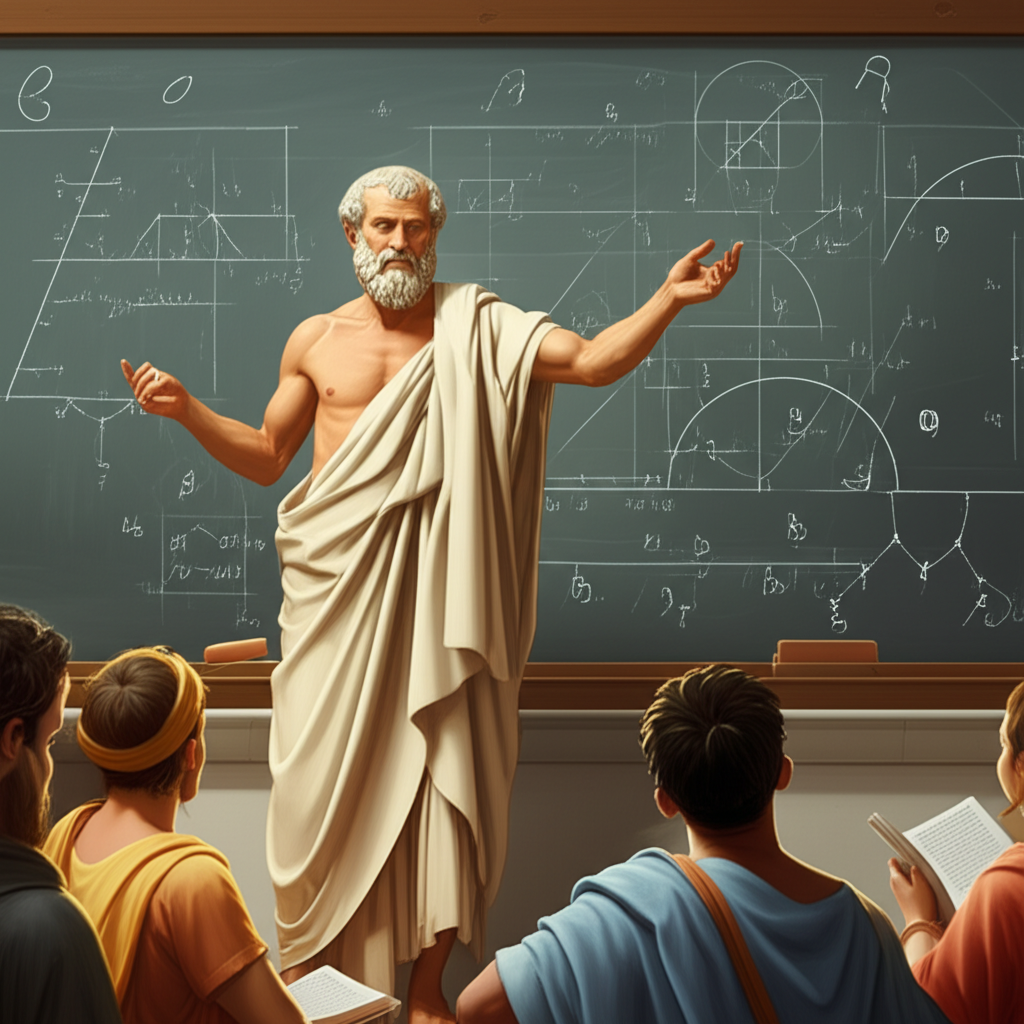
Navigating the Path to Truth
The journey from fleeting opinion to robust judgment and, ultimately, to truth, is a continuous philosophical endeavor. It requires intellectual humility, a willingness to scrutinize our own beliefs, and a steadfast commitment to logical reasoning. The Great Books of the Western World are replete with examples of thinkers grappling with this very challenge – from Plato's allegory of the cave, distinguishing between shadows (opinion) and reality (truth), to Descartes' methodical doubt, seeking indubitable judgments as foundations for knowledge.
By consciously applying logic to our thought processes, we can:
- Elevate our opinions from mere subjective preferences to more reasoned, defensible positions.
- Strengthen our judgments, ensuring they are built upon solid intellectual ground.
- More effectively discern factual claims from emotional appeals or unfounded assertions.
- Move closer to a deeper, more accurate understanding of the world, aligning our beliefs with truth.
Conclusion: The Ongoing Pursuit
The distinction between judgment and opinion, and the role of logic in navigating between them, remains a central theme in philosophy. It reminds us that our cognitive landscape is not flat; there are peaks of reasoned conviction and valleys of unexamined belief. By embracing the principles of logic, we empower ourselves to build stronger judgments, critically evaluate the opinions of others, and embark on a more deliberate and fruitful pursuit of truth. It is a journey of continuous refinement, but one that is essential for a life of intellectual integrity and genuine understanding.
YouTube Video Suggestions:
-
📹 Related Video: PLATO ON: The Allegory of the Cave
Video by: The School of Life
💡 Want different videos? Search YouTube for: ""Plato's Doxa vs Episteme Explained""
2. ## 📹 Related Video: KANT ON: What is Enlightenment?
Video by: The School of Life
💡 Want different videos? Search YouTube for: ""Introduction to Logic and Critical Thinking""