

The Logic of Judgment: Navigating the Architecture of Thought
The act of judgment is fundamental to human cognition, serving as the very crucible where disparate ideas are forged into coherent assertions about the world. Far from being a mere mental shrug, a judgment represents a profound commitment: a declaration of relationship between concepts, carrying with it an implicit claim to truth. To understand the logic of judgment is to peer into the foundational mechanisms of our intellect, uncovering how we construct meaning, differentiate fact from fiction, and ultimately, engage in meaningful reasoning. This article delves into this critical philosophical terrain, drawing insights from the rich tradition found within the Great Books of the Western World, to illuminate the structure and significance of our judgmental faculties.
The Genesis of Judgment: From Conception to Assertion
At its most basic, a judgment is an affirmation or denial of a predicate concerning a subject. Before we can judge, we must first conceive. We form concepts – "tree," "green," "tall" – through our engagement with reality. But these concepts, in isolation, tell us little. It is only when we unite them, as in "The tree is green" or "That person is not tall," that we move into the realm of judgment.
Aristotle, in his Organon, laid much of the groundwork for understanding propositions, which are the linguistic expressions of judgments. He distinguished between terms (concepts) and propositions (judgments), emphasizing that truth and falsehood reside not in individual terms, but in the combination of terms within a judgment. A judgment, therefore, is not merely a mental image; it's an intellectual act of synthesis or analysis that asserts a state of affairs.
- Concepts: Mental representations of individual things or general ideas.
- Judgments: The act of affirming or denying a relationship between two or more concepts.
- Propositions: The linguistic expression of a judgment.
This distinction is crucial. Our concepts provide the building blocks, but it is the judgment that constructs the edifice of knowledge, asserting a connection that can be evaluated for its veracity.
Judgment as the Nexus of Logic and Truth
The very essence of logic is concerned with the principles of valid reasoning and inference. Central to this is the evaluation of judgments. A judgment, by its nature, makes a claim about reality, and thus, it is either true or false. This binary nature is what allows logic to operate. Without the possibility of truth and falsehood, our intellectual assertions would be mere expressions of feeling, devoid of objective measure.
Consider the judgment: "All humans are mortal." This isn't just a statement; it's a profound logical assertion. It connects the concept of "human" with the concept of "mortal" in a universal, affirmative way. The truth of this judgment is empirically verifiable and philosophically significant. Conversely, the judgment "Some humans are immortal" would be deemed false based on our current understanding of biology and metaphysics.
The logical form of a judgment is paramount. Whether a judgment is universal or particular, affirmative or negative, affects its implications and how it can be used in syllogistic reasoning. Immanuel Kant, building upon Aristotle, further explored the categories of judgment, highlighting how the structure of our understanding itself shapes the kinds of judgments we can make.
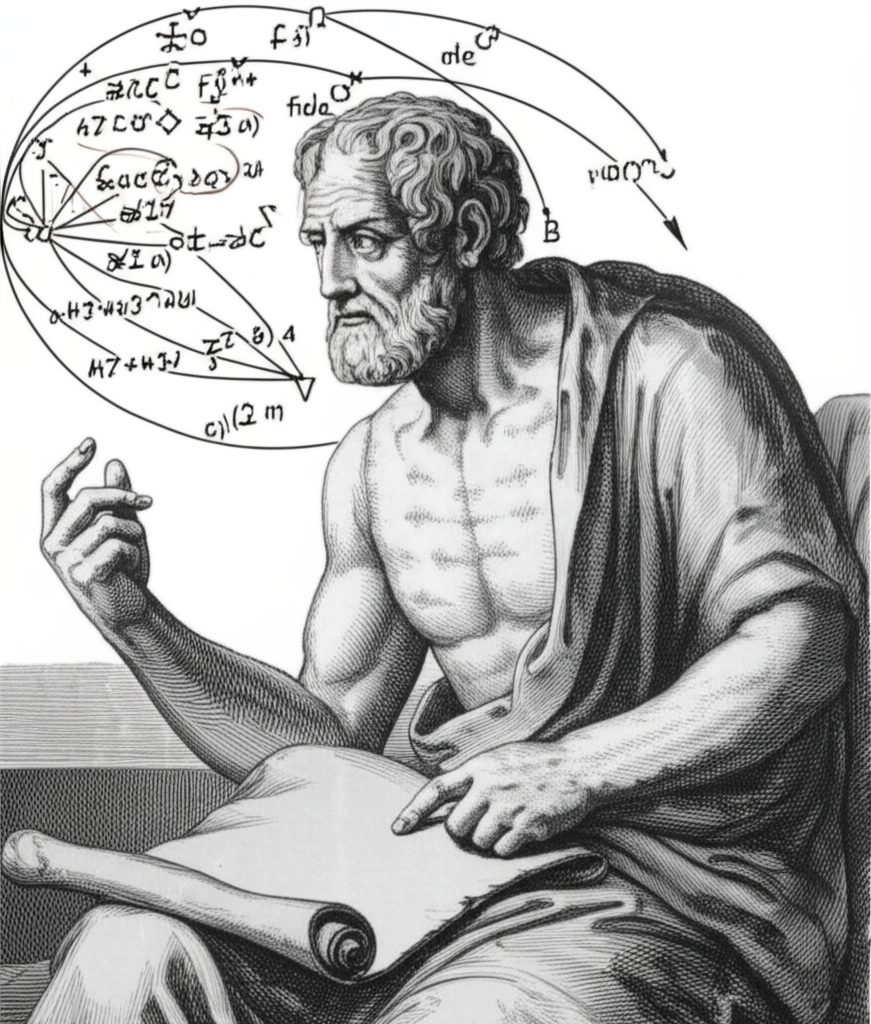
The Engine of Thought: Reasoning and the Formation of Judgments
While a single judgment asserts a truth, it is through reasoning that we move from one judgment to another, building complex arguments and reaching new conclusions. Reasoning is the process of deriving judgments from other judgments.
Types of Reasoning:
| Type of Reasoning | Description | Example |
|---|---|---|
| Deductive | Moves from general premises to specific conclusions. | All men are mortal. Socrates is a man. Therefore, Socrates is mortal. |
| Inductive | Moves from specific observations to general conclusions. | Every swan I have seen is white. Therefore, all swans are white. |
| Abductive | Infers the best explanation for a set of observations. | The grass is wet. Therefore, it probably rained. |
In each case, the conclusion is itself a judgment, arrived at through a structured process. The validity of our reasoning directly impacts the truth value of our resultant judgments. Flawed logic in the reasoning process will inevitably lead to unreliable judgments, even if the initial premises were true. This is why the study of logic, from Aristotle's syllogisms to modern symbolic logic, is so vital for clear thinking. It provides the tools to scrutinize the architecture of our arguments and the judgments they produce.
Nuances and Challenges in Judgment
The "logic of judgment" isn't always straightforward. Our judgments can be influenced by:
- Subjectivity: While logic aims for objectivity, human judgments are often colored by individual experience, emotion, and bias. A judgment like "This painting is beautiful" is inherently subjective, though it still asserts a relationship.
- Evidence and Justification: A judgment's claim to truth is only as strong as the evidence and justification supporting it. Philosophical skepticism often challenges the sufficiency of our justifications for even seemingly obvious judgments.
- Context: The meaning and truth of a judgment can be highly dependent on context. "It is cold" means something different in Antarctica than in the Sahara.
Understanding these nuances is part of mastering the art of judgment. It requires not just the ability to construct logically sound statements but also the wisdom to assess their foundation and limitations.
Conclusion: The Enduring Importance of Logical Judgment
The logic of judgment stands as a cornerstone of philosophy and, indeed, of all rational inquiry. From the ancient Greeks who meticulously categorized propositions to modern epistemologists who grapple with the nature of justified belief, the act of judgment remains at the heart of our quest for knowledge and truth. By carefully dissecting how we form judgments, how reasoning connects them, and how logic governs their validity, we hone our intellectual faculties. This deliberate engagement allows us to construct more robust arguments, discern falsehoods, and ultimately, build a more coherent and truthful understanding of ourselves and the world around us.
YouTube Video Suggestions:
-
📹 Related Video: ARISTOTLE ON: The Nicomachean Ethics
Video by: The School of Life
💡 Want different videos? Search YouTube for: "Aristotle Logic Organon summary"
-
📹 Related Video: KANT ON: What is Enlightenment?
Video by: The School of Life
💡 Want different videos? Search YouTube for: "Kant Categories of Judgment explained"