

The Logic of Induction and Experience: Building Knowledge from the Ground Up
In our relentless pursuit of understanding, few philosophical concepts are as fundamental, yet as subtly complex, as the interplay between Logic, Induction, and Experience. At its core, induction is the very engine by which we transform a myriad of particular observations into general principles, allowing us to navigate the world, predict its future, and build the edifice of human Knowledge. This article delves into the intricate relationship between our lived Experience and the inductive Logic we employ to make sense of it, exploring its power, its pitfalls, and its indispensable role in shaping our understanding of reality, drawing insights from the grand tradition of the Great Books of the Western World.
The Foundations of Our Understanding: Experience as the Wellspring of Logic
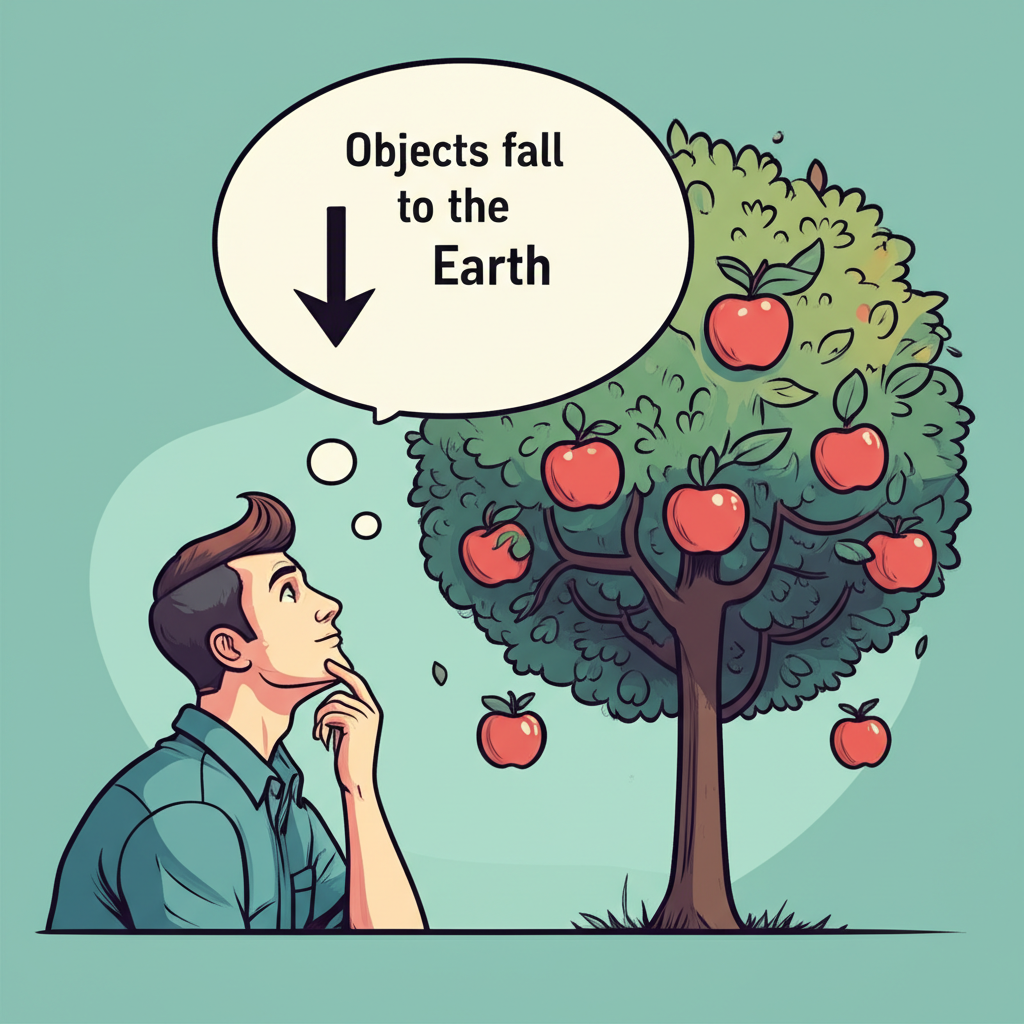
Long before the formalization of scientific methods, humanity learned through direct encounter. The sun always rose in the east; dropped objects always fell to the ground; fire always burned. These repeated observations, these undeniable Experiences, formed the bedrock upon which our earliest understanding of the world was built. From Aristotle's empirical observations of the natural world, laid out meticulously in his biological works, to John Locke's assertion that the mind is a tabula rasa – a blank slate filled by Experience – the Western philosophical tradition has consistently recognized the primacy of sensory input.
This reliance on Experience is not merely incidental; it is the very wellspring from which our inductive Logic flows. We don't deduce that fire burns from first principles; we learn it through direct sensation or the testimony of others who have experienced it. This process, though seemingly straightforward, underpins everything from our basic survival instincts to the most sophisticated scientific theories. Without the raw data of Experience, our minds would have no material upon which to operate, no patterns to discern, and thus, no Knowledge to construct.
Unpacking Induction: From Particulars to Universals
At its heart, Induction is a form of reasoning that moves from specific observations to general conclusions. Unlike deductive Logic, which guarantees its conclusion if its premises are true, induction offers conclusions that are probable, not certain. Consider the following:
- Observation 1: Swan A is white.
- Observation 2: Swan B is white.
- Observation 3: Swan C is white.
- ... (many more observations) ...
- Inductive Conclusion: All swans are white.
This simple example illustrates the "inductive leap." We extrapolate from a finite set of Experiences to a universal statement. This is how we form generalizations, scientific laws, and even our everyday expectations. Every time you expect the sun to rise tomorrow, or that a dropped pen will fall, you are employing inductive Logic based on a lifetime of consistent Experience.
- Key Characteristics of Inductive Reasoning:
- Probabilistic: Conclusions are likely, not guaranteed.
- Ampliative: The conclusion contains more information than the premises.
- Data-Driven: Relies heavily on empirical Experience and observation.
- Foundation of Science: The scientific method is largely inductive, moving from experimental results to general theories.
The Inductive Leap: Hume's Challenge and the Problem of Justification
While induction feels intuitive and necessary, its logical justification has posed one of philosophy's most enduring challenges, most famously articulated by David Hume in his A Treatise of Human Nature and An Enquiry Concerning Human Understanding. Hume observed that our belief in the future resembling the past – the very cornerstone of inductive Logic – is not based on reason or Logic, but on custom or habit.
Hume's "problem of induction" can be summarized thus: How can we logically justify the assumption that future Experiences will conform to past Experiences? Just because the sun has risen every day for millennia does not logically guarantee it will rise tomorrow. To assume it will is to use induction to justify induction, which is a circular argument.
- Hume's Core Argument:
- All reasoning about matters of fact is based on the relation of cause and effect.
- Our Knowledge of cause and effect comes from Experience (observing constant conjunction).
- Our belief in constant conjunction (e.g., fire causes heat) relies on the assumption that the future will resemble the past.
- This assumption (the uniformity of nature) cannot be proven by demonstrative Logic (as it's conceivable the future could be different).
- It also cannot be proven by probable Logic (as that would be circular, using induction to justify induction).
- Therefore, our belief in cause and effect, and thus our inductive Knowledge, is ultimately based on custom and habit, not rational justification.
Hume's critique, a profound challenge to the very foundation of empirical Knowledge, forces us to confront the limits of pure Logic when applied to the messy reality of Experience. It highlights that while induction is pragmatically indispensable, its ultimate rational justification remains elusive.
Refining Inductive Logic: Mill, Popper, and the Pursuit of Knowledge
Despite Hume's unsettling conclusion, philosophers and scientists have continued to grapple with Induction, seeking ways to strengthen its Logic or understand its role differently. John Stuart Mill, in his System of Logic, attempted to formalize inductive methods, proposing various canons (e.g., Method of Agreement, Method of Difference) to isolate causal relationships from complex Experiences. While valuable for scientific inquiry, Mill's methods still ultimately rely on the Humean assumption of the uniformity of nature.
Later, Karl Popper offered a radical alternative, suggesting that science doesn't primarily proceed by Induction (confirming theories) but by falsification (trying to prove them wrong). For Popper, a scientific theory is not one that can be proven true by endless Experience, but one that could be proven false. This shifts the focus from the problem of justifying inductive Knowledge to establishing criteria for distinguishing scientific theories from non-scientific ones, acknowledging the inherent uncertainty that Hume exposed.
Regardless of these philosophical debates, the practical utility of Induction remains unchallenged. It is the engine of learning, discovery, and adaptation. Every child who learns not to touch a hot stove, every farmer who plants crops according to seasonal patterns, and every scientist who formulates a hypothesis based on experimental data, is engaging in sophisticated inductive Logic informed by Experience.
The Indispensable Partnership: How Induction and Experience Shape Our World
The relationship between Logic, Induction, and Experience is not merely academic; it is the very fabric of our interaction with the world. Our daily lives are a testament to the power and necessity of inductive reasoning. From recognizing faces to predicting traffic patterns, our brains constantly perform inductive leaps, building a coherent model of reality from fragmented sensory input.
- Everyday Examples of Induction:
- Learning Language: We learn grammatical rules by observing many specific sentences.
- Social Norms: We understand appropriate behavior by observing others' reactions to specific actions.
- Problem Solving: We apply solutions that worked in past similar situations to new challenges.
- Scientific Discovery: Hypotheses are formed from observations, tested, and refined through repeated Experience.
The philosophical journey through the Great Books of the Western World reveals a consistent wrestling with these concepts. From the ancient Greeks seeking universal truths from particular observations to the Enlightenment thinkers grappling with the limits of human reason, the tension and synergy between Experience and the Logic of Induction have been central to our quest for Knowledge. While Hume's challenge reminds us of the inherent uncertainty in our inductive conclusions, it also underscores the profound act of faith we make every day in the regularity and predictability of the universe.
In conclusion, Induction, fueled by Experience, remains the primary mechanism by which we build our understanding of the world. It is an imperfect, probabilistic Logic, yet it is indispensable. It allows us to transcend individual observations, forge meaningful Knowledge, and navigate a complex reality with a degree of confidence that, though never absolute, is sufficient to live, learn, and perpetually expand the boundaries of human understanding.
YouTube Video Suggestions:
-
📹 Related Video: ARISTOTLE ON: The Nicomachean Ethics
Video by: The School of Life
💡 Want different videos? Search YouTube for: ""The Problem of Induction Explained - David Hume's Challenge""
2. ## 📹 Related Video: What is Philosophy?
Video by: The School of Life
💡 Want different videos? Search YouTube for: ""Inductive vs Deductive Reasoning: Crash Course Philosophy #2""