

The Twin Pillars of Thought: Unpacking the Logic of Induction and Deduction
At the very heart of human reasoning, and indeed, the pursuit of knowledge itself, lie two fundamental modes of logic: induction and deduction. These aren't just academic curiosities; they are the very engines by which we navigate the world, form beliefs, and construct understanding. From the foundational texts of the Great Books of the Western World to our daily decision-making, mastering the distinction and interplay between these two forms of inference is crucial for anyone seeking clarity and truth. This article will unravel the intricacies of inductive and deductive logic, exploring their mechanisms, strengths, and limitations.
Deductive Reasoning: The Path of Certainty
Deductive reasoning is often considered the gold standard of logic due to its inherent certainty. It moves from general principles to specific conclusions. If the premises of a deductive argument are true, then the conclusion must also be true. This form of reasoning does not introduce new information but rather makes explicit what is already implicit in the premises, guaranteeing the truth of the conclusion.
Characteristics of Deduction:
- Top-Down Approach: Starts with broad generalizations and moves to specific instances.
- Validity and Soundness:
- Validity refers to the structure of the argument: if the premises are true, the conclusion must follow.
- Soundness requires an argument to be both valid and have true premises.
- Truth Preservation: A valid deductive argument preserves the truth from its premises to its conclusion.
- Non-Amplifying: The conclusion contains no more information than was present in the premises.
A Classic Example from Aristotle:
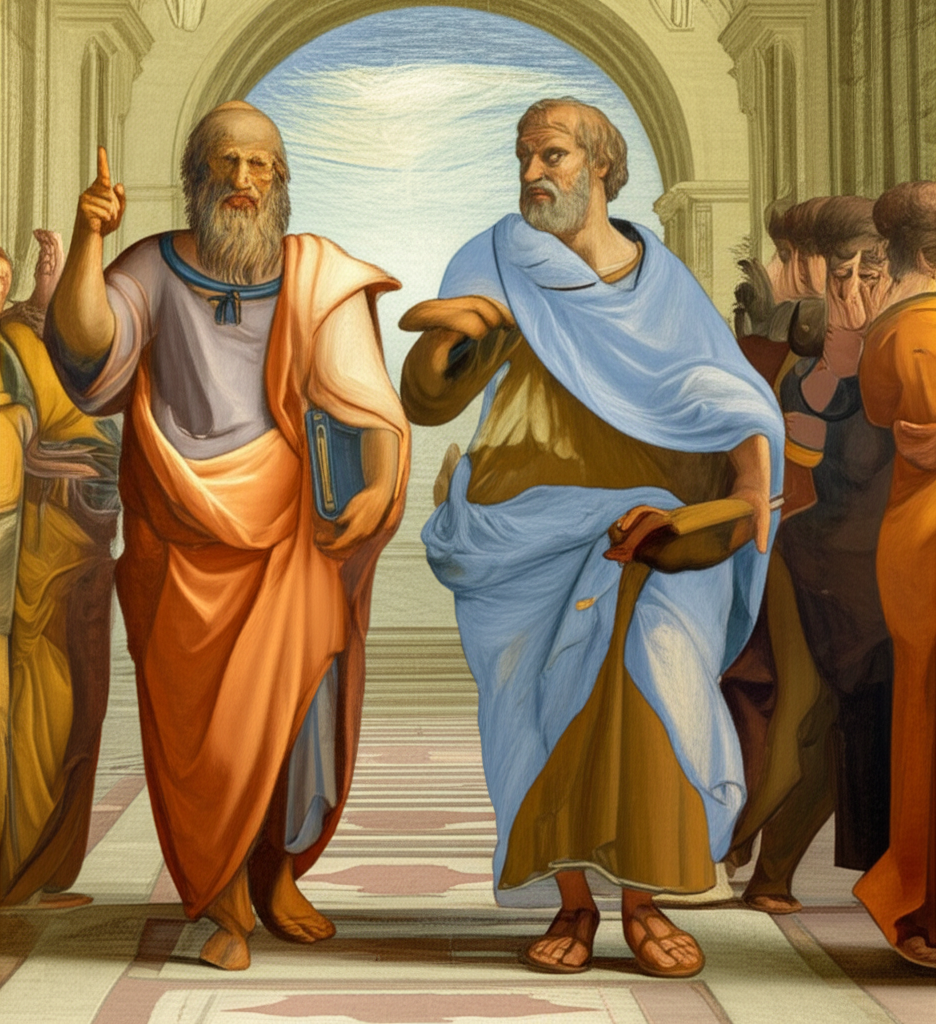
Consider the classic syllogism, a form of deductive argument championed by Aristotle, whose works, particularly the Organon, laid much of the groundwork for formal logic:
- All men are mortal. (Major Premise)
- Socrates is a man. (Minor Premise)
- Therefore, Socrates is mortal. (Conclusion)
In this example, if premises 1 and 2 are accepted as true, then the conclusion, "Socrates is mortal," is necessarily true. There is no room for doubt; the logic dictates the outcome. This absolute certainty makes deduction an invaluable tool in mathematics, formal logic, and philosophical argumentation, where the aim is to establish undeniable truths from accepted principles.
Inductive Reasoning: Building Knowledge from Experience
Inductive reasoning, in contrast to deduction, moves from specific observations to general conclusions. It's the engine of empirical science and everyday learning, allowing us to form hypotheses, make predictions, and build general principles based on observed patterns. However, unlike deduction, the conclusions of inductive arguments are never absolutely certain; they are, at best, probable.
Characteristics of Induction:
- Bottom-Up Approach: Starts with specific observations and moves to broader generalizations.
- Probabilistic Conclusions: The conclusion is likely, but not guaranteed, to be true, even if the premises are true.
- Amplifying: The conclusion contains new information not present in the premises, extending our knowledge.
- Strength: Inductive arguments are evaluated by their strength – how probable it is that the conclusion is true given the premises.
The Inductive Leap:
Imagine observing a series of events:
- Every swan I have ever seen is white.
- Every swan anyone I know has ever seen is white.
- Therefore, all swans are white.
This is a classic inductive argument. Based on numerous specific observations, we generalize to a universal conclusion. However, as famously demonstrated by the discovery of black swans in Australia, this conclusion, while highly probable based on prior knowledge, was not necessarily true. David Hume, in his exploration of causation and knowledge, highlighted the "problem of induction," pointing out that our belief in the uniformity of nature (that the future will resemble the past) is itself based on induction, leading to a circular argument. This doesn't invalidate induction, but rather underscores its probabilistic nature.
Comparing the Two Logics: A Summary
The table below highlights the key distinctions between these two vital forms of logic and reasoning:
| Feature | Deductive Reasoning | Inductive Reasoning |
|---|---|---|
| Direction | General to Specific | Specific to General |
| Conclusion | Necessarily True (if premises are true and valid) | Probably True (even if premises are true) |
| Nature | Truth-preserving, non-amplifying | Knowledge-extending, amplifying |
| Evaluation | Validity and Soundness | Strength |
| Risk | None, if premises are true and argument is valid | Risk of false conclusion, even with true premises |
| Examples | Syllogisms, mathematical proofs | Scientific hypotheses, predictions, generalizations |
The Interplay in the Pursuit of Knowledge
While distinct, induction and deduction are not mutually exclusive; they often work in tandem in the grand pursuit of knowledge. Scientists, for instance, use inductive reasoning to form hypotheses based on observations, and then use deductive reasoning to predict what should happen if their hypothesis is true. Philosophers might deductively derive consequences from core principles, and then inductively explore how those consequences align with observed reality.
Understanding these two modes of logic is not merely an academic exercise; it's fundamental to critical thinking. It allows us to scrutinize arguments, evaluate evidence, and construct our own reasoning with greater clarity and rigor. Whether we are analyzing ancient texts from the Great Books of the Western World or making daily decisions, the interplay of induction and deduction remains central to our capacity for intelligent thought.
YouTube: "David Hume problem of induction explained"
YouTube: "Aristotelian Logic and Deductive Reasoning"
📹 Related Video: What is Philosophy?
Video by: The School of Life
💡 Want different videos? Search YouTube for: "The Logic of Induction and Deduction philosophy"