

The Logic of Emotion and Reason: An Integrated Inquiry into the Human Mind
The human experience is often framed as a perpetual tug-of-war between the cool, calculating logic of reason and the fiery, impetuous currents of emotion. Yet, to truly understand the intricate workings of the mind, we must move beyond this simplistic dichotomy. This pillar page delves into the profound philosophical question of how emotion and reasoning interact, influence, and, indeed, define each other, drawing insights from the foundational texts of Western thought. Far from being mutually exclusive, these forces are inextricably linked, shaping our perceptions, decisions, and very understanding of what it means to be human.
The Enduring Dichotomy: Defining Our Inner Workings
To embark on this philosophical journey, we must first establish a working understanding of our core terms. These are not mere dictionary definitions, but concepts rich with centuries of philosophical debate.
- Logic: In its broadest sense, logic refers to the principles of valid inference and argumentation. It is the systematic study of the forms of reasoning, aiming for consistency, coherence, and truth preservation. When we speak of the "logic" of an argument, we refer to its structural soundness, its ability to move from premises to a conclusion without contradiction.
- Emotion: Often described as a complex psychological state involving subjective experience, physiological responses, and behavioral expressions. Emotions are feelings—joy, sorrow, anger, fear, love—that arise from our interactions with the world and our internal states. Philosophically, their role in motivation and perception has been a constant point of contention.
- Reasoning: The process of drawing conclusions from premises, making inferences, and arriving at judgments through the application of logic. Reasoning encompasses various forms, from deductive (guaranteed conclusions) to inductive (probable conclusions) and abductive (best explanation). It is the faculty by which we understand, explain, and justify.
- Mind: The seat of consciousness, thought, feeling, and will. The mind is the sum total of our cognitive and emotional faculties, the internal landscape where logic, emotion, and reasoning converge and diverge. Its nature—whether purely material, immaterial, or an emergent property—remains one of philosophy's greatest mysteries.
Why This Interplay Matters: Navigating the Human Condition
Understanding the relationship between emotion and reason is not merely an academic exercise; it is fundamental to comprehending human behavior, ethics, decision-making, and even our pursuit of happiness.
- Ethical Frameworks: How can we act morally if our emotions cloud our judgment, or if reason dictates a path that feels inherently wrong?
- Decision-Making: Are our most important choices truly rational, or are they subtly steered by our deepest feelings?
- Self-Understanding: To know oneself fully requires acknowledging the intricate dance between what we think and what we feel.
- Societal Harmony: Conflict often arises from a failure to understand the emotional underpinnings of seemingly irrational positions, or from an inability to apply reason to emotionally charged situations.
Philosophical Lenses: A Journey Through the Great Books
The tension and integration of emotion and reason have captivated thinkers for millennia. The Great Books of the Western World offer a rich tapestry of perspectives, revealing how different eras grappled with this perennial question.
Ancient Insights: Plato's Chariot and Aristotle's Practical Wisdom
The Greeks laid much of the groundwork for this discussion.
- Plato (c. 428–348 BCE): In his Republic, Plato famously used the allegory of the charioteer to illustrate the structure of the soul.
- The charioteer represents reason (logos), striving to guide.
- One horse is noble and spirited (thumos), representing the honorable emotions (e.g., courage, indignation).
- The other horse is unruly and appetitive (epithumia), representing base desires and passions.
- For Plato, true virtue and a well-ordered soul depend on reason asserting control over the passions, directing the spirited emotions towards noble ends, and restraining the unruly appetites. Logic is the reins, guiding the horses.
- Aristotle (384–322 BCE): In Nicomachean Ethics, Aristotle presented a more nuanced view. He argued that emotions are not inherently irrational or evil, but are integral to human flourishing.
- He introduced the concept of practical reason (phronesis), which involves deliberating about what is good for humans and acting accordingly.
- Virtues, for Aristotle, are not merely rational choices but dispositions that involve feeling the right emotions at the right time, towards the right objects, for the right reasons. For example, courage isn't the absence of fear, but feeling fear appropriately and acting rightly despite it.
- Aristotle's mind integrates reasoning and emotion in the pursuit of the good life, where logic helps us determine the mean between extremes.
| Philosopher | View on Emotion | View on Reason | Relationship |
|---|---|---|---|
| Plato | Potentially disruptive; needs control | Guiding force; charioteer | Reason controls emotion for a virtuous life. |
| Aristotle | Integral to virtue; can be appropriate | Practical guide; seeks the mean | Reason integrates emotion into virtuous action. |
The Enlightenment's Rational Turn: Descartes and the Primacy of Reason
The Enlightenment brought a renewed emphasis on reason as the primary source of authority and knowledge.
- René Descartes (1596–1650): In Meditations on First Philosophy, Descartes championed rationalism, seeking indubitable truths through methodical doubt. His famous "I think, therefore I am" (Cogito, ergo sum) established the thinking mind as the primary certainty.
- He posited a clear distinction between mind (thinking substance) and body (extended substance), a dualism that heavily influenced subsequent philosophy.
- For Descartes, true knowledge and sound reasoning arise from clear and distinct ideas, untainted by the unreliable senses or the confusing passions of the body. Emotion was often seen as a disturbance to clear thought, something to be mastered by the intellect.
Hume's Radical Challenge: Reason, the Slave of the Passions
A powerful counter-argument emerged from the empiricist tradition.
- David Hume (1711–1776): In A Treatise of Human Nature, Hume delivered a famous and provocative statement: "Reason is, and ought only to be the slave of the passions, and can never pretend to any other office than to serve and obey them."
- Hume argued that reasoning alone cannot motivate action. We are moved to act by our desires and aversions—our emotions.
- Reason's role, according to Hume, is to discover the most effective means to achieve ends that are set by our emotions. It can evaluate the truth or falsity of factual claims, but it cannot dictate ultimate values or preferences. We don't reason why we want to be happy; we simply want it. Logic serves to find the path, not the destination.
Kant's Synthesis: Duty, Reason, and Moral Law
Immanuel Kant sought to reconcile the empiricist and rationalist traditions, giving reason a powerful, yet specific, role in morality.
- Immanuel Kant (1724–1804): In Groundwork of the Metaphysics of Morals and Critique of Practical Reason, Kant argued that true morality must be grounded in reason, not emotion or inclination.
- He introduced the concept of the Categorical Imperative, a universal moral law derived purely from reason. An action is moral if its maxim can be universalized without contradiction.
- For Kant, acting out of duty—because it is the right thing to do, dictated by reason—is what gives an action moral worth, not acting out of sympathy or other emotions. While emotions might accompany moral actions, they are not their source. The mind must prioritize the logic of duty.
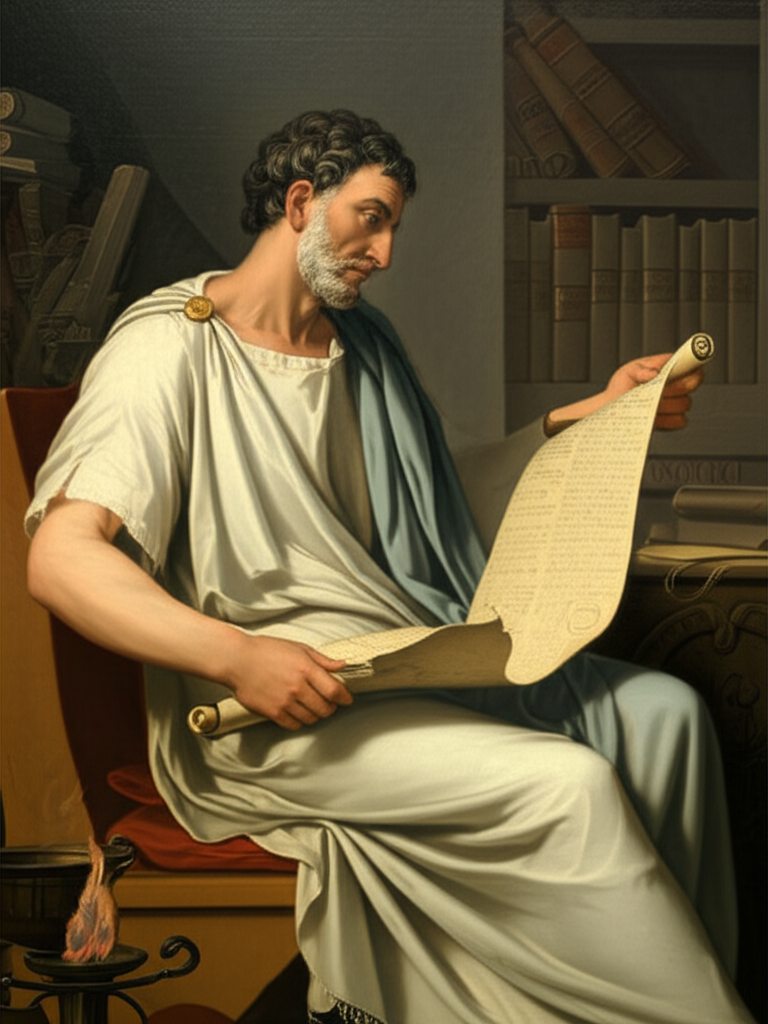
The Mind's Crucible: Where Logic and Feeling Converge
Despite the historical debates, modern philosophy and psychology increasingly recognize that emotion and reasoning are not separate, competing systems, but deeply intertwined processes within the mind.
- Decision-Making: Far from being purely rational, our decisions are profoundly influenced by our feelings. Neuroscientific research, for instance, has shown that individuals with damage to emotional centers of the brain struggle with even simple decisions, highlighting emotion's crucial role in guiding choices. Logic often provides the framework, but emotion provides the impetus or the ultimate weighting of options.
- Moral Judgment: Our sense of right and wrong is not solely a product of abstract reasoning. Empathy, sympathy, and disgust are powerful emotional drivers that shape our ethical intuitions. Reason then works to articulate and justify these intuitions, or to resolve conflicts between them.
- Creativity and Innovation: The spark of insight often comes from an intuitive, emotional place, which reason then refines and develops. The logic of a design or an argument often follows an initial, emotionally charged idea.
- Motivation: As Hume noted, reason alone rarely compels action. It is our desires, hopes, and fears—our emotions—that provide the motivation to apply logic and pursue goals.
Enduring Debates and Modern Reconsiderations
The conversation continues. Contemporary philosophy explores:
- The nature of emotional intelligence: Can we apply logic to understand and manage our emotions?
- The role of emotion in epistemology: Do feelings play a legitimate role in how we acquire knowledge?
- The impact of artificial intelligence: Can AI ever truly replicate human reasoning without emotion? Or can it develop its own form of "logic of emotion"?
Cultivating the Integrated Mind: Towards a Balanced Understanding
The lesson from the Great Books and contemporary thought is clear: a truly flourishing mind does not suppress emotion in favor of reason, nor does it allow unchecked feelings to dictate all action. Instead, it seeks integration and balance.
- Self-Awareness: Understanding one's own emotional landscape is the first step toward wise reasoning.
- Emotional Regulation: Learning to manage and appropriately express emotions, rather than being overwhelmed by them.
- Critical Thinking: Applying logic to both external information and internal feelings to make informed judgments.
- Empathy: Using reason to understand the emotions of others, fostering connection and ethical interaction.
Further Exploration
To deepen your understanding of this fascinating interplay, consider diving into the original texts or exploring contemporary analyses:
-
📹 Related Video: PLATO ON: The Allegory of the Cave
Video by: The School of Life
💡 Want different videos? Search YouTube for: ""Plato's Chariot Allegory Explained""
-
📹 Related Video: KANT ON: What is Enlightenment?
Video by: The School of Life
💡 Want different videos? Search YouTube for: ""Hume Reason Slave of Passions""
The journey into the logic of emotion and reason reveals not a battleground, but a dynamic partnership at the heart of the human mind. By appreciating the unique contributions and intricate dance between these powerful forces, we can navigate the complexities of life with greater wisdom, compassion, and insight.