

The Logic of Emotion and Reason: A Philosophical Exploration of the Mind's Dual Faculties
In the grand tapestry of human experience, few threads are as intricately woven, or as frequently misunderstood, as the relationship between emotion and reason. For centuries, philosophers have grappled with the apparent dichotomy, often pitting one against the other as if they were warring factions within the human mind. Yet, a deeper investigation reveals a more nuanced, indeed, a more logical interplay. This pillar page delves into the historical and contemporary philosophical perspectives on emotion and reason, arguing that far from being mutually exclusive, they are deeply interconnected, each providing vital context and guidance for the other, forming the very bedrock of our decision-making, morality, and understanding of the world. We will explore how what often appears as irrational emotion can possess its own inherent logic, and how even the most rigorous reasoning is often subtly, or overtly, influenced by our feelings.
The Ancient Divide: Reason's Supremacy and Emotion's Shadow
The earliest philosophical inquiries into the human mind often established a clear hierarchy, placing reason at the apex and emotion in a subordinate, often problematic, role. This perspective, deeply rooted in the Great Books of the Western World, sought to elevate humanity above mere animalistic impulse through the power of rational thought.
Plato's Charioteer: Guiding the Soul
One of the most enduring metaphors for this hierarchical view comes from Plato in his Phaedrus. He describes the soul as a charioteer (reason) guiding two winged horses: one noble and well-behaved (spirit/thumos, often associated with righteous indignation or courage), and the other unruly and prone to lust (appetite/epithymia).
- Reason (Charioteer): The faculty capable of apprehending truth, seeking wisdom, and directing the soul towards the Good. It represents control, intellect, and the pursuit of knowledge.
- Spirit (Noble Horse): Can be aligned with reason, providing the drive and courage to pursue noble goals.
- Appetite (Unruly Horse): Represents raw desires, passions, and base instincts. Without the firm hand of reason, it pulls the chariot (the soul) towards chaos and self-destruction.
For Plato, the ideal state of the mind is one where reason maintains firm control, ensuring that emotions serve its higher purposes rather than overwhelming it. The logic here is clear: a well-ordered soul is a rational soul.
Aristotle's Practical Wisdom: The Role of Emotion in Virtue
Aristotle, while also valuing reason, offered a more integrated view in his Nicomachean Ethics. He understood that emotions are not inherently bad but are natural parts of human experience. The key, for Aristotle, lies in feeling the right emotions, at the right time, towards the right people, for the right reason, and in the right manner. This is the essence of virtue, and it requires phronesis, or practical wisdom.
Aristotelian Perspective on Emotion and Reason:
| Aspect | Reason's Role | Emotion's Role | Interplay |
|---|---|---|---|
| Virtue | Identifies the mean between extremes (e.g., courage between cowardice and recklessness). | Provides the motivational force and informs the situation's context. | Reason guides emotion to achieve appropriate responses, leading to virtuous action. |
| Decision-making | Deliberates on choices, consequences, and moral principles. | Supplies information about what we value or fear, impacting our judgments. | Effective reasoning incorporates emotional data, leading to more holistic and humane decisions. |
| Character | Develops through habit and rational reflection. | Shaped by repeated emotional responses, reinforcing patterns. | Cultivating good habits involves both rational understanding and emotional training. |
Aristotle's contribution shifted the discourse from merely suppressing emotion to understanding its proper cultivation and integration within a rational framework. The logic of virtue, therefore, is not emotionless, but rather emotionally intelligent.
The Enlightenment's Rational Turn: Descartes, Spinoza, and Kant
The Enlightenment period brought a renewed emphasis on reason as the primary tool for understanding the world and oneself, often leading to a more pronounced separation from emotion.
Descartes' Dualism: The Mind as Res Cogitans
René Descartes, a foundational figure in modern philosophy, famously articulated his mind-body dualism. For Descartes, the essence of the self lay in res cogitans – the thinking substance, or pure reason. Emotions, or "passions of the soul," were often seen as disturbances arising from the body's interaction with the mind. While he acknowledged their utility in signaling danger or desire, his ultimate philosophical project was to establish certainty through rigorous, dispassionate reasoning. The logic of Cartesian thought sought to purify knowledge from the subjective biases of feeling.
Spinoza's Geometric Ethics: Understanding and Mastering Passions
In stark contrast to Descartes' dualism, Baruch Spinoza in his Ethics posited a monistic view where mind and body are two attributes of the same underlying substance. For Spinoza, emotions (or "affects") are natural phenomena, subject to the same laws as physical events. He believed that through the power of reason, we could understand the causes of our emotions and thereby gain a degree of freedom from their enslaving power.
Spinoza's approach wasn't to eradicate emotion but to transform passive, involuntary passions into active, rationally understood affects. By understanding the logic behind our feelings, we could move from bondage to freedom, achieving a state of "intellectual love of God" (or reality). His work suggests that a true understanding of logic encompasses the logic of our emotional lives.
Kant's Categorical Imperative: Duty and the Subordination of Inclination
Immanuel Kant took the supremacy of reason in moral philosophy to its zenith. For Kant, true moral action stems not from inclination, feeling, or the pursuit of happiness, but from duty, dictated by the Categorical Imperative – a universal moral law discoverable through pure reason. Emotions, while natural, were seen as contingent and unreliable guides for moral action.
The logic of Kantian ethics demands that we act according to principles that could be universally applied, regardless of our personal feelings or desires. While Kant acknowledged that humans are not purely rational beings and possess inclinations, he argued that genuine moral worth arises when we act from duty, not merely in conformity with it. Here, reason stands as the sole legislator of morality, with emotion largely relegated to the realm of non-moral or even anti-moral influence.
The Modern Reassessment: Reclaiming Emotion's Logic
The 19th and 20th centuries witnessed a significant challenge to the Enlightenment's unbridled faith in pure reason, leading to a more complex understanding of the role of emotion in the mind.
Nietzsche's Revaluation: Beyond Good and Evil
Friedrich Nietzsche launched a powerful critique against the traditional philosophical emphasis on reason and objective truth. He argued that many of our so-called rational values and moral systems were in fact expressions of underlying psychological drives, instincts, and will-to-power. For Nietzsche, emotion and instinct were not flaws to be overcome but fundamental forces that shaped human experience and cultural evolution.
He encouraged a "revaluation of all values," suggesting that what we consider "good" or "rational" often serves deeper, often unacknowledged, emotional or physiological needs. Nietzsche's work invites us to consider the logic behind our reasoning, revealing the powerful role of our passions and drives.
Contemporary Philosophy: The Intertwined Nature of Mind
Modern philosophy, psychology, and neuroscience increasingly recognize that the separation of emotion and reason is largely an artificial construct. The mind operates as an integrated system where these faculties are in constant dialogue.
- Affective Neuroscience: Research by figures like Antonio Damasio (though not from the Great Books, his ideas resonate with the modern synthesis) has shown that individuals with damage to brain regions associated with emotion often struggle with reasoning and decision-making, even on seemingly purely logical tasks. This suggests that emotions provide crucial somatic markers and intuitive guides that facilitate rational thought.
- Emotional Intelligence: The concept of emotional intelligence highlights the importance of understanding and managing one's own emotions, and recognizing those of others, as a critical component of effective reasoning and successful social interaction. This is a practical application of the logic of emotion.
- Embodied Cognition: This perspective argues that our thoughts and reasoning are deeply rooted in our bodily experiences, including our emotions and sensory perceptions. The mind is not a disembodied computer but an embodied agent, where emotion plays a fundamental role in shaping our cognitive processes.
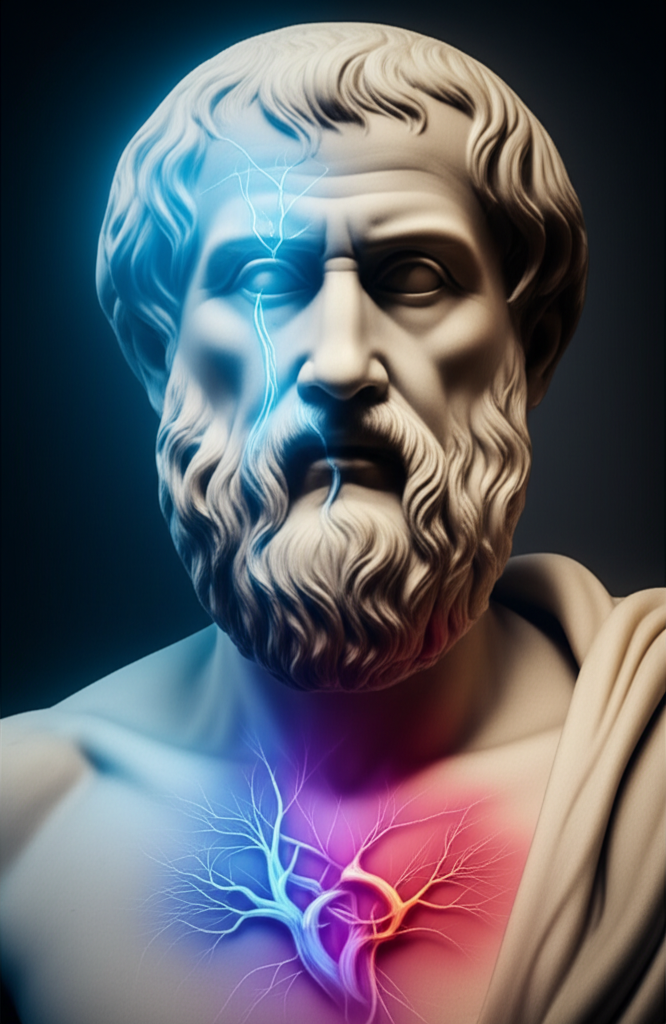
The Logic of Emotion: When Feelings Make Sense
While often perceived as irrational, emotion frequently operates with its own profound logic. Understanding this internal logic is crucial for navigating our inner world and making sense of human behavior.
Emotion as Information
Emotions are not just random fluctuations; they are signals. Fear tells us there's a threat; joy tells us something is beneficial; anger tells us a boundary has been crossed or an injustice perceived. This is the primal logic of survival and well-being.
- Fear: Logically prompts caution, fight-or-flight responses.
- Love: Logically encourages bonding, cooperation, and care for offspring.
- Guilt/Shame: Logically motivates adherence to social norms, repair of relationships.
Emotion as Motivation
Emotions are powerful motivators. We are driven to seek pleasure and avoid pain, to connect with others, and to protect what we value. This motivational logic underpins much of our goal-directed behavior.
Emotion as a Guide for Reasoning
Far from being an impediment, emotion can enhance reasoning. It helps us:
- Prioritize: Emotions highlight what is important to us, helping us focus our rational attention.
- Evaluate: Our gut feelings often provide a quick, intuitive assessment of a situation before detailed rational analysis.
- Connect: Empathy, an emotional capacity, is vital for understanding others' perspectives and making ethical decisions.
YouTube: "Antonio Damasio Descartes' Error summary"
YouTube: "Stoicism and Emotions: Ancient Wisdom for Modern Life"
Conclusion: The Integrated Mind
The journey through the philosophical landscape of emotion and reason reveals a consistent, though evolving, tension and eventual synthesis. From Plato's charioteer to Aristotle's virtuous mean, from Descartes' rational purity to Spinoza's emotional understanding, and from Kant's moral duty to Nietzsche's revaluation, the conversation has always circled back to the fundamental question: How do these two powerful forces within the human mind interact?
At planksip.org, we contend that the most profound insights arise when we move beyond the false dichotomy. The logic of emotion is not merely the absence of reason, but often a complex, adaptive system that provides vital information and motivation. Similarly, reasoning is not a cold, dispassionate calculator, but a faculty that operates most effectively when informed and guided by a well-understood emotional landscape.
Ultimately, a truly enlightened mind is one that acknowledges, understands, and integrates both its rational and emotional capacities. It is a mind that recognizes the inherent logic in its feelings and uses its reason not to suppress, but to intelligently navigate the rich, complex tapestry of human experience. This integration is not just a philosophical ideal; it is a practical necessity for navigating the complexities of our individual lives and the collective challenges of our shared world.
📹 Related Video: What is Philosophy?
Video by: The School of Life
💡 Want different videos? Search YouTube for: "The Logic of Emotion and Reason philosophy"