

The Logic of Dialectic and Truth: A Journey Through Philosophical Reasoning
The pursuit of Truth has been the enduring quest of philosophy, and few methods have proven as robust and enduring in this endeavor as Dialectic. Far from a mere argument, dialectic is a rigorous process of Reasoning, deeply intertwined with Logic, that aims to uncover deeper understanding and ultimately, truth, through the examination of opposing ideas. This article explores the historical development and philosophical significance of dialectic, demonstrating how its systematic application of logic allows us to navigate complex ideas and refine our understanding of reality, drawing insights from the foundational texts of the Great Books of the Western World.
Unpacking Dialectic: More Than Just Debate
At its core, dialectic refers to a method of philosophical argument or intellectual discourse that uses reasoned exchange to arrive at a deeper understanding of a subject. It's a dynamic interplay of ideas, often involving the presentation of a thesis, the counter-presentation of an antithesis, and the subsequent synthesis that integrates insights from both. This process isn't about winning an argument but about collectively moving closer to Truth through critical engagement and the rigorous application of Logic.
The journey of dialectic begins with the ancient Greeks, particularly Socrates and Plato, and evolves significantly through figures like Hegel, each contributing to its rich tapestry as a tool for philosophical inquiry.
The Inseparable Bond: Logic and Dialectic
To speak of dialectic without acknowledging its foundation in Logic would be to miss its very essence. Logic provides the rules of valid inference, the principles of consistency, and the framework for coherent Reasoning. It dictates what constitutes a sound argument, identifying fallacies and ensuring that conclusions genuinely follow from premises.
- Logic as the Foundation: Logic is the bedrock upon which any meaningful dialectical exchange must rest. Without logical coherence, a dialectical process devolves into mere sophistry or arbitrary assertion. It ensures that the steps taken in the pursuit of truth are rational and defensible.
- Dialectic as Applied Logic: Dialectic, in turn, is the dynamic application of logical principles within a conversational or developmental context. It's not a static set of rules but a method for using those rules to explore complex, often contradictory, ideas. It challenges assumptions, exposes inconsistencies, and forces a re-evaluation of premises, all while adhering to the dictates of sound Reasoning.
Through dialectic, we don't just apply logic to a given set of statements; we generate new statements, new understandings, and new perspectives by critically examining existing ones through a logical lens.
Historical Trajectories of Dialectic and the Search for Truth
The concept of dialectic has undergone profound transformations throughout philosophical history, each iteration contributing to our understanding of its power in revealing Truth.
1. The Socratic Method (Plato's Dialogues)
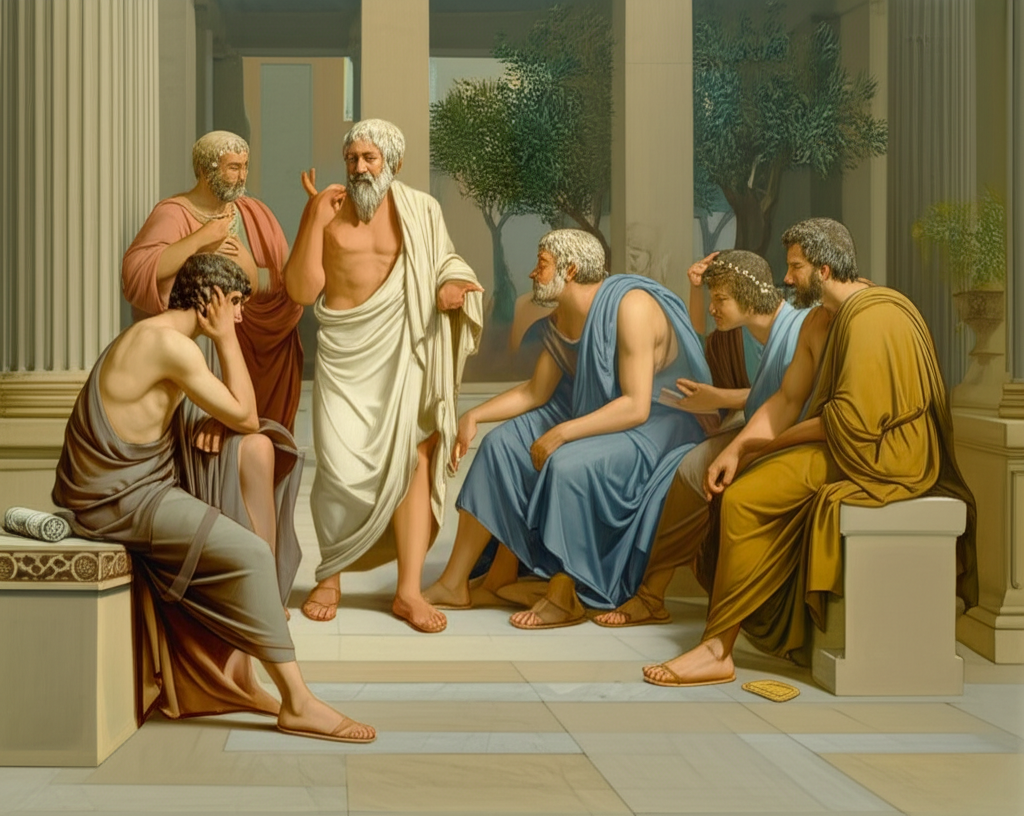
In the works of Plato, particularly the early dialogues, we encounter Socrates engaging in what is now known as the Socratic Method. This is perhaps the most iconic form of dialectic:
- Questioning and Elenchus: Socrates would engage interlocutors in a series of questions, not to impart knowledge, but to expose contradictions in their beliefs and lead them to recognize their own ignorance (aporia). This process of refutation (elenchus) was a powerful logical tool.
- Goal: The aim was to clear away false assumptions, paving the way for genuine inquiry and a closer approximation of Truth. It was a collaborative search, driven by the belief that truth resides within, waiting to be "midwived" out.
- Connection to Logic: Socrates rigorously applied principles of non-contradiction and consistent definition, forcing his companions to think critically and logically about their own assertions.
2. Plato's Ascent to the Forms
For Plato himself, dialectic was the highest form of philosophical activity, the intellectual ascent from the world of appearances to the realm of eternal, unchanging Forms – the ultimate Truths. Through rigorous Reasoning, the philosopher could transcend sensory experience and grasp the pure, intelligible essences of things.
3. Aristotle's Contribution to Reasoning
While Aristotle systematized formal Logic in a way that later thinkers would build upon, his work in Topics deals explicitly with "dialectical arguments." For Aristotle, these were arguments that proceed from generally accepted opinions (endoxa), aiming to test propositions or to train one's ability to reason. Though different from Plato's metaphysical ascent, Aristotle's emphasis on systematic Reasoning and the structure of argument was crucial for the logical underpinnings of any dialectical process.
4. The Hegelian Dialectic
Centuries later, G.W.F. Hegel re-envisioned dialectic as a fundamental process not only of thought but also of history and reality itself.
- Thesis-Antithesis-Synthesis: This well-known triad describes a process where an initial idea (thesis) generates its opposite (antithesis), and through their conflict, a higher, more comprehensive idea (synthesis) emerges, which then becomes a new thesis.
- Truth as the Whole: For Hegel, Truth is not found in isolated concepts but in the entire, unfolding process of dialectical development. It's the "concrete universal," the culmination of Reason working through history to achieve self-awareness.
- Driving Force: The inherent contradictions within concepts drive this process, forcing Reason to move beyond partial truths towards a more complete understanding.
5. Marxist Dialectic
Karl Marx famously "turned Hegel on his head," applying the dialectical method to material conditions and social relations. For Marx, the dialectic was not primarily about the development of ideas but about the historical struggle between opposing social classes, leading to revolutionary change and the eventual realization of a classless society. This demonstrated the power of dialectical Reasoning to analyze and predict historical and social Truths.
The Unveiling Power of Reasoning
Across these diverse applications, the consistent thread is the power of Reasoning to move us beyond superficial understanding. Dialectic compels us to:
- Identify and Resolve Contradictions: By pitting ideas against each other, dialectic highlights inconsistencies and forces us to reconcile them, leading to a more robust understanding.
- Refine Concepts: Through repeated examination and challenge, our concepts become clearer, more precise, and more aligned with the underlying Truth.
- Embrace Nuance and Complexity: Rather than simplifying issues, dialectic encourages us to delve into their inherent complexities, recognizing that Truth is often multifaceted.
- Foster Critical Thinking: It trains the mind to question, analyze, and synthesize, skills essential for navigating any intellectual landscape.
Modern Relevance and Enduring Value
The logic of dialectic remains profoundly relevant today. From legal arguments and scientific debates to political discourse and ethical deliberations, the process of presenting a case, challenging it with counter-arguments, and striving for a more comprehensive understanding is a direct descendent of the dialectical tradition. It underscores the importance of:
- Intellectual Humility: Recognizing that one's initial position may be incomplete or flawed.
- Open-mindedness: Being willing to consider opposing viewpoints.
- Rigorous Inquiry: Pursuing Truth through systematic Reasoning and Logic, rather than mere assertion.
YouTube:
- "Socrates and the Socratic Method Explained"
- "Hegel's Dialectic: Thesis, Antithesis, Synthesis Explained"
Conclusion
The Logic of Dialectic is not merely a historical curiosity but a living, breathing method for the pursuit of Truth. From the streets of ancient Athens to the grand philosophical systems of modernity, it has consistently offered a powerful framework for Reasoning through complexity. By embracing the dynamic interplay of ideas, challenging assumptions, and meticulously applying logical principles, dialectic continues to serve as an indispensable tool for deepening our understanding of ourselves, our world, and the elusive nature of Truth itself.
📹 Related Video: What is Philosophy?
Video by: The School of Life
💡 Want different videos? Search YouTube for: "The Logic of Dialectic and Truth philosophy"