

The Unfolding Tapestry: Unraveling the Logic of Cause and Effect
The quest to understand why things happen is perhaps the most ancient and persistent of human intellectual endeavors. From the simplest observation of a falling apple to the grandest theories of cosmic origins, our minds instinctively seek connections, patterns, and explanations. This article delves into the profound philosophical inquiry surrounding The Logic of Cause and Effect, exploring its historical development, the challenges it has faced, and its enduring significance as a fundamental principle by which we comprehend reality. We shall navigate the intricate relation between events, examining how philosophers, from antiquity to modernity, have grappled with the very nature of a cause and its subsequent effect, drawing heavily from the rich intellectual heritage preserved in the Great Books of the Western World.
The Bedrock of Understanding: A Philosophical Summary
The concept of cause and effect is not merely an intuitive observation but a cornerstone of philosophical inquiry, shaping our understanding of knowledge, morality, and the universe itself. This article will trace the evolution of this concept, beginning with Aristotle's foundational classification of causes, moving through David Hume's radical skepticism regarding necessary causal connection, and culminating in Immanuel Kant's transcendental synthesis. We will explore how the logic underpinning our causal inferences has been rigorously scrutinized, revealing that what appears self-evident is, in fact, a subject of profound philosophical debate. Ultimately, we aim to illuminate why the relation of cause and effect remains an indispensable principle for both scientific investigation and everyday life, despite its inherent complexities.
Ancient Roots: Aristotle and the Four Causes
Our journey into the logic of cause and effect must begin with Aristotle, whose systematic approach laid the groundwork for millennia of philosophical and scientific thought. In his Physics and Metaphysics, Aristotle articulated a comprehensive framework for understanding the various ways something can be said to be a cause. For Aristotle, to understand something fully was to understand its causes. He identified four distinct types of causes, providing a robust analytical tool for dissecting the relation between a thing and its origins.
Aristotle's Four Causes:
- Material Cause: That out of which something is made. (e.g., The bronze of a statue; the silver of a cup).
- Formal Cause: The form or pattern of a thing; its essence. (e.g., The shape of the statue; the blueprint of a house).
- Efficient Cause: The primary source of change or rest; the agent that brings something about. (e.g., The sculptor of the statue; the builder of the house). This is often what we commonly refer to as "the cause."
- Final Cause: That for the sake of which a thing exists; its purpose or end. (e.g., The purpose of the statue might be to honor a god; the purpose of a house is shelter).
Aristotle's framework provided a powerful lens through which to examine the principle of change and existence. It emphasized that causality is not a monolithic concept but a multifaceted relation inherent in the structure of reality itself. His work was foundational, influencing scholastic philosophy and science for centuries.
The Modern Challenge: Hume's Skepticism
The Enlightenment brought a revolutionary shift in philosophical thought, particularly concerning epistemology and metaphysics. David Hume, a central figure in the Great Books, delivered a powerful challenge to the traditional understanding of causal necessity. In his A Treatise of Human Nature and An Enquiry Concerning Human Understanding, Hume meticulously examined our experience of cause and effect.
Hume argued that when we observe a causal relation, such as one billiard ball striking another and causing it to move, we actually perceive only two distinct events:
- Contiguity: The two events occur close in space and time.
- Priority: The cause precedes the effect.
- Constant Conjunction: We have observed similar events always occurring together in the past.
What we do not perceive, Hume contended, is any necessary connection or inherent power linking the cause to the effect. The idea of a necessary connection, he proposed, arises not from empirical observation but from a psychological habit or custom. After repeatedly observing event A followed by event B, our minds are conditioned to expect B when A occurs. This expectation, rather than an objective feature of reality, is what we project onto the world as "causal necessity."
Hume's skepticism had profound implications for the logic of scientific inference and the very principle of causality. If there is no rationally demonstrable necessary connection between cause and effect, how can we truly know anything about the future, or even claim genuine understanding of the past beyond mere description? His work presented a formidable quandary to rationalist philosophy.
Kant's Transcendental Solution: Causality as a Principle of Understanding
Immanuel Kant, deeply influenced by Hume's challenge, sought to rescue the logic and validity of causality in his monumental Critique of Pure Reason. Kant acknowledged the force of Hume's argument: we cannot empirically observe a necessary connection. However, Kant argued that causality is not derived from experience, but rather is a fundamental, a priori category of our understanding, a principle that we bring to experience.
For Kant, causality is one of the "conditions of possibility" for objective experience itself. We cannot even have a coherent, unified experience of the world without imposing the relation of cause and effect upon it. It is how our minds synthesize raw sensory data into an intelligible reality.
Key Aspects of Kant's View:
- A priori category: Causality is not learned; it is an innate structure of the mind.
- Synthetic a priori judgment: The statement "every event has a cause" is true universally and necessarily, yet its predicate (having a cause) is not contained in the subject (event) itself.
- Condition for objective experience: Without the principle of causality, our perceptions would be a chaotic jumble, not an ordered world of objects and events.
Thus, for Kant, the logic of cause and effect is not a discoverable feature of things-in-themselves, but a fundamental principle that structures our perception and understanding of the phenomenal world. It is the very framework through which we can form judgments about objective reality.
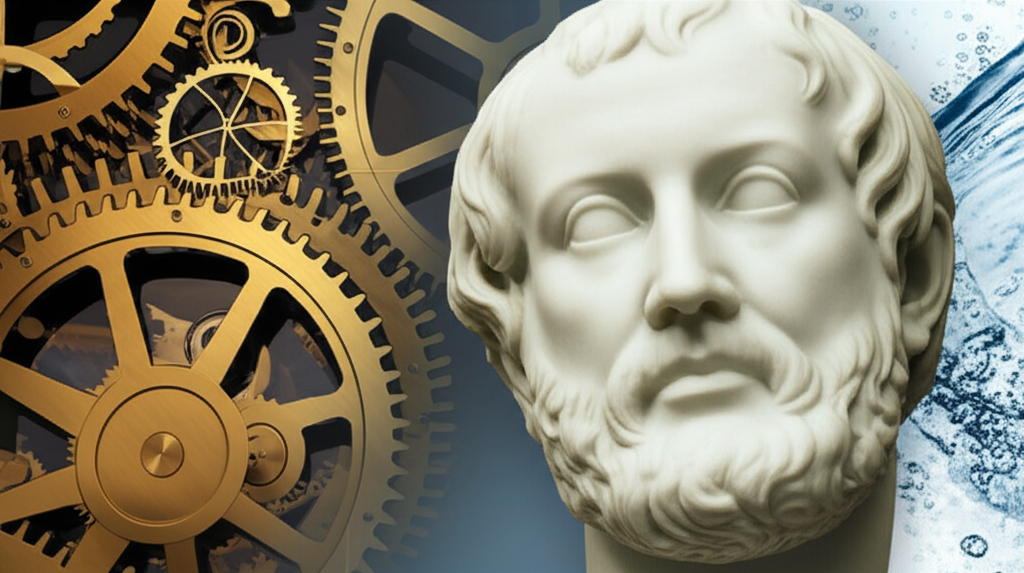
The Enduring Relation: Causality in Science and Everyday Life
Despite the profound philosophical debates regarding its ultimate metaphysical status, the relation of cause and effect remains an indispensable tool for understanding and navigating the world. In science, identifying causal links is paramount for explanation, prediction, and intervention. From medicine to physics, the scientific method is largely a sophisticated effort to isolate and verify causal relationships.
- Prediction: Understanding that applying heat causes water to boil allows us to predict boiling when heat is applied.
- Control: Knowing that a specific virus causes a disease enables us to develop vaccines or treatments to control its spread.
- Explanation: Attributing the changing seasons to the Earth's axial tilt provides a coherent explanation for a complex phenomenon.
In our daily lives, the principle of causality guides countless decisions. We avoid touching hot stoves because we understand the causal relation between heat and pain. We plant seeds because we expect them to grow into plants. This intuitive grasp of causality, even if not philosophically rigorous, is essential for survival and effective action.
The Logic of Causal Inference
While the philosophical underpinnings of causality are complex, the practical application of inferring causes from effects follows certain logical patterns. These patterns, often formalized in scientific methodology, help us distinguish genuine causal relation from mere correlation.
Key Distinctions in Causal Inference:
- Correlation vs. Causation: Just because two events occur together (are correlated) does not mean one causes the other. There might be a common underlying cause, or the correlation could be coincidental. (e.g., Ice cream sales and drowning incidents are correlated, but neither causes the other; hot weather is a common cause).
- Necessary vs. Sufficient Conditions:
- Necessary Condition: A condition without which the effect cannot occur. (e.g., Oxygen is necessary for fire).
- Sufficient Condition: A condition that, if present, guarantees the effect will occur. (e.g., Decapitation is sufficient for death).
- Counterfactuals: Often, we think of causality in terms of counterfactuals: "If X had not occurred, then Y would not have occurred." This helps isolate the causal relation.
The ongoing refinement of these logical tools allows us to build increasingly sophisticated models of the world, even as the ultimate philosophical nature of the "necessary connection" continues to be a subject of intense academic inquiry.
Conclusion: The Indispensable Principle
The journey through the logic of cause and effect reveals a fascinating evolution of thought, from Aristotle's comprehensive classifications to Hume's penetrating skepticism and Kant's ingenious synthesis. What emerges is a profound appreciation for the complexity of a concept that, on the surface, appears self-evident. Whether viewed as an objective feature of reality, a psychological habit, or an a priori principle of understanding, the relation of cause and effect remains an indispensable framework. It is the intellectual scaffolding upon which we build our scientific knowledge, make sense of our experiences, and navigate the world. The philosophical debates may continue, but the human mind's relentless pursuit of the "why" ensures that the cause and its effect will forever stand as central pillars of inquiry, challenging us to delve deeper into the very logic of existence.
YouTube Video Suggestions:
-
📹 Related Video: KANT ON: What is Enlightenment?
Video by: The School of Life
💡 Want different videos? Search YouTube for: "David Hume on Causality Explained"
-
📹 Related Video: ARISTOTLE ON: The Nicomachean Ethics
Video by: The School of Life
💡 Want different videos? Search YouTube for: "Aristotle's Four Causes Philosophy"