

The Limitless Nature of Infinity
The concept of infinity is perhaps one of humanity's most profound and perplexing intellectual creations. Far from being a mere mathematical curiosity, it stands as a cornerstone in metaphysics, challenging our finite understanding of existence, time, and space. This article explores infinity not just as a numerical construct, but as a deeply philosophical idea that has shaped human thought from ancient times to the modern era, revealing its boundless implications across various domains of inquiry.
Infinity in the Realm of Mathematics
At its most accessible, infinity first presents itself in the domain of mathematics. Here, it denotes something without end, larger than any finite number, yet its mathematical treatment has evolved significantly, revealing layers of complexity previously unimagined.
The Uncountable and the Transfinite
For centuries, infinity was largely considered a potential state – a process that could continue indefinitely, but never fully actualized. Aristotle, a towering figure in the Great Books of the Western World, famously distinguished between potential infinity (e.g., counting numbers, which can always be extended) and actual infinity (a completed, limitless totality), largely rejecting the latter as incoherent in reality.
However, the 19th century saw a revolutionary shift with the work of Georg Cantor. Cantor dared to treat infinity as an actual entity, leading to the groundbreaking discovery that not all infinities are created equal. He demonstrated that there are different "sizes" of infinity, or transfinite numbers.
Consider these examples of infinite sets:
- Countably Infinite Sets: These sets can be put into a one-to-one correspondence with the set of natural numbers (1, 2, 3...).
- The set of all natural numbers (ℕ)
- The set of all integers (ℤ)
- The set of all rational numbers (ℚ)
- Uncountably Infinite Sets: These sets are "larger" than the natural numbers; they cannot be enumerated.
- The set of all real numbers (ℝ)
- The set of all points on a line segment
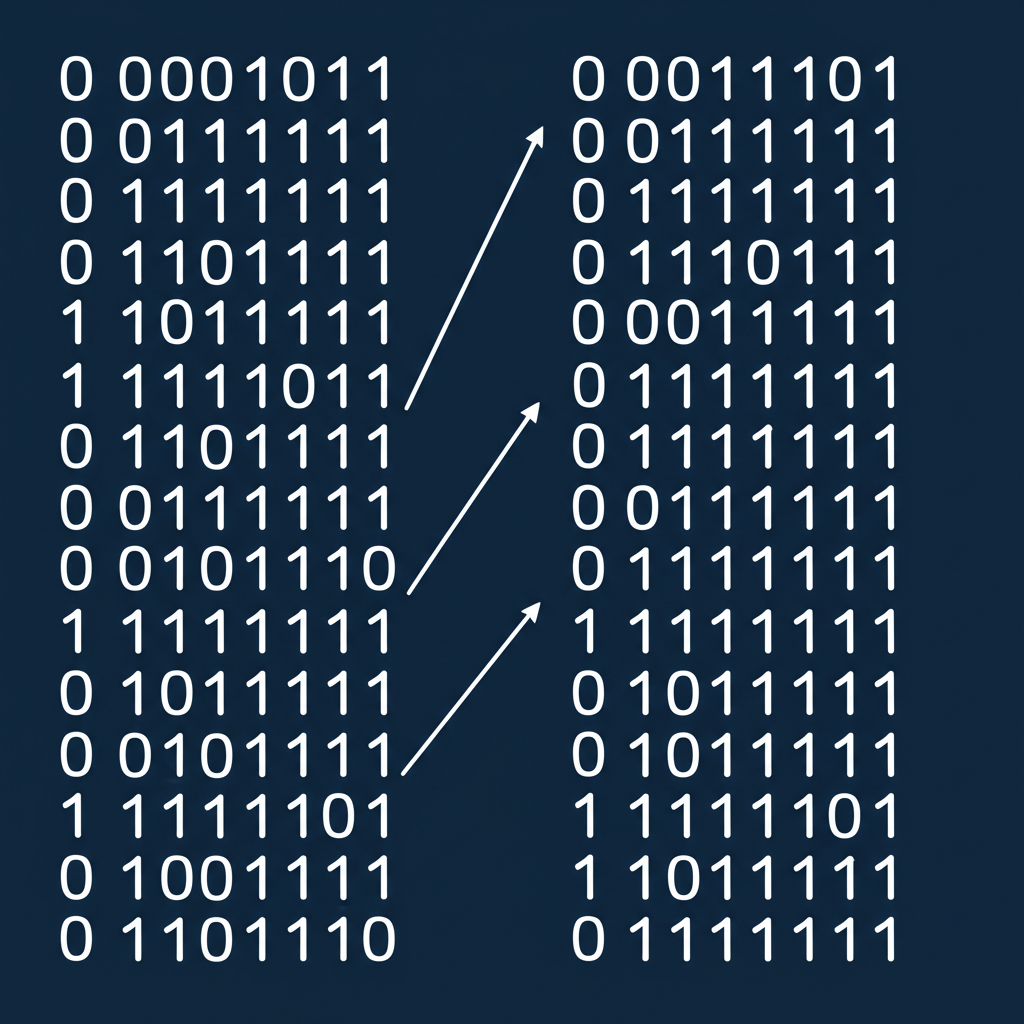
- The set of all possible infinite sequences of 0s and 1s
Cantor's work, initially met with resistance, unveiled a hierarchical universe of infinities, forever changing the landscape of mathematics and profoundly impacting metaphysics by demonstrating that the idea of actual infinity was not just conceivable, but mathematically rigorous.
Metaphysical Echoes: Infinity Beyond Numbers
Beyond its mathematical precision, infinity resonates deeply within metaphysics, touching upon questions of existence, divinity, and the very fabric of reality. Here, it transforms from a quantitative measure into a qualitative attribute, an idea that shapes our understanding of the ultimate nature of things.
The Divine and the Boundless
Throughout philosophical and theological history, infinity has often been attributed to the divine. For thinkers like St. Augustine, God is infinite in power, knowledge, and being, existing eternally outside the confines of time and space. This idea of an infinite God provides a foundation for understanding creation, providence, and the ultimate purpose of existence. The boundless nature of the divine offers a conceptual anchor for human finitude, suggesting a reality far greater than our immediate perceptions.
Our Human Grasp of the Infinite
How do finite beings, constrained by time and space, truly grasp the idea of infinity? This question lies at the heart of many philosophical dilemmas. We can conceptualize it, manipulate it mathematically, and even glimpse its implications in the vastness of the cosmos, yet its full comprehension remains elusive. Our limited senses and cognitive frameworks struggle to contain something without limits, leading to paradoxes and profound wonder. This struggle, however, is precisely what makes the idea of infinity so potent – it pushes the boundaries of human thought, inviting us to contemplate what lies beyond our immediate experience.
The Enduring Philosophical Idea of Infinity
The idea of infinity is not a static concept but a dynamic philosophical challenge that has evolved alongside human civilization, constantly prompting re-evaluation of fundamental truths.
From Ancient Greece to Modern Thought
The journey of the idea of infinity through Western thought is a testament to its enduring power. From the paradoxes of Zeno, which playfully highlighted the difficulties of infinite divisibility, to Plato's eternal Forms existing in a realm beyond change, ancient philosophers grappled with its implications. Aristotle's cautious approach to potential infinity dominated for centuries. It wasn't until the modern era, with figures like Spinoza equating God with an infinite substance, and later with the rigorous mathematical developments of Cantor, that the idea of actual infinity gained significant philosophical traction. This historical trajectory underscores infinity's persistent role as a catalyst for intellectual progress.
Implications for Existence and Knowledge
Grappling with infinity profoundly impacts our understanding of existence and knowledge. If the universe is infinite, what does that mean for our place within it? If time is infinite, what does that imply about purpose and meaning? The idea of infinity compels us to question the limits of our knowledge, suggesting that there are always further horizons to explore, deeper truths to uncover. It challenges reductionist views, opening up possibilities for a reality far richer and more complex than we might initially perceive. This philosophical engagement with infinity fosters intellectual humility while simultaneously inspiring an insatiable quest for understanding.
YouTube: "Cantor's Diagonal Argument Explained"
YouTube: "The Philosophy of Infinity | Crash Course Philosophy"
In conclusion, the limitless nature of infinity is more than a mathematical abstraction; it is a fundamental idea that permeates metaphysics, challenging our assumptions about the universe, the divine, and our own cognitive capacities. It is a concept that continues to inspire awe, provoke inquiry, and expand the very boundaries of human thought.
📹 Related Video: What is Philosophy?
Video by: The School of Life
💡 Want different videos? Search YouTube for: "The Limitless Nature of Infinity philosophy"