

The Interplay of Desire and Will in Choice: Navigating the Inner Landscape
Summary: Human choice is a complex dance between our innate desires and the guiding force of our will. This article delves into how these two fundamental aspects of the Mind constantly interact, shaping the decisions every Man makes. We explore the nature of desire as a powerful impetus, the will as the faculty of deliberate action, and the dynamic tension that defines our journey of self-determination, drawing subtly from the enduring wisdom of the Great Books.
Unraveling the Threads of Human Agency
From the moment we awaken, our lives are a continuous tapestry woven from choices. Some are trivial, others monumental, yet all stem from an intricate interplay within the human Mind. At the heart of this process lie two formidable forces: desire and will. To understand human agency, to truly grasp what it means for Man to choose, we must first dissect this fundamental relationship. Is choice merely the surrender to our strongest impulse, or is it a testament to our capacity for self-direction?
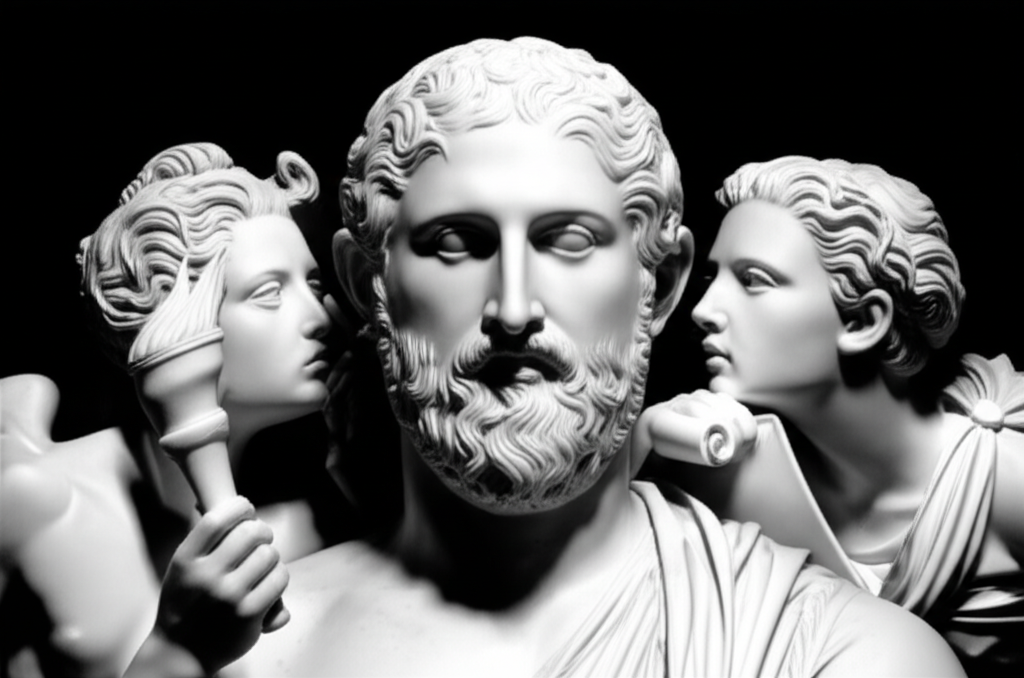
The Nature of Desire: The Engine of Aspiration
Desire is, in many philosophical traditions, the primal mover. It is the urge, the longing, the appetite that propels us forward. Whether for sustenance, companionship, knowledge, or transcendence, desires are deeply embedded in our being. Think of Plato's tripartite soul, where the appetitive part, driven by hunger and thirst, seeks immediate gratification. Or consider the Augustinian view, where desires, though often misdirected, ultimately point towards a higher good.
Key characteristics of Desire:
- Impulsive: Often arises spontaneously, demanding attention.
- Varied: Ranges from basic biological needs to complex intellectual or emotional longings.
- Motivating: Provides the initial impetus for action, a "pull" towards something.
- Often Unconscious: Can operate beneath the surface of conscious thought.
Without desire, there would be no impetus to act, no striving, no aspiration. It is the raw energy that fuels our engagement with the world. However, left unchecked, desire can lead to impulsivity, short-sightedness, and actions contrary to our long-term well-being. This is where the will enters the stage.
The Power of Will: The Navigator of Intent
If desire is the engine, then will is the steering wheel, the brake, and the accelerator – the faculty of the Mind that directs and controls. The will represents our capacity for deliberate choice, for self-command, and for acting according to principles rather than mere impulse. Philosophers from Aristotle, with his emphasis on prohairesis (deliberate choice), to Kant, who championed the "good will" as the only thing unconditionally good, have recognized its profound significance. The will is what allows Man to resist temptation, pursue difficult goals, and act in alignment with deeply held values.
Key characteristics of Will:
- Deliberate: Involves conscious thought, evaluation, and decision-making.
- Controlling: Has the capacity to restrain or redirect desires.
- Goal-Oriented: Focused on achieving specific outcomes, often long-term.
- Rational (often): Informed by reason and moral judgment.
The will is not merely the absence of desire, but an active force that can oppose, channel, or even cultivate specific desires. It is the seat of our autonomy, the source of our moral responsibility.
The Dynamic Interplay: A Constant Negotiation
The relationship between desire and will is rarely one of simple dominance. More often, it is a dynamic, complex negotiation within the Mind of every Man.
When Desire Leads: The Allure of Immediate Gratification
In many instances, desire holds sway. We grab the extra slice of cake, procrastinate on an important task, or indulge in a momentary pleasure, even when our rational will knows better. This isn't necessarily a failure of will, but rather an acknowledgement of desire's potent persuasive power, especially when it promises immediate gratification. The ancient Greek concept of akrasia, or weakness of will, directly addresses this phenomenon – knowing what is good, but doing what is bad due to overwhelming desire.
When Will Prevails: The Path of Deliberate Action
Conversely, there are countless moments when the will asserts its authority. We stick to a difficult diet, persevere through a challenging project, or choose to act ethically even when it's inconvenient. This is the triumph of conscious intent over raw impulse. It's the will acting as the architect of our future selves, shaping our character through disciplined choices. The ability to delay gratification, to act against immediate inclination for a greater good, is a hallmark of developed human agency.
Table: Contrasting Desire and Will in Choice
| Aspect | Desire | Will |
|---|---|---|
| Nature | Impulsive, emotional, appetitive | Deliberate, rational, executive |
| Motivation | Instinct, longing, pleasure | Reason, principle, long-term goals |
| Orientation | Immediate, present-focused | Future-oriented, strategic |
| Source | Body, emotions, external stimuli | Mind, self-reflection, moral compass |
| Role in Choice | Provides the "what" (object of pursuit) | Provides the "how" (method of pursuit) |
The Mind as the Arena of Choice
The Mind serves as the arena where this constant interplay unfolds. It is here that desires are perceived, evaluated, and either indulged or restrained by the will. This process involves:
- Awareness: Recognizing the desire as it arises.
- Deliberation: The Mind's rational faculty weighing the potential outcomes of acting on the desire versus exercising the will to resist or redirect it.
- Decision: The moment of choice, where one force gains temporary ascendancy.
- Action: The physical manifestation of that decision.
This internal dialogue is what makes Man a moral agent. It's not just about what we want, but what we choose to do with those wants. The cultivation of a strong will is often seen as a cornerstone of virtue, allowing us to align our actions with our highest ideals, even when those ideals clash with powerful desires.
Navigating the Labyrinth of Self-Mastery
The Great Books continually remind us that this struggle is inherent to the human condition. From the epic heroes battling internal demons to the philosophers striving for wisdom, the challenge remains: how do we achieve self-mastery?
- Is it through radical asceticism, attempting to extinguish desire altogether? (A path explored by some Stoics or ascetics).
- Or is it through the cultivation of practical wisdom (phronesis), as Aristotle suggested, where reason guides desire towards appropriate ends?
- Perhaps it's through understanding the categorical imperative, as Kant proposed, aligning our will with universal moral laws.
Ultimately, the interplay of desire and will is not a problem to be solved once and for all, but a continuous process of self-discovery and self-shaping. It is the very essence of what it means to be a conscious, choosing Man.
📹 Related Video: PLATO ON: The Allegory of the Cave
Video by: The School of Life
💡 Want different videos? Search YouTube for: ""Plato's Chariot Allegory explained" or "Kant's Good Will and Moral Philosophy""
Conclusion: The Enduring Challenge of Choice
The intricate dance between desire and will defines much of human experience. It is the fundamental tension that drives our personal growth, shapes our character, and dictates the trajectory of our lives. Understanding this interplay within the Mind allows us to approach our choices with greater awareness, recognizing the powerful currents that pull us and the deliberate strength we possess to navigate them. For every Man, the journey of life is, in essence, a continuous negotiation between what we want and what we choose to become.