

The Internal Tug-of-War: Unpacking the Interplay of Desire and Will in Choice
Summary: Human choice is a complex dance between our innate desires and our conscious will. This article explores how these two fundamental forces, deeply rooted in the Mind of Man, interact to shape our decisions and actions. Drawing from the rich tapestry of the Great Books of the Western World, we will delve into the philosophical understanding of desire as an impulse or longing, and will as the faculty of rational determination, revealing their intricate relationship in the perennial quest for self-mastery and ethical living.
Understanding the Core: Desire and Will
The landscape of human experience is perpetually shaped by the choices we make. Yet, what truly drives these choices? Is it the raw, unadulterated pull of our inclinations, or a deliberate, rational command from within? Philosophy, across millennia, has grappled with this profound question, consistently returning to the dynamic interplay between desire and will. For Man, this internal dialogue is not merely academic; it is the very essence of moral agency and self-definition.
The Impulsive Current: What is Desire?
At its most fundamental, desire is an inclination, an urge, a longing for something. It springs from our nature, often preceding rational thought, seeking satisfaction or fulfillment. From the simplest bodily appetites to the most complex aspirations, desires are deeply ingrained in the human Mind.
Philosophers in the Great Books have explored desire in myriad ways:
- Plato, in his Republic, describes desire (epithymia) as the appetitive part of the soul, akin to a many-headed beast, often irrational and seeking immediate gratification.
- Aristotle, in Nicomachean Ethics, acknowledges passions (pathē) as an aspect of our nature, but distinguishes them from rational choice, which involves deliberation.
- Augustine, in his Confessions, vividly portrays concupiscence – the unruly desires of the flesh – as a powerful force that the will must constantly contend with, a consequence of the fall.
- Spinoza, in his Ethics, famously defines desire (cupiditas) as Man's very essence, the striving (conatus) to persist in one's being, albeit often misguided by inadequate ideas.
These perspectives highlight desire's powerful, often non-rational, influence on the human psyche.
The Guiding Hand: What is Will?
In contrast to the impulsive nature of desire, will is often understood as the rational faculty of choice, the power to determine one's own actions. It is the capacity for deliberation, decision, and self-control, allowing Man to assent or dissent, to act or to refrain.
Key philosophical insights into the will from the Great Books include:
- Aristotle emphasizes prohairesis, or "deliberate choice," where reason guides our desires towards a perceived good. The will, in this sense, is informed by reason and habituated virtues.
- Augustine elevates the will to a central position, seeing it as the faculty of free choice, capable of choosing between good and evil. For him, the struggle of the will against desire is paramount to the human condition.
- Descartes, in his Meditations, posits the will as an infinite faculty, distinct from the finite understanding. It is the will that allows us to affirm or deny, to assent to or reject ideas, and thus forms the basis of our freedom.
- Kant, in his Groundwork of the Metaphysics of Morals, champions the "good will" as the only thing unconditionally good, acting purely from duty and guided by universal moral laws, often in opposition to inclinations (desires).
These thinkers underscore the will's crucial role in shaping moral character and exercising freedom.
The Dynamic Interplay: When Desire Meets Will
The relationship between desire and will is rarely static; it is a continuous, dynamic interaction within the human Mind. They can be allies, working in concert, or formidable adversaries locked in an internal struggle.
- Harmony: When our desires align with our rational will, we experience a sense of purpose and effortless action. For instance, if you desire to learn philosophy and your will directs you to study the Great Books, they are in harmony.
- Conflict: More often, we encounter internal conflict. A desire for immediate gratification (e.g., eating unhealthy food) might clash with a will to maintain long-term health. This is where the strength of the will is truly tested, as it attempts to bridle or redirect powerful desires.
- Mediation by Reason: The Mind's capacity for reason often acts as a mediator. It evaluates desires, assesses consequences, and presents choices to the will. A rational Man does not merely suppress desires but understands them, perhaps transforming impulsive urges into reasoned aspirations.
The tension between these forces is what defines much of the human moral and psychological experience. It is the battleground for self-control, virtue, and indeed, freedom.
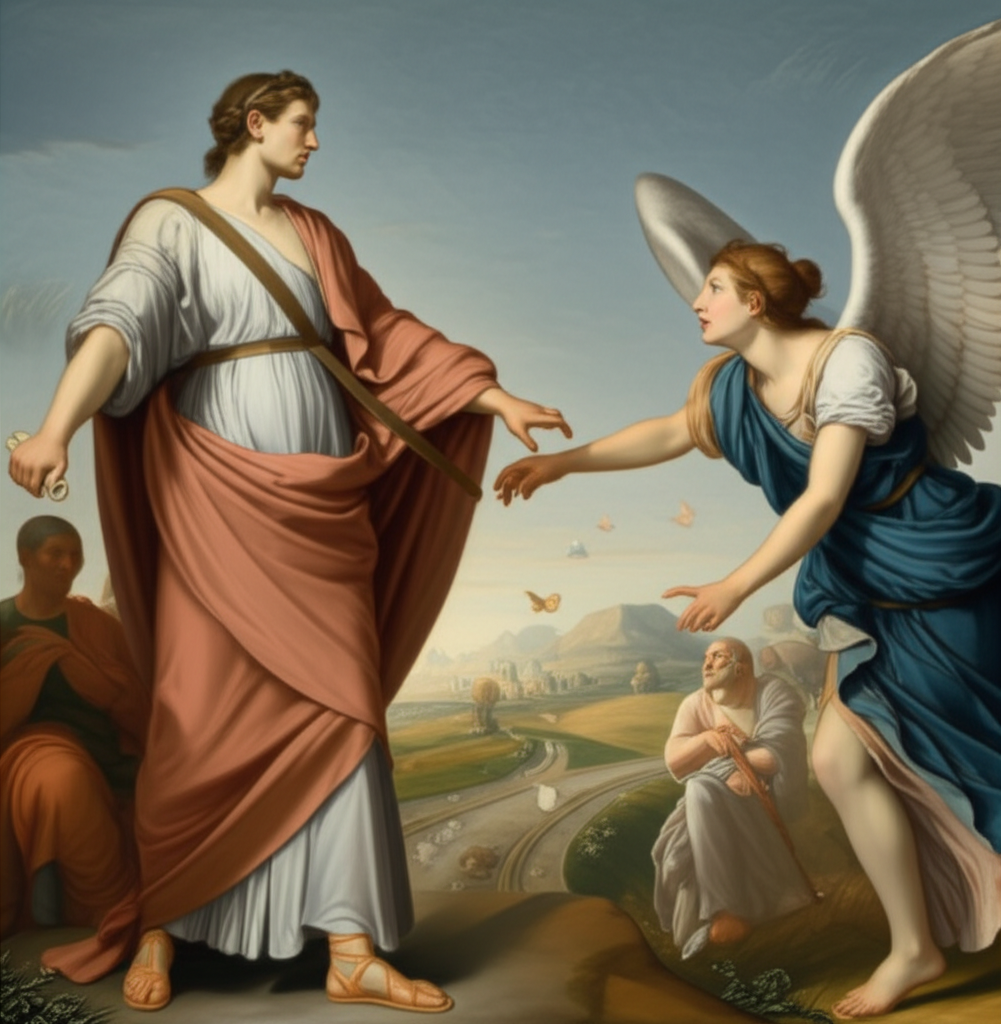
Philosophical Perspectives on Desire-Will Dynamics
Different philosophical traditions offer unique insights into how desire and will function within Man's decision-making process.
| Philosopher/Tradition | View on Desire | View on Will | Interplay |
|---|---|---|---|
| Plato | Appetitive part of the soul, often irrational. | Rational part (reason) should govern. | Reason (guided by spirit) must control appetites for a harmonious soul. |
| Aristotle | Passions/appetites; can be trained by habit. | Deliberate choice (prohairesis), informed by reason. | Reason guides desires towards virtuous action; character shapes choices. |
| Augustine | Concupiscence, powerful and often unruly. | Free will, capable of choosing good or evil. | Will struggles against fallen desires; grace assists in choosing good. |
| Descartes | Tied to passions of the soul, influenced by body. | Infinite, distinct from finite understanding. | Will assents to clear and distinct ideas, overcoming passions through reason. |
| Spinoza | Man's essence (conatus), striving to persist. | Not a free faculty; an affirmation/negation of ideas. | No true free will; actions are determined by dominant desires/ideas. |
| Kant | Inclinations; often opposed to moral duty. | The "good will," acting purely from duty. | Good will acts from moral law, often against the pull of inclination/desire. |
The Mind's Arena: Reason, Deliberation, and Choice
Ultimately, the battle or ballet between desire and will plays out in the Mind. It is here that Man reflects, deliberates, and ultimately forms a choice. Reason acts as the arbiter, evaluating the object of desire, considering the implications of yielding or resisting, and presenting options to the will.
A mature Mind is not one devoid of desires, but one where the will, informed by reason, can effectively manage and direct those desires towards higher goods or more fulfilling ends. This journey of self-understanding and self-mastery is a continuous process for every Man, shaping not just individual actions but the very fabric of character.
Conclusion
The interplay of desire and will is a foundational concept in understanding human choice. Far from being simple forces, they represent a complex, dynamic relationship that has preoccupied philosophers for centuries. From the ancient insights of Plato and Aristotle to the profound reflections of Augustine and Kant, the Great Books of the Western World illuminate the enduring challenge and triumph of Man navigating his internal world. Recognizing this intricate dance within our own Mind is the first step towards making more conscious, deliberate, and ultimately, more meaningful choices.
YouTube Video Suggestions:
-
📹 Related Video: PLATO ON: The Allegory of the Cave
Video by: The School of Life
💡 Want different videos? Search YouTube for: "Plato's Chariot Allegory Desire Will Reason Explained"
2. ## 📹 Related Video: KANT ON: What is Enlightenment?
Video by: The School of Life
💡 Want different videos? Search YouTube for: "Augustine Free Will Problem Concupiscence"