

The Unseen Architect of Character: The Influence of Habit on Moral Virtue
Summary: Our moral character is not merely a matter of innate disposition or abstract principles, but profoundly shaped by the habits we cultivate. Drawing from the wisdom of the Great Books of the Western World, this article explores how repeated actions, guided by education, custom, and convention, forge our virtues and vices, ultimately determining the quality of our ethical lives. From Aristotle's emphasis on habituation to the societal forces that mold our moral landscape, understanding the power of habit is crucial for anyone seeking to cultivate a life of virtue.
The Foundations of Character: Why Habits Matter
In the grand tapestry of philosophical thought, few concepts are as foundational yet often overlooked as the pervasive influence of habit on our moral constitution. We often consider morality a realm of high-minded ideals and weighty decisions, yet the ancient Greeks, particularly Aristotle, understood that our ethical lives are less about singular heroic acts and more about the consistent, often unconscious, patterns of behavior we develop over time. It is through these repeated actions that our inner landscape is sculpted, determining whether we lean towards virtue or vice.
Aristotle and the Habituation of Virtue
Perhaps no philosopher articulated the link between habit and virtue more profoundly than Aristotle in his Nicomachean Ethics. For Aristotle, virtue is not a natural endowment, nor is it merely intellectual knowledge. Instead, it is a hexis, a settled disposition or character trait, acquired through practice and repetition. He famously states:
"Moral virtue comes about as a result of habit, whence also its name (ethike) is one that is formed by a slight variation from the word for habit (ethos)."
This linguistic connection underscores the deep philosophical bond. We become just by performing just actions, courageous by acting courageously, and temperate by engaging in temperate behaviors. It's a continuous feedback loop:
- Action → Habit → Character → More Actions
Consider the analogy of a craftsman. A carpenter becomes skilled not by reading about carpentry, but by repeatedly working with wood, making mistakes, and refining their technique. Similarly, one becomes virtuous by consistently acting virtuously, even when it is difficult. The initial acts might require conscious effort, but over time, they become easier, more natural, and eventually, second nature—a true habit.
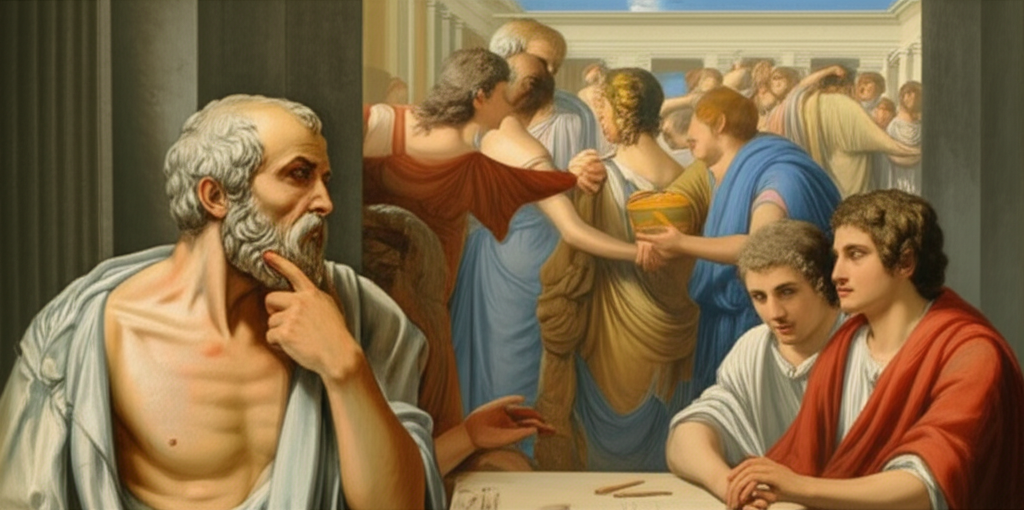
The Crucial Role of Education in Shaping Habits
If virtue is a matter of habit, then the process of education takes on paramount importance. It is through proper upbringing and training that individuals are guided towards the right kinds of habits from an early age. Plato, too, in his Republic, stresses the critical importance of early moral training, arguing that children must be habituated to love the beautiful and the good, even before they can fully understand the reasons why.
This early training isn't just about rote memorization of rules; it's about creating an environment where virtuous actions are encouraged and practiced. Parents, teachers, and community leaders play a vital role in:
- Modeling virtuous behavior: Children learn by observing.
- Providing opportunities for practice: Encouraging sharing, fairness, and empathy.
- Offering guidance and correction: Helping children understand the impact of their actions.
Without this early education, individuals are left to develop habits haphazardly, often falling prey to less noble impulses.
Custom and Convention: Society's Moral Blueprint
Beyond individual education, the broader societal context of custom and convention exerts immense influence over our moral habits. The norms, traditions, and unwritten rules of a community subtly, yet powerfully, shape what is considered acceptable, admirable, or deplorable.
Michel de Montaigne, in his Essays, often reflects on the sheer power of custom, observing how what is considered natural or moral in one society might be anathema in another. While he sometimes highlights the arbitrary nature of these conventions, he also implicitly acknowledges their profound ability to mold individual behavior.
| Influence Factor | Description | Impact on Habit |
|---|---|---|
| Family Upbringing | Early lessons, parental examples, and household rules. | Forms foundational habits of respect, responsibility, and empathy. |
| Formal Education | School curriculum, teacher guidance, and peer interactions. | Reinforces societal values, encourages critical thinking about moral dilemmas, and fosters civic virtues. |
| Cultural Norms | Shared beliefs, traditions, religious practices, and media portrayals. | Establishes collective expectations for behavior, influencing everything from etiquette to ethical decision-making. |
| Legal Systems | Laws and their enforcement, societal consequences for actions. | Creates habits of obedience to law and a sense of justice, even if driven by fear of punishment initially. |
These customs, whether explicit or implicit, create an environment that either fosters or hinders the development of specific virtues. A society that values honesty will, through its conventions, encourage truthful habits, while one that tolerates deceit will inadvertently cultivate habits of dishonesty.
The Dual Nature: Virtue and Vice as Products of Habit
It is crucial to remember that habit itself is morally neutral. It is the content of the habit that determines whether it leads to virtue or vice. Just as repeated acts of justice lead to the virtue of justice, repeated acts of injustice lead to the vice of injustice.
- Virtuous Habits: Honesty, generosity, courage, temperance, patience.
- Vicious Habits: Lying, greed, cowardice, intemperance, impulsiveness.
The insidious nature of vice is that it, too, becomes easier with practice. A small lie, if repeated, can harden into a habit of deceit. A moment of uncontrolled anger, if indulged, can develop into a disposition towards wrath. Breaking bad habits requires significant effort, often more than forming good ones, precisely because they are deeply ingrained patterns.
Cultivating Moral Excellence: A Lifelong Endeavor
Recognizing the profound influence of habit empowers us. It means that moral character is not static; it is something we actively build, day by day, action by action. Cultivating moral excellence is a lifelong endeavor that requires:
- Self-Awareness: Understanding our existing habits, both good and bad.
- Intentional Practice: Consciously choosing to perform virtuous acts, even when it's difficult.
- Persistence: Virtue is not built in a day; it requires consistent effort over time.
- Reflection: Regularly evaluating our actions and adjusting our course.
By consciously shaping our habits, we become the architects of our own character, steering ourselves towards a life of greater virtue.
Conclusion: The Enduring Legacy of Our Actions
From the ancient wisdom of Aristotle and Plato to the observations of Montaigne, the Great Books of the Western World consistently highlight the inescapable truth: our habits are the bedrock of our moral lives. They are the unseen forces that sculpt our character, guiding our choices and shaping our destiny. By understanding the intricate interplay between habit, education, and societal custom and convention, we gain profound insight into how virtue and vice are formed. The call to a virtuous life is, at its heart, a call to cultivate good habits—a continuous, conscious effort to align our daily actions with our highest ethical aspirations, thereby building not only better individuals but also better societies.
YouTube: "Aristotle Nicomachean Ethics Habit Virtue"
YouTube: "Plato Education Moral Development"
📹 Related Video: ARISTOTLE ON: The Nicomachean Ethics
Video by: The School of Life
💡 Want different videos? Search YouTube for: "The Influence of Habit on Moral Virtue philosophy"