

The Enduring Craft of Character: How Habit Forges Moral Virtue
Summary: Our moral character is not an innate blueprint but a meticulously constructed edifice, built brick by brick through the power of habit. From the ancient wisdom of the Great Books, philosophers have long understood that virtue is not simply knowing what is good, but consistently doing what is good. This article explores how our repeated actions, guided by education and shaped by custom and convention, solidify into either virtue or vice, ultimately determining the very fiber of our moral being.
The Unseen Architect: Habit as the Foundation of Moral Character
In the grand tapestry of human existence, few threads are as potent, yet often overlooked, as the humble habit. It is the silent artisan, ceaselessly sculpting our inner landscape, determining not just what we do, but fundamentally, who we are. For millennia, thinkers within the Western philosophical tradition, particularly those whose insights grace the pages of the Great Books, have recognized habit not merely as routine, but as the very crucible in which moral virtue is forged. Our dispositions, our inclinations, our automatic responses to the world – these are not accidental occurrences, but the cumulative result of countless repetitions.
The Aristotelian Blueprint: Cultivating Virtue Through Practice
When we delve into the works of Aristotle, particularly his Nicomachean Ethics, we find a profound articulation of habit's role in moral development. For Aristotle, virtue (ἀρετή) is not a gift bestowed at birth, nor is it a purely intellectual pursuit. Instead, it is a practical excellence, acquired through consistent action. He famously states that "we become just by doing just acts, temperate by doing temperate acts, brave by doing brave acts."
Consider the budding musician: they do not become proficient by merely understanding scales, but by tirelessly practicing them. So too, the morally upright individual cultivates their character not by simply knowing what is good, but by repeatedly choosing and enacting good deeds. This continuous exercise of moral choice, over time, transforms effortful actions into ingrained habits, making virtuous behavior not just possible, but natural and even pleasurable.
Virtue and Vice: The Dual Paths of Repetition
The power of habit, however, is a double-edged sword. Just as consistent virtuous actions lead to the development of moral excellence, so too do repeated negative actions pave the way for vice.
- Virtuous Habits: These are the regular practices that incline us towards moral good.
- Honesty: Consistently telling the truth, even when difficult.
- Generosity: Regularly sharing resources or time with others.
- Temperance: Habitually exercising moderation in desires and pleasures.
- Courage: Repeatedly facing fears or challenges with resolution.
- Vicious Habits: These are the ingrained patterns that lead us away from moral good.
- Deceitfulness: Regularly distorting the truth for personal gain.
- Greed: Habitually accumulating resources beyond need, at others' expense.
- Intemperance: Consistently indulging in excesses without restraint.
- Cowardice: Regularly shrinking from necessary challenges or duties.
The distinction between virtue and vice thus becomes a matter of accumulated choices and the habits they engender. Our character is not a static entity; it is a dynamic process, continually being shaped by the choices we make and the patterns we allow to take root.
The Formative Power of Education
The crucial role of education in shaping moral habits cannot be overstated. From Plato's vision of the ideal state, where citizens are trained from youth in the habits of temperance and justice, to the foundational principles of moral pedagogy, early formation is paramount. Education, in this context, is not merely the transmission of facts, but the deliberate cultivation of dispositions.
Children, through guidance, example, and gentle correction, are taught to perform actions that, initially perhaps external, gradually become internalized. They learn to share, to be polite, to respect boundaries – these are the initial seeds of virtuous habits. A robust moral education, therefore, focuses on creating environments and routines that encourage the practice of good deeds, thereby laying the groundwork for a virtuous adult life.
Custom and Convention: Society's Influence on Moral Habits
Beyond individual effort and formal education, the broader social environment plays a significant role in the formation of moral habits through custom and convention. The norms, traditions, and collective expectations of a community subtly, yet powerfully, influence individual behavior.
- Societal Reinforcement: When a society values honesty, punctuality, or civic responsibility, its customs and conventions tend to reinforce these behaviors, making it easier for individuals to adopt them as habits. Laws, social accolades, and even subtle social pressures can guide individuals towards virtuous conduct.
- Cultural Transmission: Moral habits are often passed down through generations, embedded in cultural narratives, rituals, and institutions. The way a community celebrates holidays, resolves conflicts, or cares for its vulnerable can instill particular moral sensibilities and habitual responses in its members.
Conversely, a society whose customs tolerate or even encourage unethical behavior can make it exceedingly difficult for individuals to cultivate virtue, as the path of least resistance often leads to vice. Thus, the moral health of a community is intricately linked to the collective habits it fosters and the conventions it upholds.
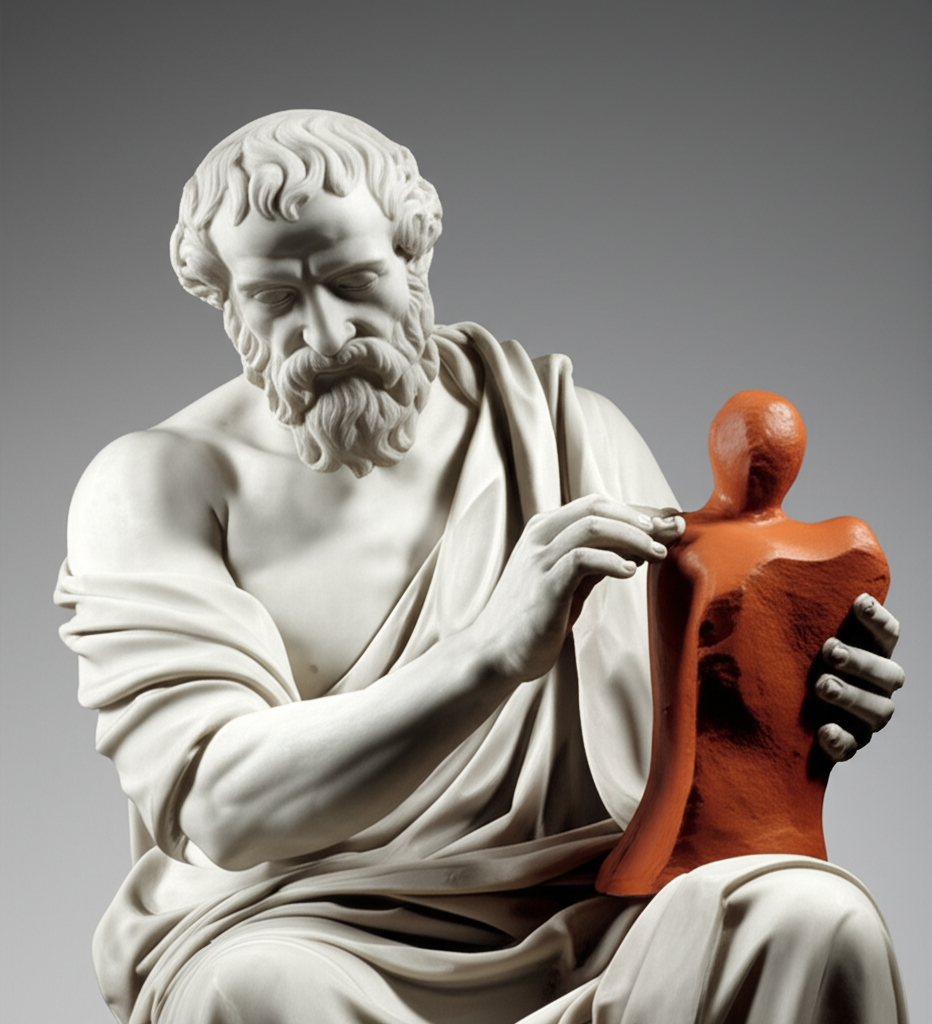
The Ongoing Craft of Self: A Lifelong Pursuit
Ultimately, the influence of habit on moral virtue is a testament to our ongoing capacity for self-creation. While early education and societal conventions provide a strong initial impetus, the cultivation of a virtuous life remains a lifelong endeavor. It requires conscious awareness, consistent effort, and the courage to break detrimental patterns while reinforcing beneficial ones. By understanding habit as the fundamental mechanism of moral development, we gain not only insight into human nature but also a powerful tool for self-improvement and the betterment of our communities.
YouTube Video Suggestions:
-
📹 Related Video: ARISTOTLE ON: The Nicomachean Ethics
Video by: The School of Life
💡 Want different videos? Search YouTube for: "Aristotle Nicomachean Ethics Habit Virtue"
2. ## 📹 Related Video: What is Philosophy?
Video by: The School of Life
💡 Want different videos? Search YouTube for: "Moral Development Character Education Philosophy"