

The Unbreakable Covenant: How Constitutions Safeguard Against Tyranny
A constitution is far more than a mere legal document; it is the foundational blueprint of a society, a solemn pact designed to prevent the concentration of power and secure the Liberty of its citizens. In an age where the fragility of democratic institutions is increasingly apparent, understanding the profound importance of a well-crafted Constitution in forestalling Tyranny is paramount. This pillar page explores how these fundamental laws establish the framework for legitimate Government, define and limit its powers, and stand as the ultimate bulwark against the oppressive tendencies inherent in unchecked authority. From ancient philosophical insights to modern governmental structures, the constitutional ideal remains humanity's most potent defense against the arbitrary rule of the few.
The Perennial Threat of Tyranny: A Philosophical Overview
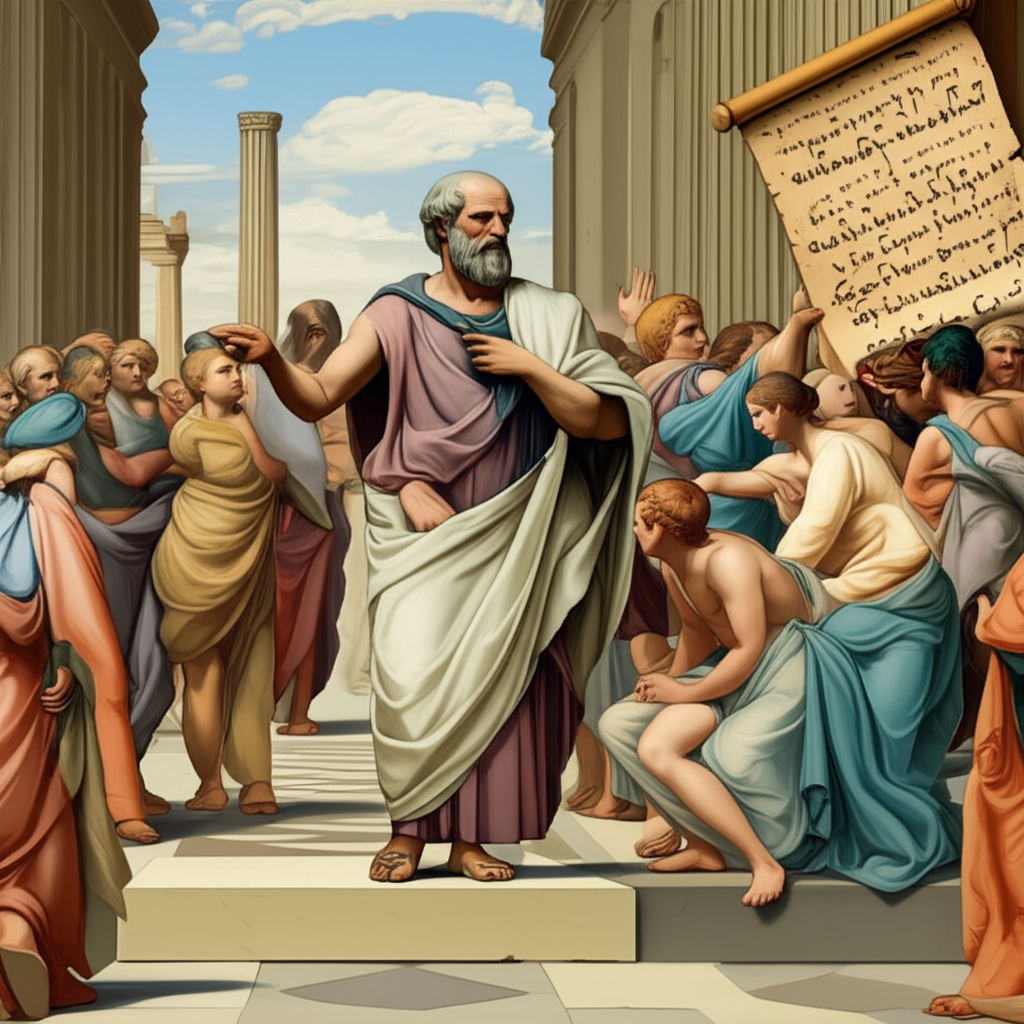
The specter of Tyranny has haunted political thought since antiquity. Philosophers from Plato to Aristotle meticulously dissected the nature of unjust rule, recognizing its insidious capacity to corrupt Government and crush individual Liberty. Plato, in his Republic, warned against the degeneration of political systems, seeing Tyranny as the final, most debased form of Government, where a single individual rules by force and self-interest, devoid of law or justice. Aristotle, in his Politics, similarly distinguished between legitimate rule for the common good and tyrannical rule for the benefit of the ruler, emphasizing that the absence of law is the hallmark of despotism.
The core of Tyranny lies in the arbitrary exercise of power, where the will of the ruler supplants the rule of law. This unchecked authority inevitably leads to the suppression of dissent, the exploitation of resources, and the erosion of fundamental human rights. History is replete with examples of societies succumbing to this dark force, demonstrating that the human tendency towards dominance, if not constrained, can swiftly dismantle the delicate balance of a free society. The recognition of this inherent danger is precisely what propelled thinkers to conceive of robust frameworks capable of resisting such pressures.
What is a Constitution? More Than Just a Document
At its heart, a Constitution is a system of fundamental principles according to which a state or organization is governed. It is the supreme law of the land, establishing the parameters within which all other laws and institutions must operate. But beyond its legal definition, a constitution embodies a nation's highest ideals, its collective aspirations for justice, order, and Liberty. It is a social contract, as theorized by Locke and Rousseau, where individuals consent to be governed in exchange for the protection of their rights and the maintenance of a just society.
A truly effective Constitution serves several critical functions:
- Establishes the Framework of Government: It defines the branches of Government (e.g., legislative, executive, judicial), their powers, and their interrelationships.
- Limits Governmental Power: Crucially, it sets explicit boundaries on what the Government can and cannot do, preventing overreach.
- Guarantees Rights and Liberties: It often enumerates fundamental rights, ensuring citizens are protected from governmental infringement.
- Provides for Change: It outlines procedures for amendment, allowing the Constitution to adapt to evolving societal needs without resorting to revolution.
- Promotes Stability and Predictability: By establishing clear rules, it fosters a stable political environment and allows citizens to understand their rights and obligations.
The development of constitutional thought, from ancient Greek city-states to the Enlightenment, reflects a continuous quest for a Government that is both effective and accountable, powerful enough to maintain order but restrained enough to protect Liberty.
The Mechanisms of Constitutional Protection
The genius of constitutional design lies in its ability to deploy specific mechanisms that actively counteract the forces leading to Tyranny. These structural safeguards are not accidental but are carefully engineered to distribute power, foster accountability, and uphold the rule of law.
Separation of Powers and Checks and Balances
One of the most potent anti-tyrannical innovations, articulated vividly by Montesquieu in The Spirit of the Laws and later elaborated upon in The Federalist Papers, is the principle of the separation of powers. This divides governmental authority into distinct branches—typically legislative, executive, and judicial—each with its own specific functions and responsibilities.
| Mechanism | Description | Anti-Tyrannical Function |
|---|---|---|
| Separation of Powers | Divides governmental authority among distinct branches (e.g., legislative, executive, judicial). | Prevents any single branch or individual from accumulating too much power. |
| Checks and Balances | Grants each branch certain powers to limit or check the actions of the others. | Ensures mutual oversight and requires cooperation, making tyrannical action more difficult. |
| Rule of Law | The principle that all individuals and institutions, including the Government, are subject to the law. | Prevents arbitrary rule; ensures decisions are based on established legal principles, not whim. |
| Independent Judiciary | A judicial system free from political interference. | Upholds the Constitution and protects individual rights without fear or favor. |
| Supremacy of the Constitution | The Constitution is the highest law, above all other laws and governmental actions. | Provides a fixed standard against which all actions of Government can be judged. |
Checks and balances further refine this separation, granting each branch certain powers to limit or check the actions of the others. For instance, the legislature may pass laws, but the executive can veto them, and the judiciary can declare them unconstitutional. This intricate dance of power ensures that no single entity can act unilaterally, demanding negotiation and consensus, thereby significantly hindering any movement towards autocratic rule.
Rule of Law and Due Process
Central to any effective Constitution is the concept of the Rule of Law. This dictates that all individuals, including those in power, are subject to the same laws, impartially applied. It stands in stark contrast to the arbitrary decree of a tyrant. The Constitution establishes a framework where legal processes are transparent, predictable, and fair, ensuring due process for all citizens. This means that Government cannot deprive individuals of their Liberty or property without following established legal procedures, thus protecting against arbitrary arrest, detention, or confiscation.
Liberty's Last Stand: The Constitution as Guardian of Individual Rights
The ultimate purpose of preventing Tyranny is to safeguard Liberty. A comprehensive Constitution explicitly delineates and protects the fundamental rights of its citizens, transforming abstract ideals into enforceable legal protections. Thinkers like John Locke argued for inherent, inalienable rights—life, Liberty, and property—that predate Government and which no legitimate Government can justly infringe upon.
Many modern constitutions include a bill of rights or similar provisions that enumerate these fundamental protections. These might include:
- Freedom of speech, press, assembly, and religion
- The right to a fair trial and due process
- Protection against cruel and unusual punishment
- The right to privacy
- The right to bear arms (in some contexts)
These enshrined rights act as direct limitations on Governmental power, empowering individuals to challenge state overreach and ensuring that the pursuit of the common good does not come at the expense of individual freedoms. An independent judiciary plays a crucial role here, acting as the final arbiter in disputes between citizens and the state, interpreting the Constitution, and upholding its guarantees against legislative or executive encroachment.
The Ongoing Vigilance: Maintaining Constitutional Integrity
A Constitution is not a static document; it is a living framework that requires constant vigilance and adaptation. While stability is vital, provisions for amendment ensure that the Constitution can evolve to meet the changing needs and values of society without losing its foundational principles. However, the amendment process is often deliberately arduous, preventing hasty or tyrannical alterations.
The enduring strength of a Constitution ultimately rests on the active participation and commitment of its citizens. Civic education, public discourse, and the willingness of individuals to hold their Government accountable are essential for its longevity. When citizens become complacent, or when the principles of the Constitution are gradually eroded through legislative action, executive decree, or judicial reinterpretation, the path to Tyranny can subtly reopen. The erosion of norms, the weakening of checks, or the disregard for protected rights can slowly undermine the constitutional order, demonstrating that the fight against Tyranny is a perpetual one.
Conclusion: A Living Document, A Constant Safeguard
The Constitution stands as humanity's most sophisticated and enduring attempt to tame the beast of power and secure Liberty. By meticulously defining the structure of Government, limiting its authority, separating its functions, and explicitly safeguarding individual rights, it builds an intricate web of defenses against Tyranny. From the philosophical insights of the Great Books of the Western World to the practical realities of modern governance, the message remains clear: a robust Constitution is not merely a legal nicety but the indispensable guardian of a free society. It demands our understanding, our respect, and our unwavering defense, for in its integrity lies our collective freedom.
📹 Related Video: What is Philosophy?
Video by: The School of Life
💡 Want different videos? Search YouTube for: ""John Locke Social Contract Philosophy Explained""
📹 Related Video: PLATO ON: The Allegory of the Cave
Video by: The School of Life
💡 Want different videos? Search YouTube for: ""Montesquieu Separation of Powers and Checks and Balances""