

The Enduring Shield: How Constitutions Prevent Tyranny and Safeguard Liberty
Unpacking the Bedrock of Freedom: Why Constitutions are Our Best Defense Against Tyranny
In the grand tapestry of human history, the struggle for self-governance and the preservation of individual freedom against the encroaching shadow of absolute power is a recurring theme. From ancient city-states to modern republics, societies have grappled with the fundamental question: how do we empower a government to maintain order without allowing it to become a source of tyranny? The answer, a testament to centuries of philosophical thought and hard-won experience, lies in the deliberate crafting and vigilant upholding of a Constitution. More than just a legal document, a constitution is a society's solemn pact with itself, a foundational framework designed to limit power, establish the rule of law, and ultimately, secure liberty for all. It is the architectural blueprint of a just society, carefully engineered to prevent the concentration of power that inevitably leads to oppression, ensuring that the reins of authority remain firmly in the hands of the people, not an unchecked despot.
The Specter of Tyranny: Understanding the Threat
Before we can fully appreciate the protective power of a constitution, we must first understand the very nature of what it seeks to prevent: tyranny. Philosophers from Plato to Locke have meticulously dissected this dangerous phenomenon.
- Plato, in his Republic, warned against the degeneration of government forms, seeing tyranny as the ultimate corruption of democracy, where unchecked freedom leads to anarchy, paving the way for a single, powerful individual to seize control. This tyrant, driven by insatiable desires, rules without law, exploiting the populace.
- Aristotle, in his Politics, further distinguished between legitimate rule and tyranny, noting that a tyrant rules in his own interest, not for the common good, using force and fear rather than persuasion and law.
In essence, tyranny is the exercise of absolute power, often arbitrary and cruel, by an individual or a small group, without regard for established law or the rights of the governed. It thrives on the absence of limits, the suppression of dissent, and the erosion of individual liberty.
The Constitution: A Social Contract and a Blueprint for Governance
So, what exactly is a Constitution? It's far more than a collection of statutes. It is, at its heart, a manifestation of the social contract – an agreement among the people to establish a government and define its powers and limitations.
As thinkers like John Locke articulated, people enter into society to protect their natural rights, delegating certain powers to a government but never surrendering their fundamental liberty. A constitution formalizes this delegation, serving several critical functions:
- Establishes the Framework: It defines the structure of government (e.g., legislative, executive, judicial branches).
- Allocates Power: It outlines which bodies have which powers and responsibilities.
- Limits Power: Crucially, it sets boundaries on what the government can and cannot do.
- Protects Rights: It enumerates and safeguards the fundamental rights and freedoms of citizens.
- Provides for Amendment: It includes mechanisms for its own modification, allowing it to adapt while maintaining its core principles.
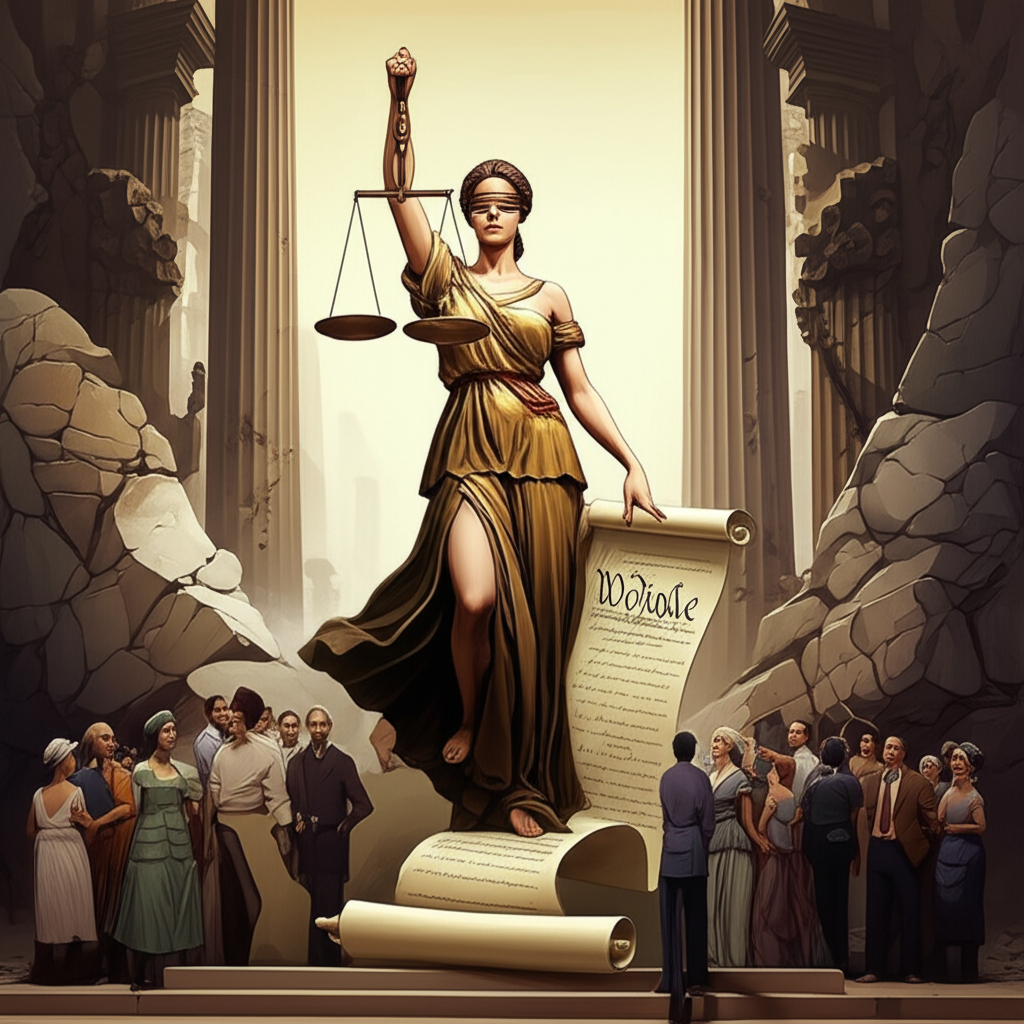
Mechanisms for Prevention: How Constitutions Thwart Tyranny
The genius of a well-crafted Constitution lies in its sophisticated mechanisms designed to act as bulwarks against the rise of tyranny. These are not mere suggestions but legally binding injunctions that shape the very nature of power.
A. Separation of Powers and Checks and Balances
One of the most profound insights into preventing tyranny came from Baron de Montesquieu, who, in The Spirit of the Laws, argued for the division of governmental authority into distinct branches. This concept, adopted and elaborated upon by the American Founders in the Federalist Papers, is central to constitutional design.
- Legislative Branch: Makes laws (e.g., Parliament, Congress).
- Executive Branch: Implements and enforces laws (e.g., President, Prime Minister).
- Judicial Branch: Interprets laws and administers justice (e.g., Courts).
This separation of powers is then reinforced by a system of checks and balances, where each branch has the ability to limit the powers of the others. This prevents any single branch from becoming too dominant.
Table: Checks and Balances in Action
| Branch of Government | Power | Check on Another Branch |
|---|---|---|
| Legislative | Makes Laws | Can impeach executive/judicial officials; override presidential vetoes; approve judicial appointments. |
| Executive | Enforces Laws | Can veto legislation; appoint judges; command military. |
| Judicial | Interprets Laws | Can declare executive actions or laws unconstitutional (judicial review). |
B. The Rule of Law
A cornerstone of any free society, the rule of law dictates that everyone, including those in power, is subject to and accountable under the law. A Constitution enshrines this principle, ensuring that decisions are made based on established legal principles, not on arbitrary whim or personal decree. This stands in stark contrast to tyranny, where the ruler is the law.
C. Protection of Individual Rights and Liberties
Constitutions explicitly define and protect the fundamental rights of citizens, acting as a direct barrier against governmental overreach. These rights – such as freedom of speech, assembly, religion, and the right to a fair trial – are often enshrined in a Bill of Rights, making them legally enforceable and placing them beyond the reach of ordinary legislative or executive action. The very purpose of government, in this view, is to secure these pre-existing natural rights, not to grant or remove them at will.
D. Accountability and Representation
A Constitution typically outlines mechanisms for holding government officials accountable. This includes:
- Regular Elections: Allowing citizens to choose their representatives and remove those who fail to serve their interests.
- Impeachment Processes: Providing a legal avenue to remove officials who abuse their power.
- Transparency and Openness: Requiring governmental proceedings to be public, fostering an informed citizenry.
These mechanisms ensure that power ultimately flows from the people, preventing the entrenchment of an unaccountable elite, a hallmark of tyranny.
The Continuous Vigilance: Maintaining the Constitutional Shield
While a robust Constitution provides the essential framework, it is not a static artifact. Its effectiveness in preventing tyranny depends on the continuous vigilance and active participation of its citizens. The words on the page are given life by the commitment of a society to uphold its principles.
As James Madison eloquently argued in The Federalist Papers, "If men were angels, no government would be necessary. If angels were to govern men, neither external nor internal controls on government would be necessary." Because humans are fallible, the constitutional structure acts as those crucial internal and external controls.
The fight against tyranny is an ongoing endeavor, requiring:
- Civic Education: An understanding of constitutional principles and the importance of liberty.
- Active Participation: Voting, engaging in public discourse, and holding elected officials accountable.
- Independent Judiciary: A strong, impartial judiciary willing to uphold the constitution, even against popular sentiment or governmental pressure.
- Free Press: A media capable of scrutinizing power and informing the public without fear of reprisal.
Conclusion: The Enduring Power of a Constitutional Society
In sum, the Constitution stands as humanity's most sophisticated and enduring defense against the perils of tyranny. By carefully delineating and limiting the powers of government, establishing the rule of law, and unequivocally safeguarding individual liberty, it creates a stable foundation for a just and free society. It is a testament to philosophical foresight and practical wisdom, a constant reminder that power, left unchecked, inevitably corrupts. To preserve our freedoms, we must not only possess a constitution but also actively understand, defend, and live by its principles, ensuring that the shield against tyranny remains strong and true for generations to come.
📹 Related Video: What is Philosophy?
Video by: The School of Life
💡 Want different videos? Search YouTube for: ""John Locke Social Contract Philosophy Explained""
📹 Related Video: What is Philosophy?
Video by: The School of Life
💡 Want different videos? Search YouTube for: ""Montesquieu and the Separation of Powers - Political Philosophy""